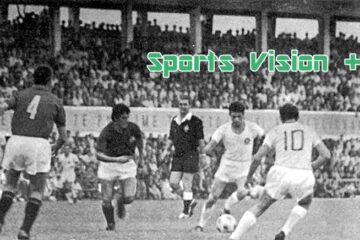
When “17 Nentori” drew against “Ajax” of Amsterdam in 1970!
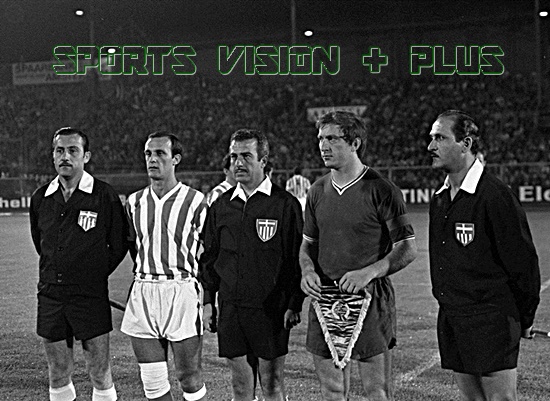
Unbelievable truths in Football!
Intro
September 17, 1970.
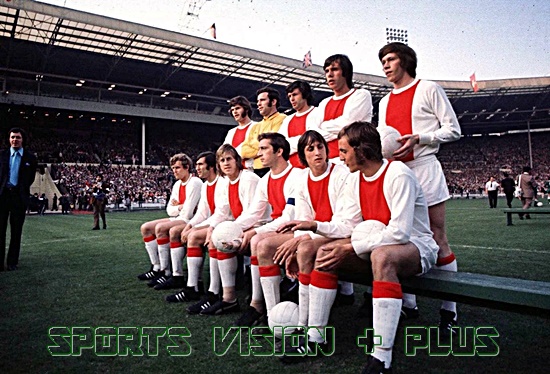
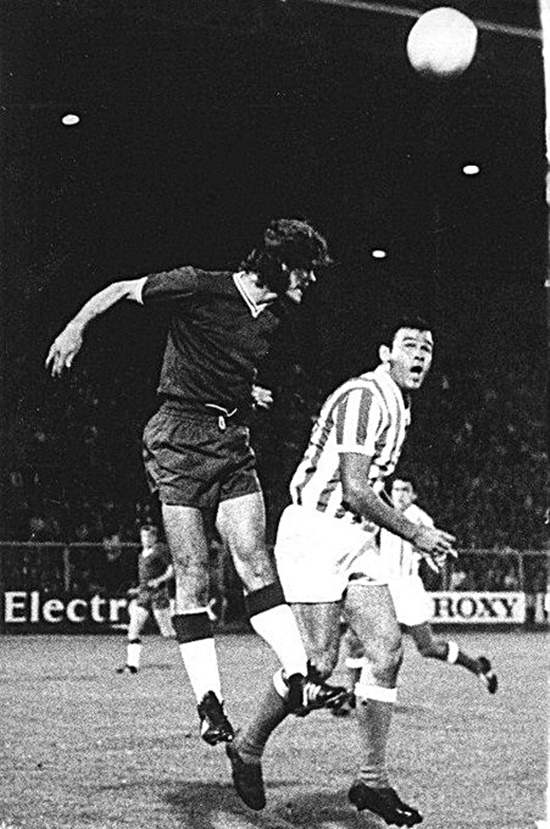
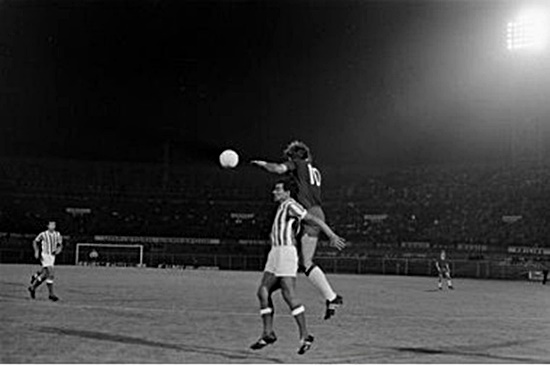
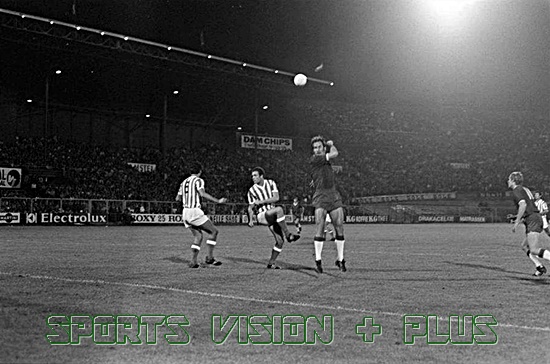
“17 Nentori” plays for the first round of the European Champions Cup against “Ajax” of Amsterdam, who will win the European Champions three times in a row starting from that year. While the first half starts with a disadvantage for the Tirana team, after two goals by right-back Suurbier, in the 19th and 49th minutes, during the second half, “17 Nentori” shortens the distance with Kazaxhiu’s side in the 18th minute and surprisingly equalizes with Zhega’s side, borrowed from Vllaznia, in the 33rd minute after an excellent game.
“I did not expect to play in Tirana against a strong team like “17 Nentori” which made a great impression on me,” said coach Marinus Michels, who four years later would lead Cruyff’s great Holland to the 1974 World Cup, composed mainly of Ajax players.
1.
Summer of 1970!
It has been a little over a month since the 1969-1970 Albanian championship season ended, where the “17 Nentori” team from Tirana emerged victorious.
They closed this championship, as the first seasonal one for Albania (spring 1969 – 1970), in the lead with 44 points, five points ahead of their rivals “Partizan” who are ranked second with 39.
The reigning champions have selected at the end of this season with 14 participating teams, after 26 matches, 19 wins, 6 draws and only one loss, that against Skenderbeu in Korce (0-1) in week 4. “17 Nentori” has scored 56 goals more than anyone else and has conceded 10, even here less than anyone else.
In fact, from 1965 until 1970, “17 Nentori” has proven in this five-year period to be the strongest team in the Albania, even though it has had the presence of the two giants “Partizan” and “Dinamo”.
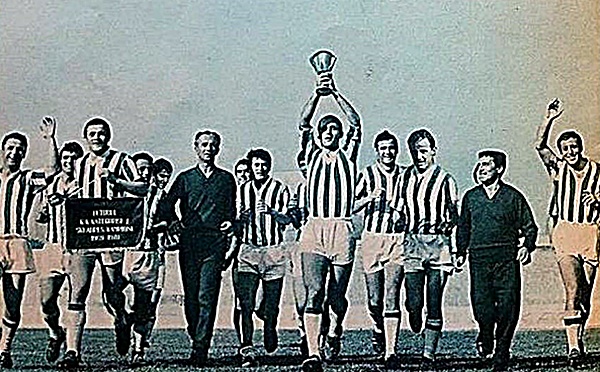
They were equipped with the features of a team with modern techniques, with elastic defense, mobile midfield and dynamic and explosive attack. In their ranks are: Frasheri, Ali and Osman Mema, Bylyku, Ishka, Xhacka, Bukoviku, Bytyci, Hyka, Kazanxhi…
* * *
When the draw for the European Cup first round took place in Basel, Switzerland, in June 1970, it threw together several sting contests with many of the continent’s elite forced uncomfortable journeys into uncharted territories to protect or perpetuate their international reputations. Newly crowned English champions Everton endured a chilly trip up north’ to face Keflavík, the Icelandic league champions, with the previous season’s tournament runners up, Celtic, facing an equally brisk northernly sojourn to Finland where they’d been paired against the extravagantly monikered Kokkolan Palloveikot.
There was a potentially explosive face-off between the and Northern Irish champions, Waterford United and Glentoran, that would keep the garda and military of both Irelands in a state of pensive alert.
The reigning champions of Europe, Feyenoord of the Netherlands, would visit Ceauşescu’s Romania and the potential banana skin posed by UTA from the country’s textile city of Arad.
Feyenoord had earned their place in the 1970/71 edition of the competition as a result of the final win at Milan’s San Siro against an under-par Celtic, a 2-1 victory that had cemented Netherlands’ reputation as an emerging force in world football.
But it was the Rotterdam club’s Amsterdam neighbors who had been drawn in the most intriguing of the first-round ties.
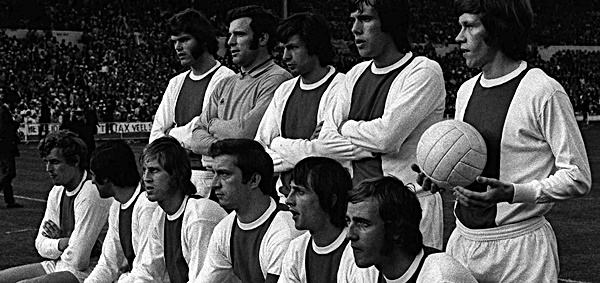
Ajax won the 1969/70 Eredivisie at a canter, five points ahead of second-placed Feyenoord, scoring 100 goals and conceding only 23 during the 34-game season. They’d shown glimpses of European pedigree too, reaching the final in 1968/69 and the quarter-finals in 1966/67.
Yet 1970/71 heralded the augmentation of what would prove a great journey for Rinus Michels’ wonderful side, playing the game in a new way – totaalvoetbal – executed by a group of players who were technically comfortable and competent with or without the ball.
The Dutch “kampioenen” were drawn against the Albanian “kampionë”, “17 Nëntori” of Tirana, a tie that provided both the allure and subsequent difficulties that a trip to the continent’s least obliging nation presented.
By 1970, a period of social and cultural change had been in progress in the Netherlands, the nation’s youth engaged in the new-worldly pursuits of rock ‘n’ roll, drugs, informal clothing, sexual exploration and moral idealism. The contrasts between the Netherlands and Albania – mired in the aftermath of the 1967 constitutional rewrite and the toxic cultural revolution that preceded it – couldn’t have been more starkly pronounced.
However, there was one social phenomenon in which both countries were mutually invested – bicycles. In the Netherlands, a growing trend away from motorized transport was taking shape, Dutch people taking to the streets to protest not only against both the carbon emissions and huge traffic flows, but more pointedly to oppose to the high number of child deaths on the roads over 500 children were killed in collisions with motor vehicles in 1969.
Whereas Dutch and more pertinently, the Amsterdammers’ leanings towards this mode of transportation were prompted by the pervading air of ethical idealism that blew through the lowlands of progressive Holland, Albania’s was born of social necessity. Either way, the results remained the same; bicycles reigned in Tirana as they did Amsterdam.
When the draw was made, the players and staff of “17 Nëntori” were enjoying a shared club holiday on the beaches of Durrës on the Albanian Adriatic coast. Propping up the bar with beers in hand, the announcement – made during the midday news on Radio Tirana – was received with enthusiasm by the footballers of Tirana.
The team spirit and belief among Myslym Alla’s group of players was equivalent to that of their Dutch counterparts. “17 Nëntori” were locked into a cycle of recurring success between 1965 and 1970, a half-decade where the club, embodying the characteristics prevalent in Tirana’s finest teams – sacrifice, determination, positivity and beauty were a dominant and foreboding force domestically, breaking the Partizani-Dinamo chokehold on the national game. They were confident of making an impact against De Godenzonen.
In the lead-up to the first leg in Tirana, the Albanian government forwarded a letter to the Dutch club warning them that their players – the ‘long-haired scum’ – would not be allowed to enter the country if they had facial hair or haircuts measuring in excess of 3cm in length, thus generating a flurry of activity in the barbershops neighboring De Meer.
A pithy response regarding the Albanians’ requests, apropos hair, from Ajax director Jaap van Praag caused a further storm in the proverbial teacup.
“That’s impossible,’ van Praag chided. ‘Mao Zedong has long hair himself, doesn’t he?’ His comment was greeted with an icy rebuke from Ajax’s hosts; Albania would not tolerate long hair as it was a characteristic of the noxious decadence that emanated from the capitalist West.
Indeed, any signs of Western influence, including foreign music and TV, wearing Western fashions, the importation of religious texts and regalia or having long hair and/or a beard, were categorically banned.
Packing a suitcase for a visit to Albania could prove a minefield in itself.
But the petty nitpicking continued upon Ajax’s arrival in the Hermit Kingdom. The Dutch – like FC Köln before them in 1964 – brought their own provisions to Albania; a perceived display of impropriety and disrespect hastily rebuffed by management at Tirana’s Hotel Dajti. Head chef Mihal Kanini baulked at the contraband foodstuffs – sausages chiefly imported by these petulant, Western bourgeoisie.
The club sportingly distributed the contraband goods among Dajti’s hotel staff to preserve peace, with Ajax’s chief objector, Kanini, receiving nothing.
After an initial settling-in period at Hotel Dajti, the players of Ajax held a meet-and-greet session at Stadiumi “Qemal Stafa”, which was attended by curious fans and Tirana players.
Ajax’s entourage, accompanied by their glamorous WAGs, pulled up at the national stadium on the Tuesday afternoon wearing brightly colored Western outfits; the wives in mini-skirts, a caravan of Western pomp and excess the natives aghast.
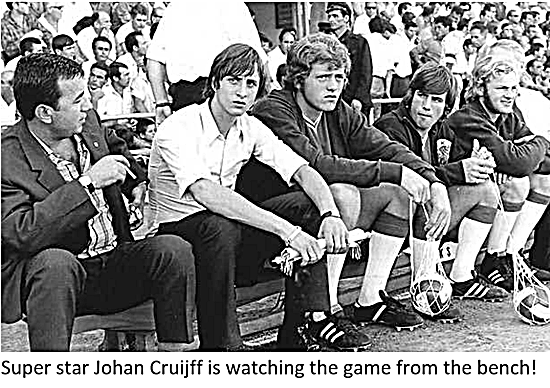
As the Ajax players indulged in light training, stroking the ball around the seasonally decent playing surface at the “Qemal Stafa”, Myslym Alla, “17 Nentori” ‘s coach and an enjoyer of the finer nuances of the beautiful game, entered into conversation with his staff regarding the youthful Johan Cruyff.
‘You see that boy,’ Alla is purported to have said, ‘very soon you will see how great a football player he will become.’
He certainly knew talent when he saw it.
However, the fledgling Cruyff would play no part in the first leg, arriving on matchday at the stadium with a heavily bandaged left knee. Alongside fellow Oranje legend Arie Haan, the 23-year-old Cruyff would only warm the substitutes’ bench in Tirana, much to native disappointment.
Ironically, it had been during the team’s Tuesday evening cycle ride around the Albanian capital that Cruyff had reportedly sustained his injury.
Despite the absence of Cruyff and Haan, the Ajax side that appeared in Tirana that day was replete with established.
Ajax, starting from this season and this challenge onwards, would take on the dimensions of a super team of total Dutch football. It was a time when the Ajax team already had the names of some players who would later become famous with the Dutch national team, the world champions in 1974, with Krol, Suurbier, Neeskens, Muhren, Kaizer, adding to this the leadership of coach Rinus Michels. Johan Cruyff was undoubtedly also in the Ajax team that would face
“17 Nentori” although he did not play in either of the two 1970 Champions Cup challenges.
2.
Before the “17 Nentori”, tasks and plans were set for this challenge. Strong and tiring training sessions were held at the artificial lake, “Student City” and at the “Dinamo” stadium, training sessions that were also attended by several members of the Albanian People’s Party, PPSH such as the Minister of Defense Beqir Balluku and the Prime Minister of that year Manush Myftiu, and in-depth analyses with political overtones.
Only one person seemed to be unimpressed by this challenge. This was the coach of “17 Nentori” Myslym Alla. He appeared calm and alone with his notebook in front of him for hours, writing and forming tactical schemes and formations based on the players he had at his disposal. Collective play, physical strength, sacrifice, fast ball circulation.
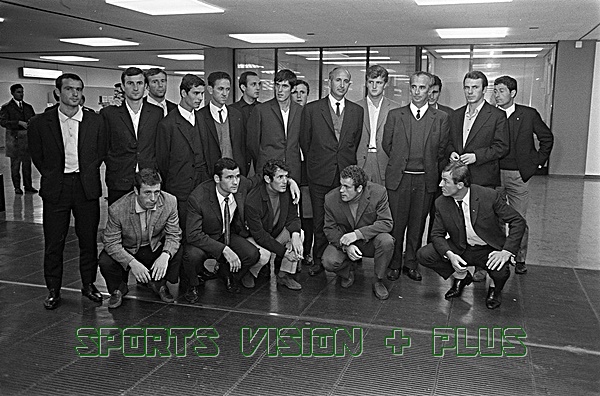
For this great challenge for Albanian football, “17 Nentori” had received three reinforcements, even though international rules did not allow these unforeseen movements of players within the ongoing season. But no one had deep knowledge of Albanian football, of the players and the teams, so these movements or reinforcements were done secretly without the knowledge of FIFA or UEFA.
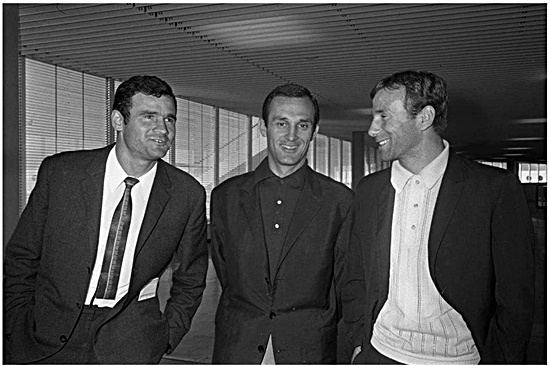
Thus, Iliaz Ceco, Gani Xhafa and Medin Zhega had arrived from “Dinamo” from “Vllaznia”.
In addition to the food they had brought with them, they requested that the match be played with their own “adidas” ball and not with the Chinese-made balls that were used in Albania at that time.
As soon as they arrived at “Qemal Stafa” stadium, curious to see the surroundings, the atmosphere, they noticed that people were coming to the stadium on bicycles. Many fans will shrug their shoulders and ask each other: What will this Ajax be like in football?!
Of course, the Dutch had come to Tirana with claims, even though the coach, Michels, had brought in all the young players like Cruyff, Hulshof, Surbier, Neskens, etc.
All of that would not be just a match, with a surprise result, with all the emotions until the end. That match would mark the opening of an era where the team, with total football, would start from Tirana.
On that Wednesday, September 16, 1970, a new style of play would begin its journey, perhaps the most famous system in the history of world football, represented by the Dutch “Ajax”. A great, modern, completely different football, would be called “Total Football”, dominant for years, extraordinary, inimitable with the “Ajax” of the 70s, with coach Michels, a former player who also invented it. When Michels transferred to “Barcelona” in 1971, he passed the baton to the Romanian coach, Stefan Kovač.
3.
Matchday observed a packed-to-capacity “Qemal Stafa”; the pigeons, till rolls and blue and white confetti held in reserve in the event of a Tirana goal. Albania was basking in the heat of an unseasonably warm September; men in the Tribuna “njëzetshet” dressed in short-sleeved shirts and slacks, the women wearing summer blouses and skirts.
The sun gazed down on the stadium from above the verdant, overseeing heights of Mount Dajti, small wisps of cloud suspended in an otherwise Alice blue sky; perfect conditions for a football contest of such importance.
Surprisingly, and outside the realms of any reasonable context, the two sides took to the field sporting kits unfamiliar from the shirts associate them with; Tirana donned in Columbia blue V-neck, short-sleeved shirts, white shorts and white socks with a Columbia blue hem, Ajax wearing cherry red, short-sleeved shirts with white V-neck and cuffs, white shorts and white socks with cherry red hem – the consummate Blues versus Reds confrontation.
Table
“17 Nentori” – Ajax 2-2 | European Cup
First Round / First Leg
Stadium: “Qemal Stafa”, Tirana
September 16, 1970
Attedance: 17,516
Scorers: Suurbier ’19, ’58, Kazanxhi ’59, Zhega ’85.
The teams head to the middle of the field led by the trio of Austrian referees: P. Schiller, Uxa, Mayer, with these formations:
“17 Nentori”: Mihallaq Konomi (61`Shpetim Habibi), Fatmir Frasheri (captain), Gani Xhafa, Perikli Dhales, Gezim Kasmi, Skender Hyka, Ali Niko Xhaçka (58`Josif Kazanxhi), Arben Cela, Medin Zhega, Iljaz Ceco.
Coach: Myslym Alla
“FC Ajax”: Heinz Stuy, Wim Suurbier, Barry Hulshoff, Velibor Vasovic (captain), Ruud Krol, Nico Rijnders, Johan Neeskens, Ge Muhren, Sjaak Svart, Dick van Dijk, Piet Keizer
Coach: Rinus Michels
Before the start of this unusual challenge, it is worth mentioning a few facts:
In the starting lineup that took to the field, there is no Kazanxhi, precisely the one who was seen by all present in the short warm-up before the start of the match.
This sudden absence of Kazanxhi, sitting on the bench, had created great suspicions, since he was a player of the starting lineup, even of the national team in that historic 0-0 draw three years earlier, against West Germany, and no one was informed of the real motive, at least until the end of the first half.
What had happened?
The referee, during a routine check of the players’ uniforms before the match, found irregularities in his shoes, preventing him from entering the game.
Unable to find other shoes, or to fix them, Iliaz Çeço was activated, which created an unclear situation for journalists, columnists and fans, as he was not even on the preliminary protocol lists.
Also missing was captain Pavllo Bukoviku, who was not included in the lineup, another fact that surprised those present, while Bukoviku had been a starter and key player in many championship matches, as well as against “Standard” of Liege, a year earlier.
The match was broadcast on screens throughout Albania by the still experimental TVSH – Radio Televizioni Shqiptar soundtracked by the commentary of Ismet Bellova and journalistic luminary Skifter Këlliçi, who swapped roles at half-time – Këlliçi providing the TV narrative in the first half and radio coverage in the second, Bellova vice-versa.
The presence of television cameras meant that football fans from Shkodër to Gjirokastër were united in their support for the team.
Captains Fatmir Frasheri and Velibor Vasović exchanged handshakes and wimpels prior to a noon kick-off, Tirana opting to kick towards the end to the right of the Tribuna.
The first ball from the center is played by the players of “17 Nentori” with Hyka, Zhega and Mema. The players are emotional, they seem cautious, the big name of “Ajax” scares them. In these first minutes they seem clumsy and nervous. The Dutch, on the contrary, put continuous pressure on the midfield!
The home side strived to maintain possession, going close when a quick passing movement through the centre of the Ajax midfield almost broke for Perikli Dhales in the area only for Stuy to gratefully retrieve the ball.
Despite being tested, Hyka forcing a decent save from Stuy with a speculative long-range drive and Zhega screwing wide a golden opportunity after the Ajax keeper had misdirected a clearance into the forward’s path, the Dutch were beginning to show signs of their undoubted quality, Piet Keizer probing the “17 Nentori” back line down its right.
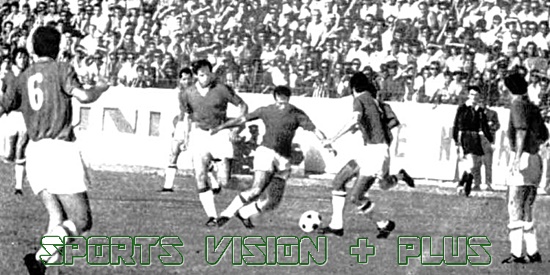
With 18 minutes gone and the contest even, Ajax stung their Albanian opponents. A “17 Nentori” corner was cleared as far as Gani Xhafa 40 yards from the Ajax goal. Xhafa’s attempted forward prod to Ali Mema failed to reach its intended target, intercepted by Ruud Krol whose first-time pass found Piet Keizer just inside the Tirana half. Ahead of him testament to the tenets of totaalvoetbal to which Michels’ side were invested was full-back Wim Suurbier, racing towards the Albanian goal.
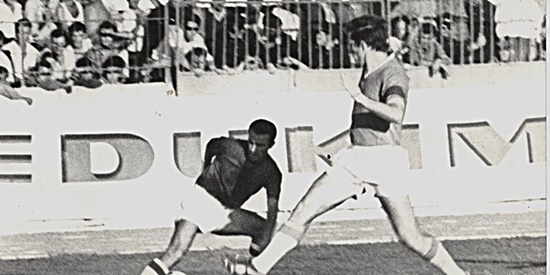
What Keizer produced wasn’t so much a pass, more a moving on of the ball, putting Suurbier one- on-one with opposing keeper Konomi. Taking one touch, Suurbier hammered a low shot past the “17 Nentori” stopper. Only four touches and seven seconds had elapsed since Krol’s intervention; the most speedy and potent of breakaway goals. Ajax led 1-0.
Tirana, stunned by this bolt from the blue, took a while to recover. However, by half-time they had reclaimed some semblance of control, Zhega heading over when handily placed in the box and Stuy clawing an awkward Xhafa cross off the same player’s head moments later. But Ajax, a coiled cobra, still looked to exploit their opponents on the break, stretching “17 Nentori” whenever the Albanians were anything other than totally secure in their passing.
At half-time Myslym Alla rang the changes, replacing the ineffective Niko Xhaçka with the raw, physical presence of Josif Kazanxhi; the substitute immediately making an impression by forcing a fingertip save from Stuy with a towering header, minutes into the second half.
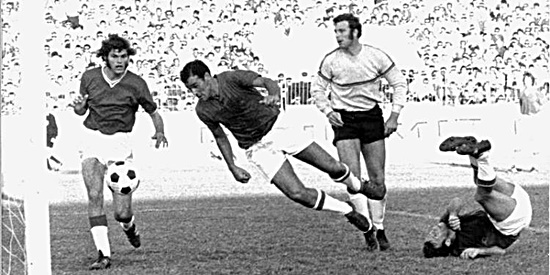
As “17 Nentori” appeared to be gaining the upper hand, Ajax struck again on 58 minutes, Suurbier collecting a short pass from Keizer before delivering a 25-yard right-footed hammer blow into Konomi’s bottom-right corner, the keeper at full stretch. Despite playing exceptionally well, “17 Nentori” found themselves 2-0 behind against dangerous opposition. Suurbier, who managed only 16 goals in over 400 appearances, had scored two in 40 minutes.
But the nature of the response was admirable. Within minutes, Iljaz Çeço received the ball wide-right and bent a wonderful ball into the Ajax area – inside the ‘corridor of uncertainty’ – between the edge of the six-yard box and the penalty spot.
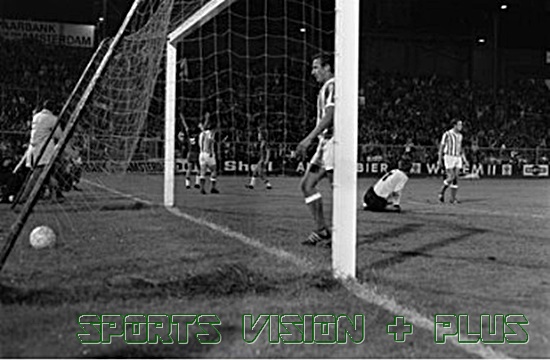
The ball evaded the ruckus of players scampering towards the near post, finding the late run of Josif Kazanxhi who, unmarked at the far post, spectacularly dive-headed Çeço’s bouncing bomb of a cross past Stuy into the Ajax net.
The hosts were back in business.
Within a minute of “17 Nentori” ‘s goal, their keeper Mihallaq Konomi departed the pitch injured and was replaced by youngster Shpetim Habibi. Aside from some rudimentary goalkeeping basics, it was to prove a quiet 29 minutes for the teenager, with the home side now in the ascendency.
Ali Mema had quietly taken a cadenced hold of the middle of the park, providing ammunition for the three-pronged attacking troika of Çeço, Zhega and Kazanxhi. Despite knocks to defensive partners Fatmir Frasheri and Perikli Dhales, which required medical attention, “bardhë e blutë” pressed hard for an equaliser.
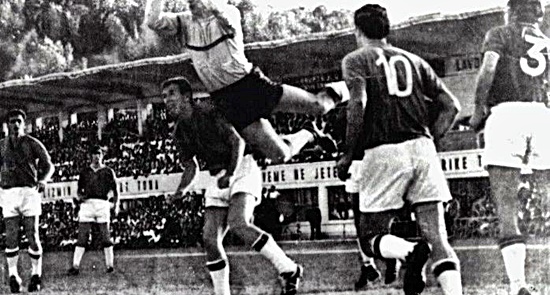
There was little more than five minutes on the clock when Mema’s driving run and cross inside the Ajax area created the necessary havoc that enabled Çeço to toe the ball into the path of Zhega, who crashed in a low finish to level the scores at 2-2.
Ajax wore the appearance of a heavyweight boxer who couldn’t wait for the final bell to ring. When Schiller finally blew the full-time whistle, it was greeted with a collective sigh of relief by the Dutch champions and wild, joyous applause from the home contingent inside the concrete bowl of the Qemal Stafa. Tirona had tested their mettle against the best in Europe and won. Well, almost.
Sporti Popullor, Albania’s football weekly, waxed exultantly over Tirana’s display. It had provided a glue with which to unite the country; a metaphor celebrating the collective strength of Albania when confronted by powerful enemies.
The journalist wrote, ‘When Ajax – the name of a hero in Greek mythology – came to face “17 Nëntori”, they were sure that the victory was in their pocket. Their team came to Tirana with high ideas; coach-general Rinus Michels had brought everyone, the young Cruyff, Hulshoff, Suurbier, Neeskens, etc. But with confidence in their strengths, our footballers can give more.”
For “17 Nentori”, it was the high point of a disastrous season. They lost the return in Amsterdam; sublime, well-constructed, typically Ajax goals from Piet Keizer and Sjaak Swart giving De Godenzonen a 2-0 victory at the Olympisch Stadion.
Domestically, “17 Nentori” descended into freefall, a seventh-place finish in the “Kampionati” unacceptable for a team with such high standards and so rich in talent. They would have to wait until 1981/82 to win a further title, their next crack at the European Cup in 1982/83 seeing them progress past.
Northern Ireland’s champions, Linfield, in the first round before they were pulled from the competition by The Party after they’d been paired with the champions from the ideologically odious Soviet Union, “Dinamo” Tbilisi, in the second round.
There would be notable successes in European competition in the future, but 16 September 1970 saw the end of an era for “17 Nentori”; a five-year window of glory that re-established the club as the best in Albania. But it also hailed the beginning of a new, exciting phase for their victors.
Ajax’s 2-2 draw at the Qemal Stafa proved to be the first rung on an upward spiral of success that “ssaw De Godenzonen” win the next three European Cups, taking their deserved place among the royalty of European football, but it was a journey – on a balmy afternoon in the autumn of 1970 – that began in Albania.
* * *
Immediately after this “strange” match, starting from the result for the Dutch who allowed the recovery of two goals, in the “Ajax” locker room, coach Rinus Michels had a lot to say to his players.
Meanwhile, the bus with the “17 Nentori” players was blocked on the main boulevard, near the editorial office of the newspaper “Zeri i Popullit”, on its way back to the “Donika” hotel, as the road was filled with enthusiastic people who had blocked them. Meanwhile, in the pages of “Sportit Popullor”, we read: “The Amsterdam clan left Tirana without fuss or noise, with their heads down.”
Even at the stadium, the coach refused to answer journalists’ questions, while in Rinas he changed his mind, admitting that he was surprised by the game of ’17 Nëntor’ and had never thought that they would find such an opponent in Tirana. But he did not have the courage to say that he came from Holland with a different opinion and is leaving our country with another one”.
New York, April 2026
___________________
Sports Vision +Plus / Champion`s Hour since 2013

Discover more from Sports Vision +
Subscribe to get the latest posts sent to your email.