The Day the Sky Turned Red: How “Partizani” Orchestrated Europe’s Greatest Shock!

Prologue:
The Midnight Boots and the Silent Coliseum
On the night of September 17, 1968, the streets surrounding the center of Tirana did not sleep. Under the heavy, tense shadows of the city’s main boulevard, the thudding cadence of boots and the ominous mechanics of a massive military parade transformed the pavement directly in front of the Hotel “Dajti” into a theater of psychological friction. Inside the hotel’s walls, the visiting delegation of Italy’s “Torino” watched from their windows in absolute disbelief. The environment was so heavily charged that individual members of the Italian contingent later confessed they genuinely believed war had broken out right outside their rooms. Yet, after surviving that terrifying midnight illusion,the visitors woke up the next morning only to experience a completely different, sporting nightmare on the pitch.
On the afternoon of September 18, 1968, that precise, unyielding domestic discipline was transferred directly onto the grass of the packed “Qemal Stafa” Stadium. Before a capacity crowd of 30,000 spectators, “Partizani” stepped into the European Cup Winners’ Cup to face a club draped in pure continental immortality.
The Italian visitors were the absolute aristocracy of European football, arriving as the reigning Coppa Italia holders and spearheading a core of five elite Italian internationals—including freshly crowned European Champions—alongside France’s world-class forward, Nestor Combin. What unfolded across 90 minutes was a tactical masterpiece that shattered the established continental hierarchy, delivering the country’s first-ever premium victory over a Western footballing empire.
The White Armor: A Masterclass in Tactical Identity
A unique aesthetic twist defined the prelude to the match. Because “Torino” occupied the pitch in their traditional, iconic deep red jerseys, “Partizani” surrendered their familiar home colors. The hosts descended from the tunnel dressed entirely in a clean, reserve white kit sourced from the national team registry, featuring the state emblem positioned squarely on the chest.
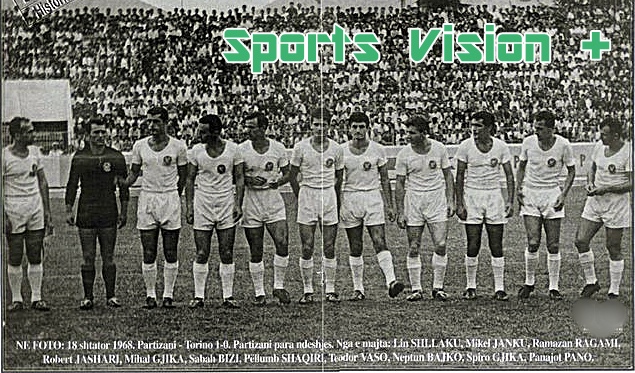
From the opening whistle, the tactical blueprint executed by the mastermind manager—and former legendary striker—Refik Resmja operated with absolute clockwork precision.
To counter the overwhelming physical caliber of the visitors, the technical staff had brilliantly reinforced the lineup by drafting a dynamic 20-year-old universal midfield prodigy, Sabah Bizi, and the cerebral playmaker Ramazan Rragami, alongside the elite defensive wall of Teodor Vaso.
The Midfield Blueprint
The Core: Bizi & Rragami establish a flawless gridlock
The Shield: Spiro Gjika coordinates the backline
The Engine: Lin Shllaku anchors the defensive transitions
The Italian attack, anchored by Giorgio Ferrini and Combin, swarmed forward early, attempting to impose their traditional high-tempo rhythm. However, they ran directly into an impassable “mbrojtje prej çeliku”.
Spiro Gjika operated as a world-class sweeper (libero), executing a series of flawless interceptions, while the stoic captain Lin Shllaku anchored the center circle with supreme serenity. Slowly, the hosts choked the space out of the visitors, shifting the weight of the match entirely into the vertical dimension.

The Protagonist and the 46th-Minute Lightning Strike
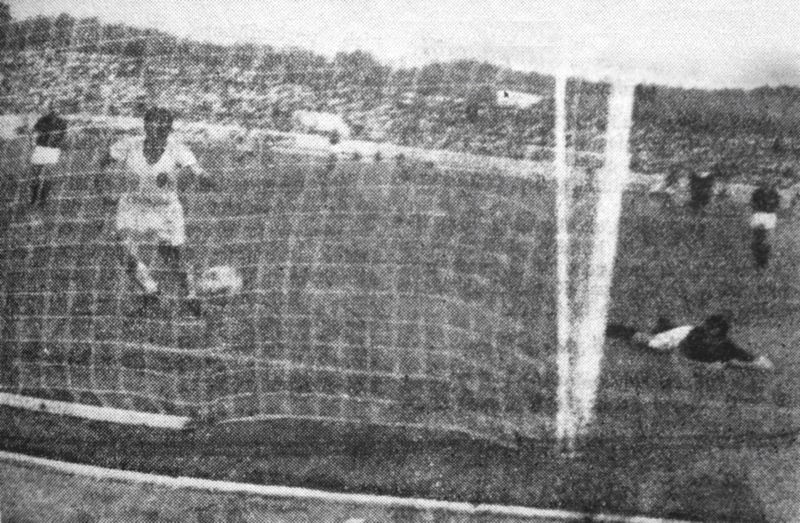
As the second half commenced, the scoreless deadlock was broken in a flash of pure, clinical instinct. In the 46th minute of the match, “Partizani” launched a rapid, fluid passing transition that caught the Italian backline completely out of position. The ball was fed into the path of Pëllumb Shaqiri, who unleased a venomous, precise strike that flew past the Italian international goalkeeper Lido Vieri, rattling the back of the net to send the 30,000 fans into a thunderous frenzy.
The Historic Breakthrough (46th Minute)
———————————–
1–0 ➔ Pëllumb Shaqiri (Strikes immediately after the interval)
Match Status: “Partizani” forces “Torino” into a defensive panic
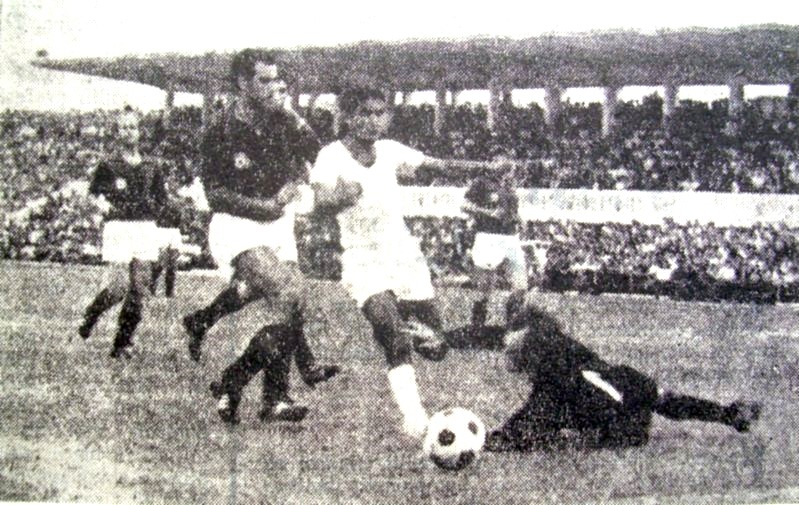
Faced with a 1–0 deficit, “Torino” threw their entire tactical shape out the window, desperately trying to lock down the equalizer. Yet, the pitch reality was entirely dictated by the hosts’ offensive fluidness. The legendary Panajot Pano put on a spectacular individual display, terrorizing the Italian backline all afternoon.
Though Pano uncharacteristically missed two clear, open-net chances from just two meters out—moments that required the iconic forward to briefly recalibrate his nerves—his physical pressure remained completely overwhelming.
The visitors became so utterly obsessed with tracking Pano’s dangerous movements that they completely surrendered their own attacking build-up, allowing the hosts to comfortably dictate the final parameters of the match.
The forward Panajot Pano delivered a paradoxical performance, completely terrorizing the Italian defense with his sublime technical preparation, yet uncharacteristically squandering clear-cut chances right in front of the net, which prompted an Italian journalist to remark that he had never witnessed a footballer so exceptionally prepared, yet simultaneously so profoundly inaccurate, missing opportunities that even a child would easily convert.
The Post-Match Verdict: Fabbri’s Admonition!
The sheer technical maturity displayed by the home side drew immediate, unprompted praise from the opposition dugout. Following the final whistle, the defeated “Torino” manager, Edmondo Fabbri—who had previously commanded the Italian National Team—stood in absolute admiration of the performance, transparently admitting that his team had arrived full of confidence for an easy away victory.
Fabbri noted that the moment the hosts seized the lead, it became completely clear that even a draw was mathematically impossible, praising “Partizani”‘s high-tempo rhythm and their absolute tactical right to win the match. While the return leg in Italy on October 2, 1968, saw the professional heavyweights advance 4–2 on aggregate after a tight 3–1 shootout in Turin, the 180-minute duel proved that the elite structures of the domestic game possessed the raw quality to match any footballing empire in the world.
Technical Match Sheet: The 1968 European Archive
The official match sheets from the continental archives cleanly reconstruct the structural formations, substitutions, and officials for this historic encounter:
Date: September 17, 1968
Venue: National Stadium “Qemal Stafa”, Tirana
Spectators: ~30,000
Referee: Milivoje Gugulović (Yugoslavia)
Team Starting Lineups
“Partizani”: M. Janku (GK), M. Gjika, S. Gjika, T. Vaso, R. Rragami, L. Shllaku, N. Bajko, P. Shaqiri, S. Bizi, P. Pano, R. Jashari (Ciraku 46′)
Coach: Refik Resmja
“Torino”: L. Vieri (GK), F. Poletti, N. Fossati, G. Puia, N. Cereser, e. Bolchi, A. Carelli, (G. Mondonico 30`) G. Ferrini, G. Baisi, G. Moschino, P. Facchin (P. Corni 56′)
Coach: Edmundo Fabbri
© By Pjerin Bicaj
Bryant Park & Bronx, New York
August 10-11, 2026
__________________
Sports Vision +Plus | Champions Hour since 2013

Discover more from Sports Vision +
Subscribe to get the latest posts sent to your email.