The Emerald of Vlorë: Sokol Kushta and the Art of the Crucial Strike!
Prologue:
The Winger of Iron Stamina and Unbroken Pride
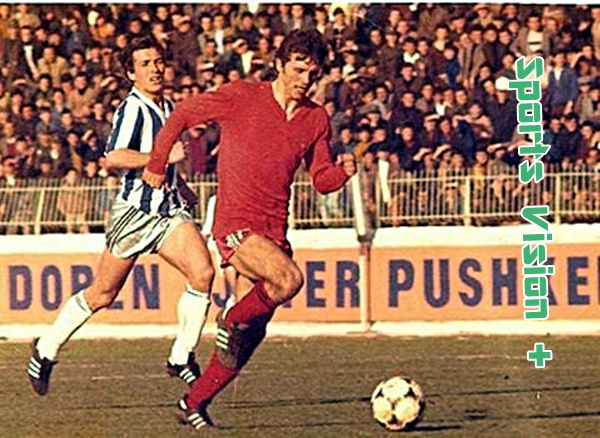
There are clinical goalscorers whose legacy is defined purely by raw domestic volume, accumulating stats against lower-tier entities in padded leagues, and then there are the rare, clutch icons whose boots are reserved exclusively for the grandest coliseums of the sport. In the modern folklore of the national game, the “Flamurtari” Vlorë and “Partizani” forward Sokol Kushta stands as the definitive mirror for all generations that followed in his wake. Across an international career spanning just 34 senior A-caps for “Kombëtarja” (National Team), Kushta smashed an incredible 11 goals—establishing a magnificent, unmatched efficiency ratio while strictly encountering elite continental powerhouses, never padding his record against micro-states.
To witness Kushta in full stride was to observe a masterclass in raw physical dominance and terrifying acceleration. He was a power sprinter who ruthlessly left tracking defenders staring blankly at the number on his back. Yet, his true genius lay in his uncompromised mental fortitude. When a generation of talent moved across the borders in the early 1990s, Kushta achieved highly successful stints in Greece and Cyprus without ever succumbing to lucrative financial packages that demanded he alter his name or citizenship to suit foreign registration quotas.
He played globally as Sokol Kushta, preserving his absolute identity. This is the authentic, third-person chronicle of an outstanding champion—the maestro who brought global giants to their knees and ruled the pitch through absolute will.
The Blueprint of the Asphalt: Street Football Roots
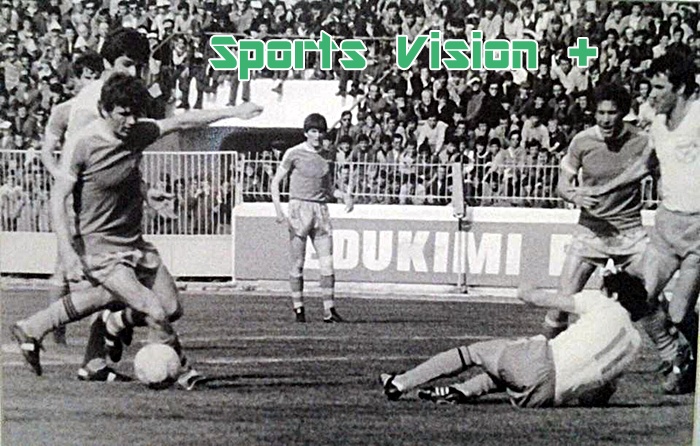
The structural foundation of Kushta’s footballing education was not carved out within the formal confines of specialized academy regimes. Like the legendary Pelé or the mythic Diego Maradona, his initial development was forged in the unadulterated arena of neighborhood street football, kicking a ball across the asphalt of Vlorë. His raw technical parameters quickly separated him from his peers, catching the attention of his first youth coach, Besnik Elbasani, who recruited the 14-year-old directly into the local pioneer ranks as a primary attacking weapon.
By 1978, Kushta was captaining his regional youth selection to the grand final of the National Pioneer Spartakiad. His physical dominance caught the eye of the iconic “Partizani” talent scout Gjergji Thaka, who aggressively pressured the teenager to enlist in the strict military high school in Tirana to secure his long-term draft rights for the Army club. Kushta relocated to the capital, but the rigid military discipline clashed with his independent spirit; after a brief six-week tenure, he abandoned the barracks and returned home to Vlorë, integrating instantly into the youth system of Skënder Elmazi.
The Early Career Matrix
1976 (Age 14): Discovered by Besnik Elbasani in street football
1978 (Age 16): Brief 6-week military draft spell in Tirana
1979 (Age 17): Senior Debut vs. “Vllaznia” Shkodër
The Agron Sulo Breakthrough and the 50-Meter Rocket
By 1979, the teenage winger was dominating the youth league, making his debut against “Vllaznia” Shkodër. His vertical ascent was so impressive that before he even celebrated his 17th birthday, the immortal manager Agron Sulo fast-tracked the rookie directly into the senior “Flamurtari” first-team roster. In a brilliant twist of symmetry, his senior debut also materialized against “Vllaznia” in a 3–1 victory, with Kushta entering the arena for the final 45 minutes.
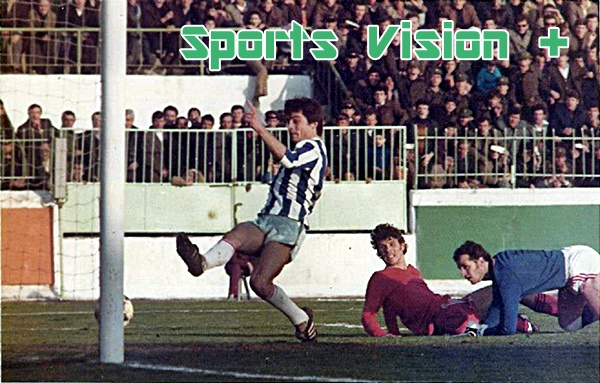
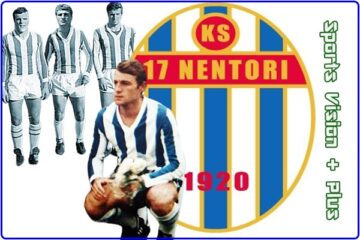
By his second appearance against “17 Nëntori” he struck his first senior goal in a breathless 3–3 thriller alongside Taho and Braho.
Operating alongside established regional masters like Uran Xhafa, Kreshnik Çipi, and the Curri brothers (Leonidha and Spiro), Kushta transformed into a lethal offensive threat.
As a youth, he harbored a deep sporting dream of scoring against his iconic fellow citizen, the legendary goalkeeper Perlat Musta. He realized this ambition in jaw-dropping fashion during a domestic clash against “Partizani”. Spotting Musta slightly off his line, Kushta unleashed a staggering, long-range rocket from a distance that exceeded 50 meters in a straight aerial line. The ball flew into the back of the net—a painful but exhilarating strike that demonstrated his unmatched shooting range.
The Imperial Army: Domination in the Capital
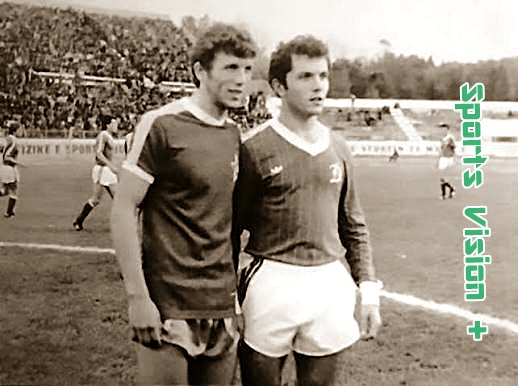
The bureaucratic machinery of the Ministry of Defense never stopped tracking Kushta. In 1983, he formally relocated to the capital to attend the Institute of Physical Culture “Vojo Kushi,” a move that automatically locked him into the senior roster of “Partizani” Tiranë.
This era became a period of absolute structural consolidation and global prestige. While his close friend Sulejman Demollari consistently pressured him to cross the institutional divide and join “Dinamo” Tiranë, Kushta remained fiercely loyal to the Red shirt.
Under the sophisticated tactical guidance of Neptun Bajko and Gjergji Thaka, “Partizani” functioned as an elite footballing university.
Flanked by generational talents like Skënder Gega and Ylli Shehu, Kushta became the spearhead of an offensive storm that consistently packed the “Qemal Stafa” Stadium to its 20,000-capacity limit. Across his imperial tenure with the Army club, Kushta smashed 31 official goals, driving “Partizani” to a National Championship title, a Republic Cup trophy, and highly competitive campaigns on the European stage.
The “Partizani” Production Ledger
Total Goals Scored: 31 Official Silverware Strikes
Domestic Titles: 1 National Championship | 1 Republic Cup
Tactical Directors: Neptun Bajko & Gjergji Thaka
Primary Setting: “Qemal Stafa” Stadium (20,000 Capacity)
The Legend of the Coast: Home Fortresses and European Epics.
Despite his massive success in the capital, the magnetic pull of his hometown was absolute. Upon completing his academic studies, the Minister of Defense, Kiço Mustaqi, personally offered Kushta highly lucrative incentives to remain in Tirana permanently.
Kushta flatly declined, choosing to return to his beloved “Flamurtari” Vlorë. This home turf was a weekly sanctuary for the entire city, drawing thousands of fanatical supporters from neighboring regions like Fier, Lushnja, and Berat, who famously packed the grandstands three to four hours before kick-off.
It was during this legendary era that “Flamurtari” carved its name in gold across continental football folklore, shattering the myth of the “invincible” capital clubs and shaking major Western powers. In the 1987–88 UEFA Cup, they drew the formidable Yugoslav heavyweights, “Partizan” Belgrade. In the away leg in Belgrade, with the match hanging in a razor-thin balance, Kushta executed an absolute masterpiece.

He struck a stunning, bullet away goal that fundamentally broke the Yugoslav defense, securing a historic aggregate victory that caused absolute euphoria across the homeland—prompting ecstatic supporters to fire celebratory volleys into the air, narrowly escaping local holding cells in the process.
Interestingly, during the post-match celebrations at the hotel, even rival fans of Red Star Belgrade arrived to congratulate the squad for dethroning their fierce domestic opponents. Kushta followed this epic feat by scoring an unforgettable goal against the global aristocrats of “Barcelona”, cementing his status as the ultimate big-game hunter of his era.

The Continental Hunt
Belgrade: Away Strike Silences “Partizan”
Spanish Giant: Lethal Execution Against “Barcelona”
Domestic Legacy: 76 Total Goals for “Flamurtari” Vlorë
The Hellenic Pioneer: Unbroken Identity Abroad
Following his 76-goal legacy with “Flamurtari”, the dawn of the 1990s opened the gates to international club transfers. Kushta made history by signing a fully recognized, professional contract with Greek top-flight side Iraklis Thessaloniki, making him the first Albanian footballer to secure a legitimate contract of this standard in Greece. While many migrating players felt compelled to alter their birth names or disguise their citizenship to bypass strict foreign player registration caps, Kushta adamantly refused, proudly taking the field under his real name.
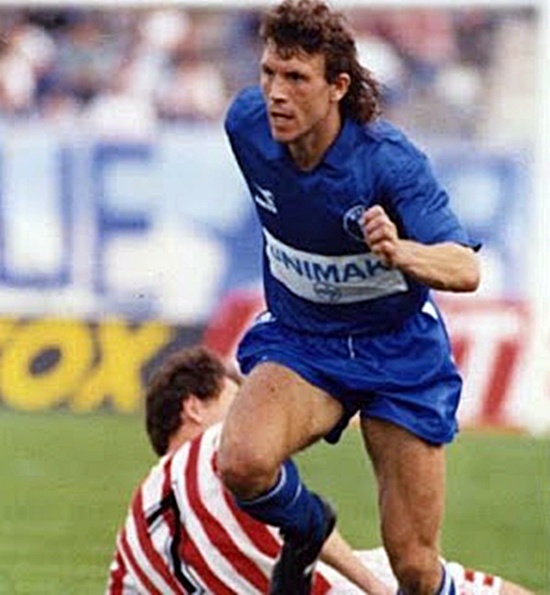
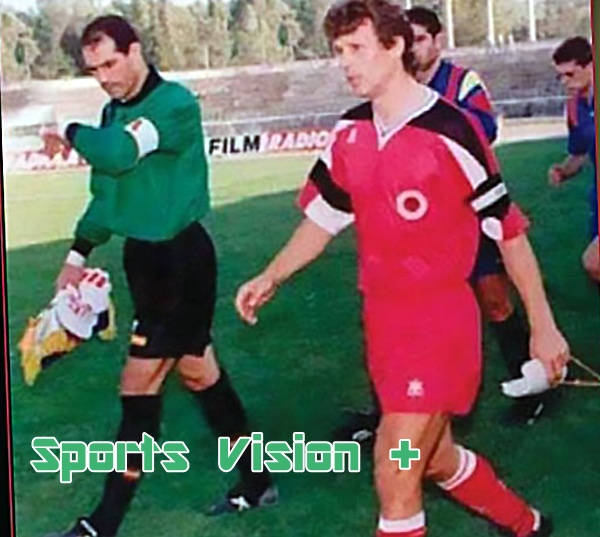
His explosive physical traits adapted seamlessly to foreign turf. During his tenure in the Greek championship, he functioned as a clinical centerpiece, hammering 28 goals before transferring to the picturesque island of Cyprus to lead the attack for Olympiakos Nicosia.
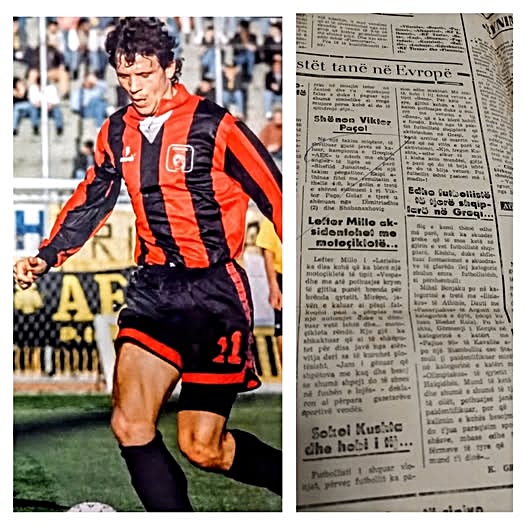
In Cyprus, his technical output remained pristine, accumulating 25 goals over a highly successful three-year campaign, earning the lifelong respect of Greek and Cypriot sports purists who continue to honor his integrity decades later.
The International Paradox: The Pure Efficiency Metric
Sokol Kushta’s record within the international youth echelons remains a statistical marvel. Long before commanding the senior national side, he amassed a spectacular 22 goals for the under-19 national selection. He later spearheaded the under-21 youth side during a historic European Championship campaign, dismantling powerhouse nations like Germany to propel Albania into a historic semi-final placement before narrowly falling to an elite Italian squad.
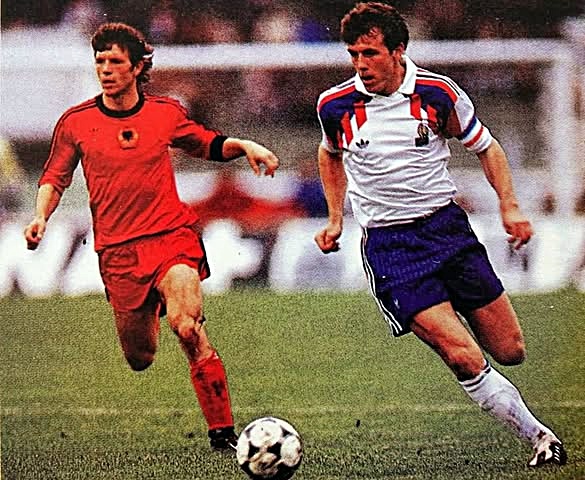
When evaluating his 34 senior appearances for “Kombëtarja”, his 11-goal return illustrates an unmatched efficiency metric in modern history. Unlike modern forwards who pad their statistics against micro-states, Kushta’s era was defined by a brutal, uncompromised calendar.
Due to geopolitical restrictions, friendly matches were virtually non-existent, and the team regularly faced elite giants like Germany or Wales, occasionally skipping qualifiers entirely if drawn against specific nations like Israel. Had his era featured frequent fixtures against lower-ranked modern opponents, his international tally would have comfortably doubled.
The Modern Disconnect: Athletics vs. Entertainment
Years after hanging up his boots, Kushta transitioned into a senior directorial role at “Flamurtari”, navigating their triumphant return to the Superliga. Looking at the contemporary game, the icon notes a massive physical and psychological gulf between his generation of sacrifice and the modern, commercialized athlete.
The data confirms this structural regression. In Kushta’s era, an elite Albanian player recorded an average coverage metric of 8 to 9 kilometers per 90 minutes, compared to the global standard of 10 to 12 kilometers, with 95% of domestic players comfortably passing the federation’s strict physical entry exams. Today, while the global elite cover 14 kilometers, modern domestic players frequently drop to a meager 4 to 5 kilometers in a relaxed environment where strict physical benchmarks have completely vanished.
While modern players treat the pitch as a commercial landscape of financial comfort, Kushta’s generation treated it as a sacred coliseum of pure athletic survival, proving that a striker’s true velocity is measured by power, sprint, and unbroken pride.

© By Pjerin Bicaj
Hudson Yard, New York: August 12, 2026
___________________________
Sports Vision + | Champions Hour in activity since 2013

Discover more from Sports Vision +
Subscribe to get the latest posts sent to your email.