The arrival story of “Kalle” Rummenigge in Serie A!
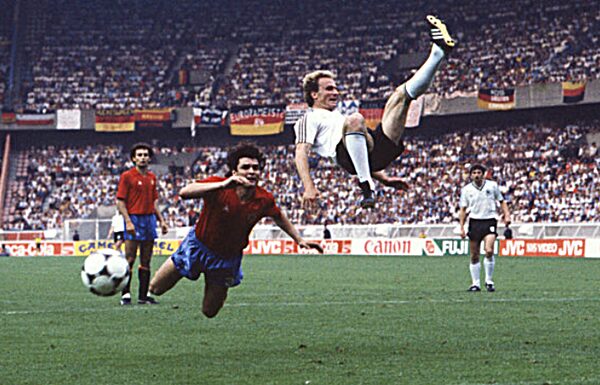
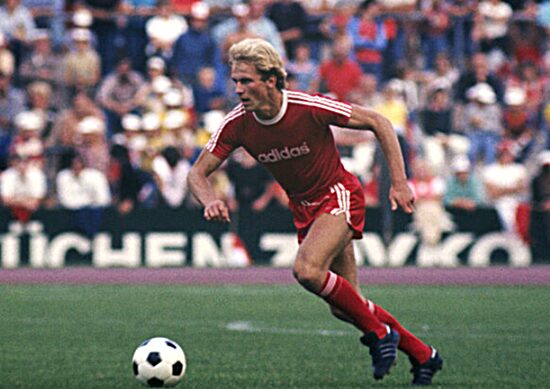
Karl Heinz Rrummenigge in the early 80s was undoubtedly one of the greatest footballers of the era. In 1984, the Italian team “Internazionale” had been watching him for a while to make him part of the “nero-azzurra” team. The German champion, a star of Bayern Munich and the national team, seemed unattainable, however…
It was the first days of February 1984, when in Munich, in the villa of K.H. Rrummenigge, the phone rang. Kalle, nicknamed by his older brother Wolfgang, jumped up. Who could it be ringing? The number was ultra secret, the number was known to barely ten people in the world.
On the other end of the line, an unknown voice introduced himself: Gianni Sartori, 29 years old, owner of “Mondial Sport,” an organization that handled advertising in European stadiums. His office was in Kreuzlingen, in German-speaking Switzerland, and he had been in contact with Inter for some time, often putting his perfect knowledge of German at the disposal of the club from Foro Bonaparte. By chance, he had seen a program on Austrian television about the Rummenigge brothers. One sentence in particular struck him like lightning: “A year ago I would have gladly gone to Italy,” Kalle had declared.
Sartori wasted no time: “I saw the Austrian TV broadcast: come with us to Inter.” Rummenigge’s response was disappointed: “Look, there’s nothing I can do, my club won’t let me go. I’m bound to Bayern by a contract that only expires in 1987.” But Sartori wasn’t the type to give up easily.
On February 2nd, Sartori called the Bayern Munich headquarters directly. After getting past Uli Hoeness’s strict secretary, he managed to speak with the powerful general manager of the Bavarian club. The response was icy: “I’m sorry, Mr. Sartori, under no circumstances will we release Rummenigge.”
Hoeness, the man who had miraculously survived a terrible plane crash, seemed unyielding. When Sartori insisted on a second attempt, the German executive literally told him to go away: “I don’t have time, I’m going on vacation.” But the Italian intermediary had an ace up his sleeve.
Sartori called Rrummenigge and suggested: “Listen, I know this might not be of any use, but do me a favor: talk to Sandro Mazzola for a moment, he’d like to say hello.” At the name Mazzola, Karl-Heinz almost fainted. As a boy, he had always admired two players: Pelé and Sandro Mazzola. Yet, despite his proverbial politeness, he became stern: “I’m sorry, I don’t see the reason to talk to Mr. Mazzola. Thank you very much and goodbye.”
Two hours later, Rummenigge was sitting in his “Stube,” the coziest corner of his Bavarian home, with his sons Roman and André and his wife Martina, who was preparing dinner. The second channel of ZDF was broadcasting the news when the phone rang again.
A harsh voice, speaking imperfect English: “I am Sandro Mazzola: is it possible that you come to us?” Rummenigge, excited but cautious, replied: “In my opinion it is possible, but it is not my decision.”
Mazzola promised: “Even if there’s only a small chance, we’ll exploit it in every way.” And he kept his word. On February 15th, together with Sartori, he managed to track down Hoeness on vacation in Lenzerheide, a ski resort near Zurich. It was the day Rummenigge was playing with the German national team against Bulgaria in Varna, on the Black Sea. A pointless match, in which Kalle couldn’t concentrate, his mind already focused on Italy.
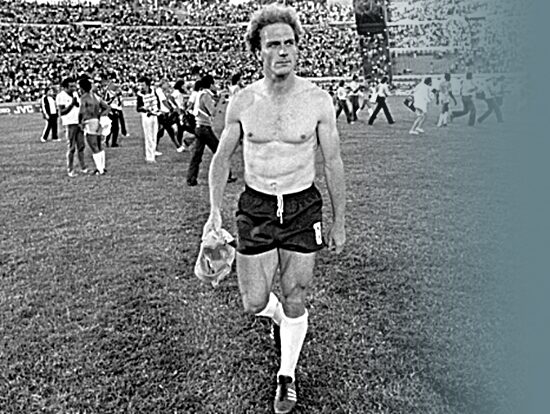
After that unsuccessful trip, Sartori called Rummenigge at the Airport Hotel in Frankfurt: “Red light.” At that moment, Karl-Heinz decided: “It doesn’t matter: your offer interests me now.”
Tuesday, February 21st, 9:15 PM. Eicheleite Street was silent under the snow that covered the garden of Rummenigge’s villa in Grünwald, an exclusive district of Munich. A taxi stopped in front of number 4. Kalle recognized Mazzola accompanied by Sartori.
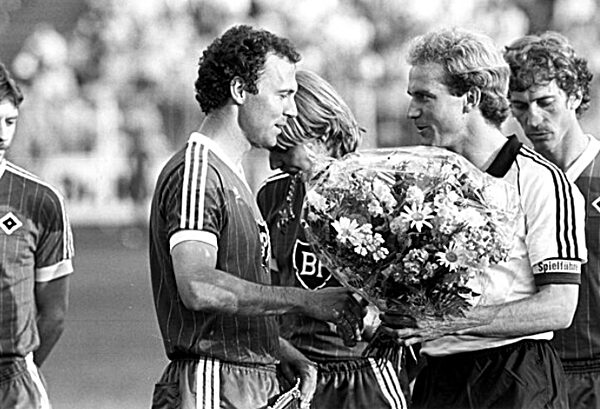
“Good evening,” Rummenigge greeted them in his still somewhat rusty Italian. The guests brought gifts: a bouquet of flowers and a gold chain with an “M” for Martina, and Inter Milan tracksuits for the couple. The house was elegant but not ostentatious: 190 square meters, seven rooms, all white with dark wood finishes. On the walls were traditional German paintings and works by the naive painter Petra Moli, and on the floors, fine carpets bought during trips to the East and South America.
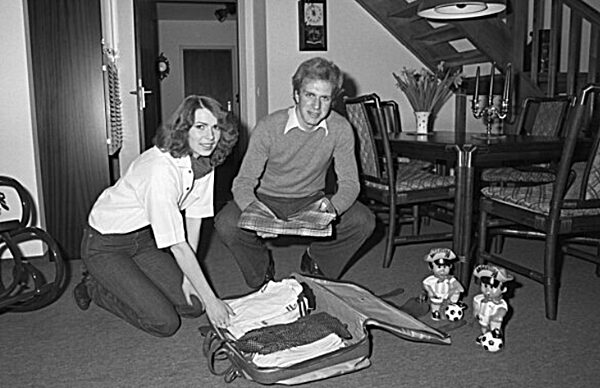
Martina had prepared a special dinner: no Bavarian cuisine, but refined French dishes with shrimp and salmon, accompanied by Kalle’s favorite wine: “Baron de L.” After dinner, everyone gathered in the charming patio in front of the outdoor fireplace, with the crackling fire and a good cognac.
The conversation lasted two and a half hours, almost entirely in English, with Sartori translating when necessary. They talked a lot about Hansi Müller and his difficult integration at Inter. Kalle was worried, Mazzola explained. Then the decisive moment arrived: they talked about money. Only fifteen minutes to finalize everything.
As he would later tell “Bild,” Rummenigge recalled: “Mazzola offered me the same conditions that Sartori had mentioned since our first meeting. I certainly didn’t try to haggle: the offer was exceptional.” Six billion lire for Bayern, one billion and 200 million for three years for the player. “Turnkey,” without extras: no waiters, bodyguards, or babysitters.
Before saying goodbye, Rummenigge reiterated that negotiations with Bayern would be difficult. But Mazzola smiled knowingly, confident of himself. It was a sleepless night for Kalle. “Martina, what do you think?” he repeatedly asked his wife. Her answer was significant: “Sandro made a fantastic impression on me.”
Two days later, Karl-Heinz spoke with Hoeness: “Uli, you know that my relationship with Bayern isn’t like that of an employee with his employer: the idea of moving to Italy is now firmly in my head. And it’s getting stronger every day.” Uli responded with a pat on the shoulder: “Do me a favor, wait another month, then we’ll talk about it again.”
But the “Bild” newspaper had already revealed everything: “Rummenigge is going to Italy.” Initially, Fiorentina was considered the favorite – the Viola had been courting him since July 1982 – but Inter’s offer was superior.
On Sunday, March 4th, Willi Hoffmann, the burly president of Bayern Munich, received Rummenigge at his villa in Bogenhausen, the “Beverly Hills” of Munich. With his booming voice and a frown on his face, hardened by his salt-and-pepper beard, he announced his surrender: “There’s no point in fighting anymore. We certainly can’t keep you by force, given the offer you’ve received. Good luck.”
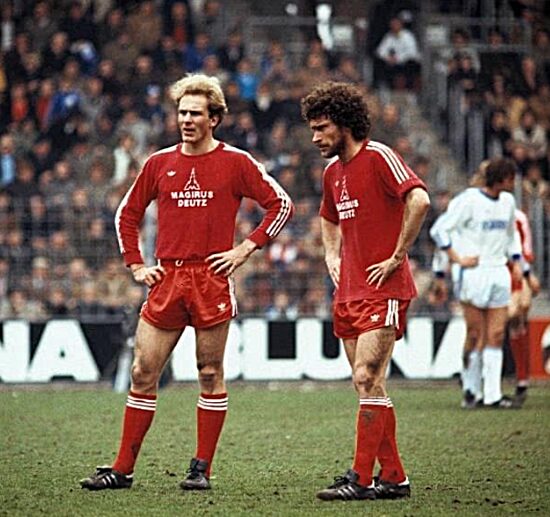
Kalle also consulted his old friend Paul Breitner. During a lunch of sausages at the Munich trade fair, he asked for advice. Paul, who had experienced playing in Spain with Real Madrid, was blunt: “If you really want to, well, 28 is the right age.”
Even his teammates understood. Michael, the younger brother who had grown up in the shadow of the champion, encouraged him: “Go, Kalle, go; if I were you, I’d go right away. Don’t worry about me, I can manage on my own now.”
Tuesday, March 6th, Rabat. During Bayern’s friendly match against Kuneitra in front of 50,000 spectators, Rummenigge finally played freely. A splendid goal, action after action, fully involved in the game. In the center of the field, during the second half, he finally felt like himself again. But above all, he felt like an Inter player.
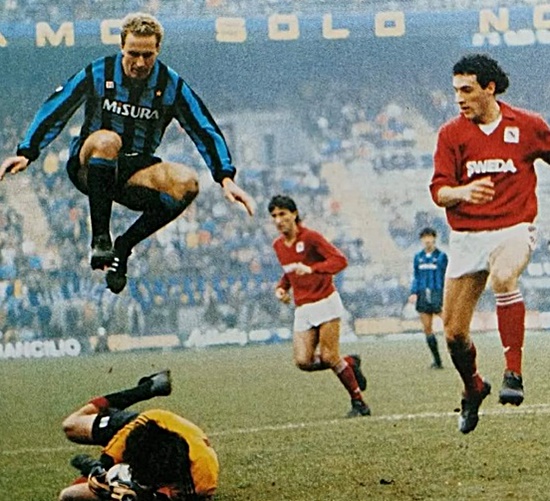
On the return flight, at 10,000 meters altitude, he saw the Rock of Gibraltar from the window and it seemed like a pointing finger, a warning sign. His last doubts disappeared: it was now or never.
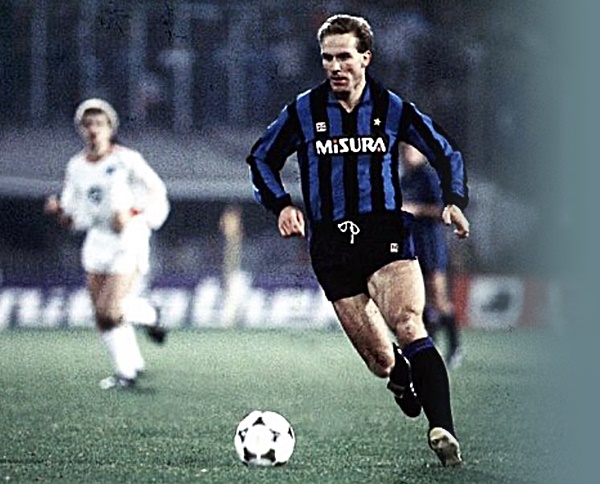
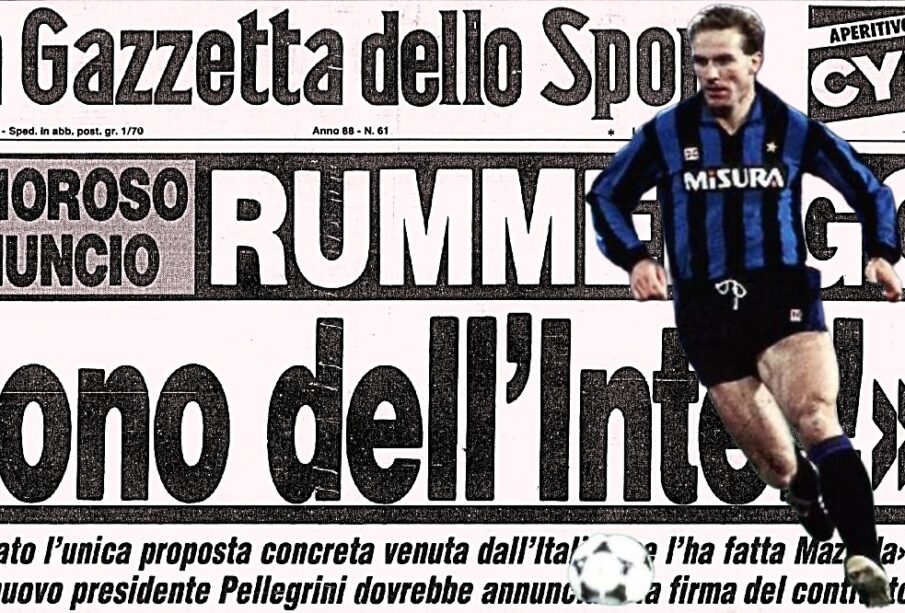
On Sunday, March 11th, he made a public confession to a journalist in Munich. A few minutes earlier, he had called Jupp Derwall, the national team coach. On Monday, March 12th, in Italy, “La Gazzetta dello Sport” published a historic nine-column headline: “Rummenigge: I’m joining Inter.”
_______________
Sports Vision + Plus / Champions Hour since 2013

Discover more from Sports Vision +
Subscribe to get the latest posts sent to your email.