
The Unlikely Whistleblower: The Story of Tef Prela!

When looking at the history of Albanian football in the 1980s, few figures stand out with a background as distinct as Tef Prela. Born into a highly cultured and traditional family from Shkodra, Prela’s life seemed destined for anything but the chaotic pitches of the domestic top flight. His father, Tom, was a well-known economist, while his mother, Agetina, was a highly educated woman whose early academic achievements bore the historic signatures of prominent local cultural and religious figures.
As a youth, Prela’s sporting universe was confined entirely to table tennis. Between 1956 and 1960, he dominated the sport at his high school, winning four consecutive championships, followed by another four-year streak as a university champion. He routinely competed at national tournaments against the era’s top players. He possessed a deep affinity for music, literature, and art, but harbored no real interest in football—let alone officiating it.
After finishing university, Prela settled into life as a Russian language teacher, split across several schools on the outskirts of Shkodra. Then, a stroke of pure chance permanently altered his trajectory.
Tef Prela’s Transition:
===============================================
Table Tennis Champion ➔ Russian Teacher ➔ First Division Referee
(1956–1960) (Mid-1960s) (1968)
Taking the Whistle
In the mid-1960s, a prominent local international referee named Tahir Kalaci happened to teach at the same school as Prela’s father. Recognizing something in the young teacher, Kalaci approached Tom Prela with an unexpected proposition: he wanted to recruit Tef into Shkodra’s refereeing ranks.
The idea caught on, and Prela quickly discovered a natural aptitude for the job. By 1968, he had risen through the ranks to become an official First Division referee. Exactly a decade later, in 1978, his younger brother Leonard—a wood engineering graduate—followed him into the profession.
For years, the Prela brothers became a staple of the league. It was common for both to be handed top-flight matches in the same week, and they frequently shared the pitch as a team: Tef commanding the center circle with the main whistle, and Leonard monitoring the touchline as his assistant.
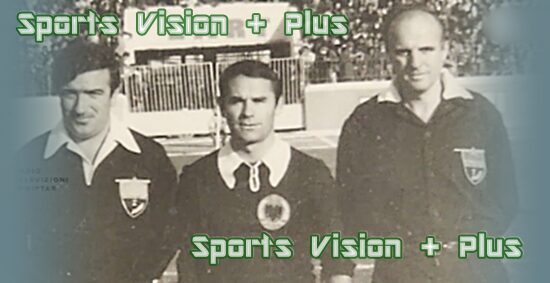
The Prela Officiating Dynasty (1978–1988)
—————————————-
Main Referee: Tef Prela (Language Teacher)
Linesman: Leonard Prela (Wood Engineer)
Extreme Precision on the Pitch
Prela quickly earned a reputation for an unyielding, almost extreme devotion to fair play and rule enforcement, regardless of how intense the atmosphere became.
Two historic matches in the mid-1980s cemented this legacy:
• The Four-Penalty Drama (December 2, 1984):
Prela traveled to Korça—a city close to his heart, as he had married Tatjana Sherko, the daughter of the legendary international national team goalkeeper Klani Marjanit —to referee a tense clash between Skënderbeu and Naftëtari. It turned into a historic afternoon. Prela awarded four penalties during the match, becoming only the second referee in Albanian history to do so. In stoppage time, with Skënderbeu hanging onto a 2–1 lead, Prela pointed to the spot for the fourth time, giving Naftëtari a lifeline.
What followed was unprecedented: the Naftëtari players, frozen by the intense pressure, completely refused to take the kick. After minutes of waiting on the pitch, Prela walked over to the opposition dugout, demanding the coach select a shooter. The desperate manager looked down his bench and ordered a substitute—who was not even a native of the town—to step onto the pitch and take it. The player missed, and Skënderbeu claimed the 2–1 victory.
• The Cërrik Security Crisis (1986):
Lower-league promotion finals were notoriously volatile, to the point that five different referees from Tirana flatly refused to handle a high-stakes, toxic return leg between the local Cërrik side and Bilishti. The football federation turned to Prela as an emergency appointment.Upon arriving at the stadium, Prela realized why his colleagues had backed out: the pitch was heavily fortified by security forces using border patrol guard dogs.
Minutes before kickoff, an unidentified individual slipped into the locker rooms and attempted to bribe linesman Skënder Bilali. Bilali and Prela immediately shut down the attempt, completely unbothered by the intimidation. True to Prela’s reputation for absolute honesty, he walked onto the field, established strict order, and completed the volatile match without a single incident.
His firm hand was tested again during a famously chaotic 1987 Albanian Cup semifinal at the Qemal Stafa Stadium. With Flamurtari defending a narrow 1–0 lead in a highly aggressive, high-stakes match, Prela maintained absolute control by ruthlessly brandishing three red cards and five yellow cards to restore sporting order.
The Shadow of the Anonymous Letters
Behind Tef Prela’s authoritative presence on the pitch lay a frustrating reality of the era: the constant threat of anonymous letters. In a highly competitive environment, unseen detractors frequently weaponized malicious notes sent directly to officials to stall the careers of prominent figures.
The most devastating blow occurred at the Qemal Stafa Stadium in Tirana ahead of a major international friendly between Albania and the People’s Republic of China. With both squads prepared in the locker rooms, a stranger walked in and delivered a psychological shock: local security forces from Shkodra had issued an abrupt order declaring Prela unfit to referee such a high-profile game.
Disoriented and deeply hurt, Prela quietly changed out of his kit. As Met Petrela stepped in to take his place as linesman, Prela walked alone to the Tirana train station to head home, dreading how he would explain this mysterious dismissal to his colleagues and students at school.
A humorous coincidence briefly shielded him. A fellow teacher, having watched the match on television, remarked the next day that he heard Prela’s name called but the linesman on screen looked different. Because both surnames ended in the same phonetics (“…rela”), the colleague simply assumed it was Prela. It took six agonizing months of quiet investigation before Prela finally uncovered the truth: an anonymous letter, written to systematically sabotage his career, had pulled him from the match.
The same malicious tactics stripped him of his dream to earn an official FIFA badge. Three separate times, Prela was proposed for international FIFA status, and three times it was blocked. In 1987, he was officially selected to travel to Romania as a linesman for a prestigious European fixture. The crew was announced over the stadium loudspeakers during a domestic game in Durrës.
Hearing his name on the radio, a group of veterans from Shkodra immediately dispatched an anonymous complaint to the football federation. The following morning, a devastated official called Prela into the office with heartbreaking news: “Tef, you aren’t flying to Romania.”
Though he eventually fulfilled his dream years later by officiating youth Under-18 international matches in Turkey and San Marino, he was continually denied the global badge he deserved at home.
The Bureaucratic Roadblocks
——————————————————-
• FIFA Badge Proposals: Nominated 3 times; blocked 3 times
• The Romania Incident: Pulled from international duty after radio announcement
• International Outings: Later handled U-18 fixtures in Turkey & San Marino
Vindication via the Press
On rare occasions, the national press stepped in to validate Prela’s sharp eye. During the high-stakes 1984 Albanian Cup Final between 17 Nëntori and Flamurtari, Prela served as a linesman alongside main referee Arsen Hoxha. In the dying minutes of a tense 11 stalemate, the Tirana side launched a furious attack, and their star forward, Kola, slotted the ball into the net. Prela immediately raised his flag, signaling a clear offside position.
Hoxha, however, overruled his assistant, declaring the goal valid. The pitch erupted into fierce protests, delaying the restart for several minutes. The goal stood, hand-delivering the trophy to the capital club, while the furious Vlora players outright boycotted the closing medal ceremony. While the federation remained silent amid the media storm, prominent sports journalist Albert Shala published a definitive column in the major newspaper Zëri i Popullit.
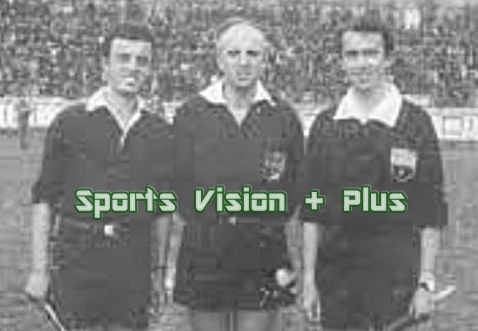
Titled “Television Technology and the Referee’s Decision,”
Shala used a meticulous technical breakdown of the play to prove that Prela’s offside call was entirely correct and that the championship-winning goal should have been disallowed.
Rewriting the Unwritten Rules
Prela was known for his sharp wit and inventive solutions when matches threatened to spiral out of control. During a volatile capital derby between Dinamo and 17 Nëntori, the referee awarded a free kick to Tirana just outside the penalty box. Fearing the lethal accuracy of free-kick specialist Sulejman Mema, the Dinamo wall continuously encroached, rushing forward the moment Mema took his run-up.
After several failed attempts to maintain the mandatory 9.15-meter distance, Prela executed a completely unprecedented tactic. He physically set the defensive wall in its place, scooped up the match ball in his hands, and began pacing out the 9.15 meters in the opposite direction to set the spot for the kick. While effective, the unorthodox maneuver drew furious protests from Mema, who was promptly shown a red card for dissent.
A Career of Milestones and Records
Prela’s top-flight career was a testament to longevity. He made his debut on February 18, 1977, as a relatively unknown 35-year-old, taking charge of a 1–1 draw between Shkëndija and Lokomotiva at the Dinamo Stadium. He would go on to blow his final whistle fourteen years later in March 1991, serving as an experienced assistant to a young Alfred Pavaci.
Over a 25-year career, Prela logged over 400 total matches, with exactly 200 of them served in the First Division as both a head official and linesman. His absolute physical peak arrived during the 1987–88 season, setting a record by officiating nine consecutive top-flight matches—a grueling feat matched only by elite peers Arsen Hoxha and Dhori Prifti.
Tef Prela’s Career Statistics
===================================================
Total Career Longevity: 25 Years (1968–1992)
Top-Flight Span: 14 Years (1977–1991)
Total Matches Officiated: 400+ Games
First Division Clean Sheet:200 Games (Referee & Assistant)
The Streak Record: 9 Consecutive First Division Matches (’87–’88)
He was widely respected as a strict “penalty-giver,” modeling his style heavily on the highly clinical Italian Serie A officials whose matches were widely watched across Albania at the time.
Over his career, he confidently pointed to the penalty spot over 50 times—awarding 29 to home teams and 21 to brave away sides.
Prela also holds a distinct domestic record: he is the only official in Albanian football history to be selected to referee five separate major national cup or promotional finals. During his first final, a tense lower-tier battle between Lokomotiva and Labinoti, he famously silenced a wave of furious player protests by boldly declaring: “Not even John Taylor could have refereed this match better than Tahir Kalaci did!”—paying ultimate respect to his mentor by invoking the name of the legendary English referee who commanded the 1974 World Cup Final.
Prela’s Historic Five Finals:
——————————————————————
1. Lokomotiva vs. Labinoti (As Assistant to Tahir Kalaci)
2. 17 Nëntori vs. Dinamo (As Assistant to M. Lara)
3. 17 Nëntori vs. Dinamo (As Assistant to Dh. Prifti)
4. 17 Nëntori vs. Flamurtari (As Assistant to P. Kotherja)
5. 17 Nëntori vs. Flamurtari (As Assistant to Arsen Hoxha)
The American Reinvention
In 1992, Prela officially stepped away from the domestic pitch, serving briefly as a match observer before making the life-altering decision to relocate his family to the United States in 1996. Settling in New York with his wife and two sons, his love for the whistle refused to fade.
The United States Record Comeback
==================================================
Age 54 (1998): Passes NY Referee Testing ➔ Earns “State Referee” Badge
Age 56 (2000): Sets Age Record for International-Equivalent Licensure
At the age of 54, Prela walked into the New York Referees Association, passed a rigorous testing phase overseen by a veteran Italian director, and was immediately cleared to referee high-level amateur and collegiate soccer across New York and New Jersey.
In 1997, he accomplished what his own homeland had denied him: he officially earned his “State Referee” license, a prestigious tier equivalent to an international badge.
By actively officiating high-intensity matches until the age of 56, Prela set a rare age record, demonstrating a career with truly no expiration date. Today, he remains a symbol of energy, quick wit, and deep family values in New York, frequently meeting up with his old contemporaries Arsen Hoxha and Dhori Prifti—a legendary trio of whistles always ready to step out and command a veteran’s match.
© By Pjerin Bj
Bronx New York – July 16, 2026
_______________
Sports Vision + Plus | The Champions Hour

Discover more from Sports Vision +
Subscribe to get the latest posts sent to your email.


