The Leaden Sky and the Velvet Touch: The Eternal Odyssey of Teodor Vaso!
There are corners of the world where history is not merely written in textbooks, but carved into the cobblestones and carried upon the mountain breeze. Korça is such a place—a sanctuary of culture, an outpost of quiet aristocracy tucked away in the Albanian highlands. For decades, to travel to Korça was a privilege; to step onto its pitch was a sacred footballing pilgrimage.
In the spring of 2014, a quiet reunion took place in this timeless city. Two old warriors of the pitch, greyed by time but illuminated by memory, sat across from one another. Dhimitraq Shoni had traveled to meet an epochal ghost of his youth, a man whose name once echoed through the grandstands of Europe but who now sat in the soft, fading light of relative obscurity: Teodor Vaso.
As they spoke, the modern world, with its transactional coldness, dissolved. They were pulled backward into a golden, romantic age—an era where football was played with a fierce, sacrificial purity.
The Architecture of a Legend
======================================================
Technique – The fluid grace to navigate the pitch
Symmetry – A rare combination of intelligence and speed
Sacrifice – “I started with my head bowed toward the grass”
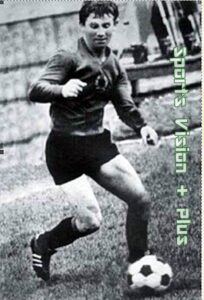 The Bowed Head and the Sacred Turf
“I began my journey with my head bowed down,” Vaso began, his voice a soft rustle, yet heavy with the weight of bygone battles. “I knew from the very first whistle that this game demanded everything. It required a complete surrender to sweat, toil, and monumental sacrifice.”
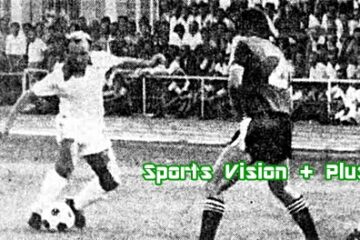
Vaso did not inherit greatness; he forged it. His story did not begin under stadium floodlights, but rather during the stark, disciplined student exhibitions of the technical high schools in Tirana. There, a young boy from the provinces caught the eyes of the capital’s finest tacticians. He possessed a rare, magnetic style—a mixture of unyielding defensive steel, boundless mobility, and an elite reading of the game.
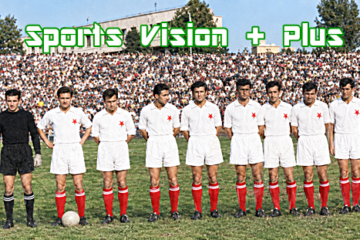
Soon, the great institutional powerhouses of the state came calling. For a young, uninitiated boy, the pressure was immense. Yet, Vaso’s destiny was clear. He would go on to don the heavy jerseys of both Dinamo and Partizani, navigating the intense rivalries of the Albanian top flight with the calm precision of a seasoned general.
The Pantheon of Three Kings
When asked about the titans who walked the earth alongside him, lighting up the packed, breathing coliseums of the nation, Vaso’s eyes flashed with a sudden, poetic brilliance.
“In those days, class was scattered across every field,” Vaso murmured. “But above the rest stood three undisputed kings.”
The Albanian Football Pantheon (Through the Eyes of Vaso)
——————————————————————
The Sovereign of the Realm: Loro Boriçi (The Complete Architect)
The Magician of the Ball: Panajot Pano (The Born Phenomenon)
The Monarch of the Net: Refik Resmja (The Unforgiving Striker)
Loro Boriçi: “He was the complete sovereign,” Vaso explained. “A magnificent player who transformed into an even more titanic manager. To this day, his dual legacy remains completely unapproachable.”
• Panajot Pano: “A rare, celestial phenomenon. It did not matter if we were playing in Tirana or under the hostile gaze of a foreign capital—Pano would paralyze defenders. His sudden bursts of pace, his breathtaking feints, and his thunderbolt strikes were works of pure, spontaneous art.”
• Refik Resmja: “The king of the net. He was our Gerd Müller. Resmja possessed a terrifying, instinctual scent for the goal. He simply could not leave a pitch without breaking the opponent’s heart.”
The Day the Giants Stumbled
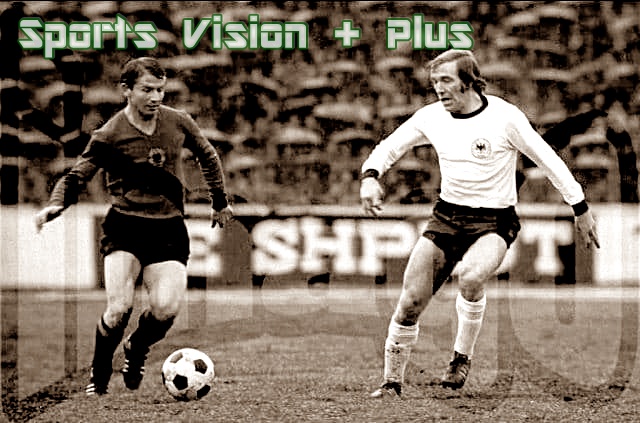
The conversation shifted naturally to international waters—to those immortal afternoons when the Red and Blacks stepped onto the European stage. Vaso’s mind drifted immediately to the historic, earth-shattering year of 1967, and a legendary West Germany team captained by Franz Beckenbauer.
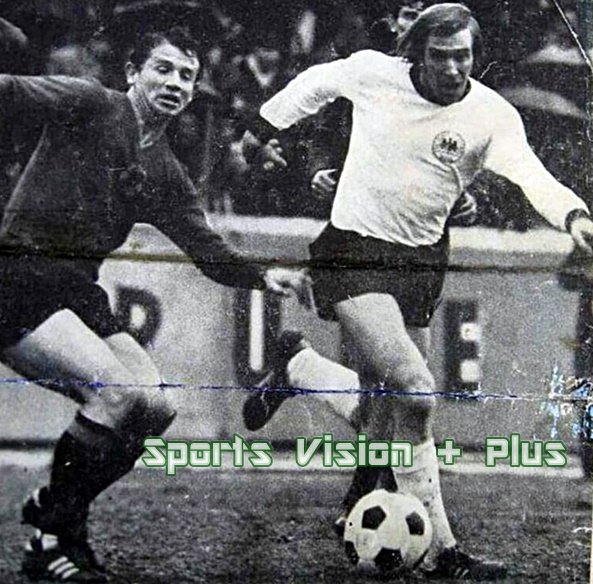
On April 8, 1967, the Albanians were humbled in Dortmund, suffering a heavy 6–0 defeat. The world assumed the return leg in Tirana on December 17 would be a mere formality for the Germans, who were heavily favored to march toward the European Championship.
Instead, they walked into an ambush of tactical discipline.
The Albanians fought like men possessed, grinding out a historic, legendary 0–0 draw. That single afternoon under the Tirana sky completely altered European football history. The single point stripped West Germany of their ticket to the 1968 finals in Italy, allowing Yugoslavia to advance from the group. The global press erupted, placing the heroic Albanian defense at the epicenter of international sports pages.
The Alternate Realities of the Press
==============================================
Belgrade Banners (1967) – Predicted a 10–0 destruction by Džajić
The Pitch Reality – Vaso completely neutralizes Dragan Džajić
The Foreign Press – Yugoslav papers praise Vaso’s masterclass
The Domestic Press – Silence (dictated by cold political relations)
Istanbul Clash (1971) – Albania falls 2–1 in front of 50,000 fans
‘Hürriyet’ Newspaper – Awards Vaso a flawless 4-Star rating
The Domestic Press – Complete media blackout at home
Triumphs in the Shadows
Yet, for Vaso, the sweetest victories were often accompanied by a bitter, silent isolation at home.
In November 1967, the national team traveled to Belgrade to face a formidable Yugoslavia. The host city was draped in massive, intimidating banners. A giant graphic of a goal filled with ten footballs lined the streets and the stadium, boldly predicting a 10–0 annihilation, with Yugoslav icon Dragan Džajić tipped to score four times.
On the pitch, Vaso was handed the impossible task of marking Džajić. Through sheer physical defiance and tactical intelligence, Vaso completely suffocated the superstar, holding him scoreless all afternoon. While the Yugoslav sports press spent the following week praising the brilliant Albanian defender who had neutralized their hero, the sole domestic sports paper back in Tirana chose to print a different story.
They claimed Džajić had merely suffered from “poor form,” completely erasing Vaso’s masterclass from the official record due to the chilly geopolitical relations between the nations’ leaderships.
History repeated itself in October 1971. Following a resounding 3–0 Albanian victory over Turkey in Tirana, the return leg at the intimidating, 50,000-seat Mitat Pasha Stadium in Istanbul saw the Turks claim a narrow 2–1 win.
Despite the loss, Vaso’s performance as a deep-lying playmaker was so masterful that Turkey’s largest newspaper, Hürriyet, awarded him a flawless, rare 4-star rating, while icons like Astrit Ziu and Sabah Bizi received three. Yet, back home in Tirana, the sports ministry and state media enforced a total media blackout, refusing to publish a single word about Vaso’s continental validation.
Directed by the Castas
“Football in those days,” Vaso said, his voice tinged with the quiet sorrow of a man who looked back at a beautiful game directed by unseen hands, “was tightly steered by military and bureaucratic factions.”
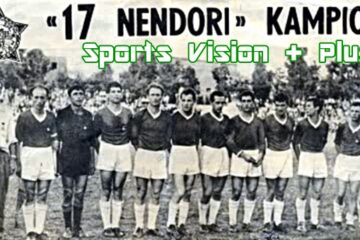
The pure sporting theater was constantly pressured by powerful state departments, each demanding their flagship clubs—Partizani, Dinamo, and 17 Nëntori—win at all costs. Men who had never laced a pair of boots held the remote controls to the league, manipulating schedules and careers from behind closed doors.
Yet, as the shadows lengthened over Korça, Dhimitraq Shoni looked at the old man sitting before him. The state departments had faded into the dust of history, their bureaucratic decrees long forgotten. But Teodor Vaso remained—undefeated, a noble prince of a golden age, whose elegance on the pitch was forever etched into the folklore of a grateful nation.
© By Pjerin Bj
Bronx New York – July 16, 2026
______________________
Sports Vision +Plus | Champions Hour in activity since 2013

Discover more from Sports Vision +
Subscribe to get the latest posts sent to your email.