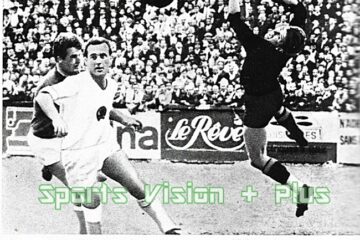
Feyenoord–FK Partizan Albania, the match involving Artur Lekbello and Klootwijk, remains a life lesson in the Football of that era.
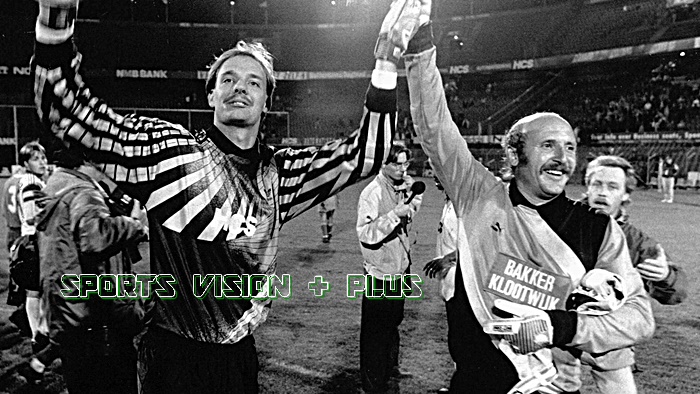
What stuck with me most from that match? The goalkeeper: Artur Lekbello. It was as if he had been plucked right off the street just moments before and asked if he wouldn’t mind putting on a goalkeeper’s kit. He was the kind of person you would never, in a million years, expect to be a goalkeeper when you saw him in his everyday clothes. Yet, he kept shots out in the most insane fashion. The crowd at De Kuip absolutely fell in love with him.”
Peter Wosz former “Feyenoord” Player
PROLOGUE
In the twilight of Dutch dominance, Feyenoord, the giants of Rotterdam, clashed with FK Partizani, the plid fold of Albania. The year was 1991, and the stage was the Cup Winners’ Cup, second leg. The first match in Tirana had ended 0-0, setting the stakes high.
FK Partizan, the Albanian club, was about to show they’re big in heart. Against Feyenoord’s fury and pressing, they held their ground like a fortress. Goalkeeper Lekbello was a wall, his defenders a shield. Ocelli, Shulku, and Berberi – they fought like lions.
The Dutch poured on the pressure, but Partizani resisted, their resolve unbroken. It seemed they’d force extra time, maybe penalties….. But fate had other plans. A late goal sealed their fate, 1-0 Feyenoord.
Yet in defeat, Partizani won hearts. They showed that in Albania, pride and passion can level the playing field. The “Small” club had taken on a European giant and almost came out on top. Lekbello and co. – their resistance will be remembered.
1.
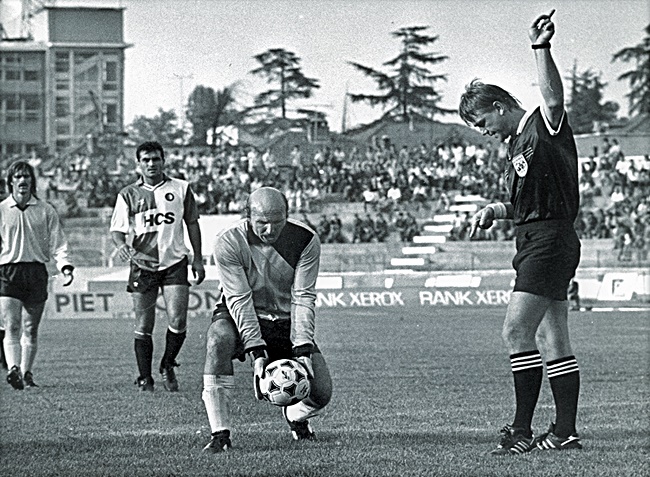
FK Partizan of Albania is the winner of the “Republic Cup” in 1991 and the draw made in the hot August of this year for the Cup Winners’ Cup puts the Albanian team against the Dutch football school, one of the three best teams in this country, “Feyenoord” of Rotterdam, also a well-known team in European rank.
Although that year the Dutch club was not in good shape, its name still attracted the attention of the Albanian public.
However, in the ranks of this club there were 5-6 players from the Dutch representative team, goalkeeper Ed De Goej, the one who would replace the legendary goalkeeper right after the 1990, the European champion, Hansi Van Breukelen, defender John Metgod, as well as three midfielders, Peter Bosz, Arnold Scholten and Rob Witschge, plus the attacking talent Gaston Taument.

FK PARTIZAN UP Abanian Champion of 1992-1993 Season
At “FK Partizani UP” (People’s Army), the legendary team born as the representative club of the Albanian Army, in the early 90s, there were still some elements of the late 80s. The change of system in Albania, like all the countries of the East, brought radical and at the same time problematic changes in the life of Albanians who appeared to be the poorest country in Europe.
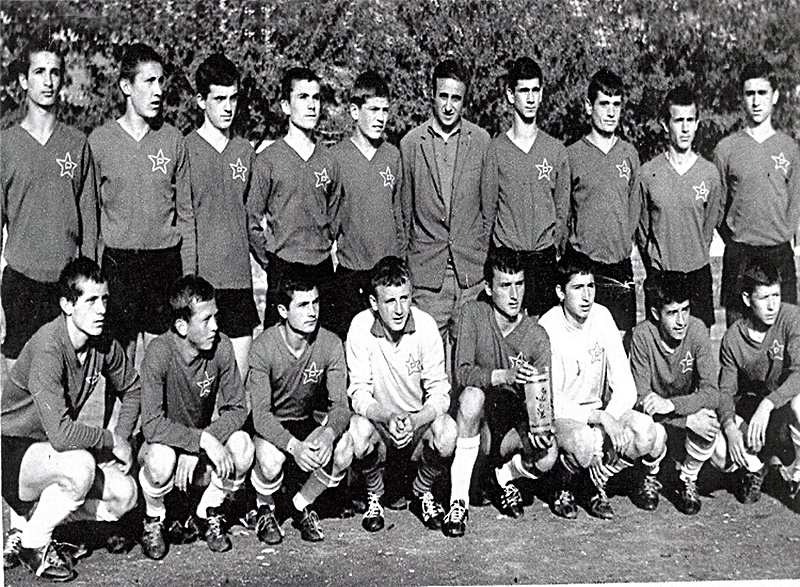
FK Partizan Youth Team
These features were also seen in sports, where some athletes and footballers continued their careers abroad, some others simply emigrated and the rest retired from football.
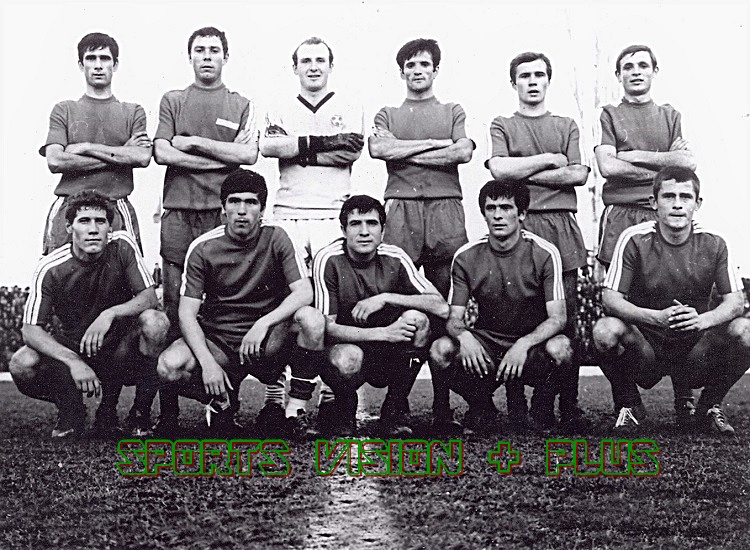
Thus the years had forced a renewal at Partizan. Of course, as time passes, the team no longer has names like Hametaj, Eksarko, Lame, Tomori, Lika, but Partizan, even with changes, always knows how to preserve in its composition that DNA, as the team that has dominated Albanian football. The well-known goalkeeper, captain Perlat Musta tries his luck in Romania.
Against Feyenoord, a goalkeeper is needed who can defend the colors of FK Partizan with dignity.
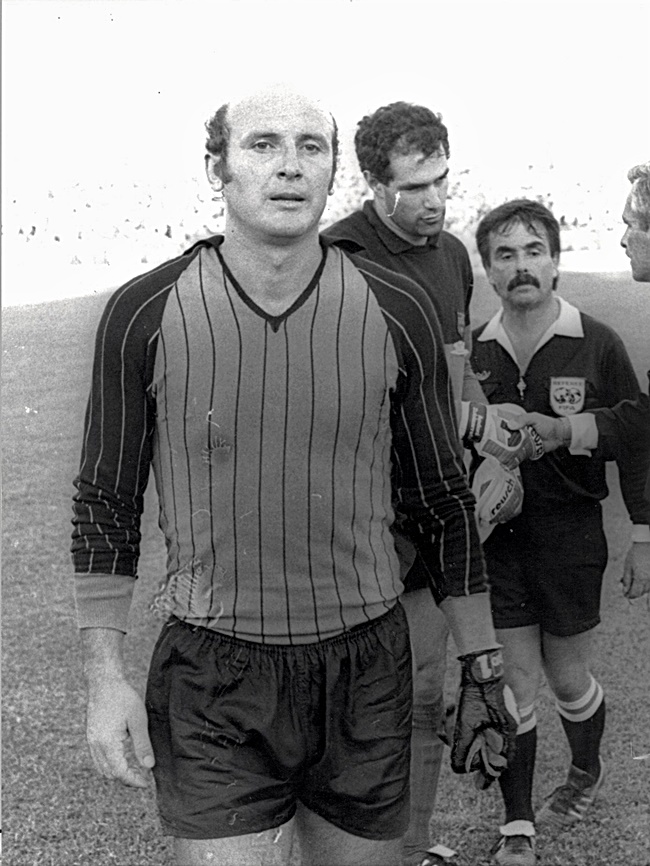
And here, Artur Lekbello, always answers when Partizan calls. Partizan, after all, is his home from where he “migrated” to Lokomotiva, Flamurtari, as reinforcement in the two matches against FC Barcelona of Lineker and Hudges.
Always Musta’s reserve, Lekbello, after his extraordinary performance at the “Camp Nou” (0-0), now had another opportunity to show his skills that he has as valuable as his friend, this time on another difficult field at the “De Kuip” Arena in Rotterdam.
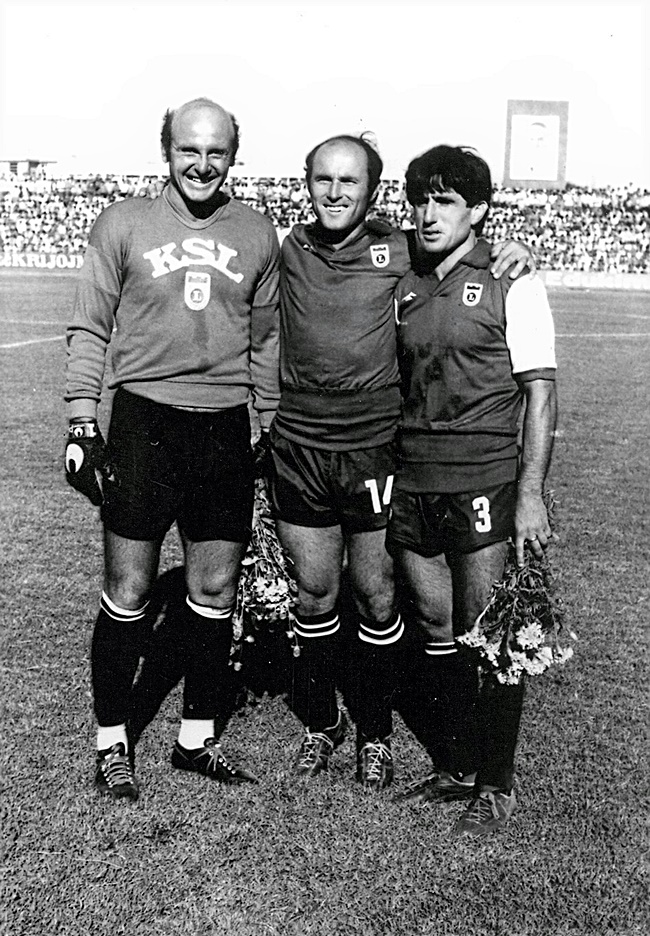
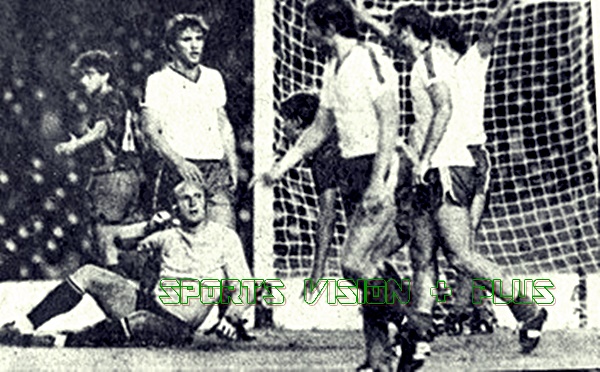
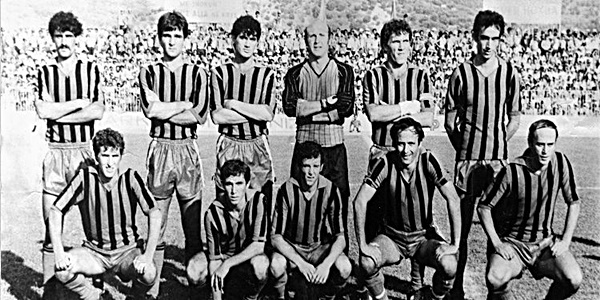
In defense is still Nand Ocelli, now the current captain and in a new position of center back. Alongside the experienced captain are Ilir Shulku, the tall defender, Shahin Berberi, Marko Pelinxhi, Lorenc Leskaj, Artan Mergjyshi, Nordik Ruhi.
The midfield consists of Alfons Muca and Fatmir Hasanpapa. Alongside them, the talent Bledar Kola. Then there are Besnik Prenga, Klarent Fejzolli, Andon Nikolla, Astrit Sheta, Amarildo Zela and Armand Damo.
The attacking line has Ylli Shehu, Artan Bano and of course the most in-form player Edmond Dosti. Lefter Millo, Edmond Kacaci, Ledio Pano have left the team to Greece.
2.
Feyenoord came to an Albania who had just come out of Communist, they found Albania in ruins. They were touched by that as they understand the pain of the Albanians and the players themselves started to hand out supplies to the citizens.
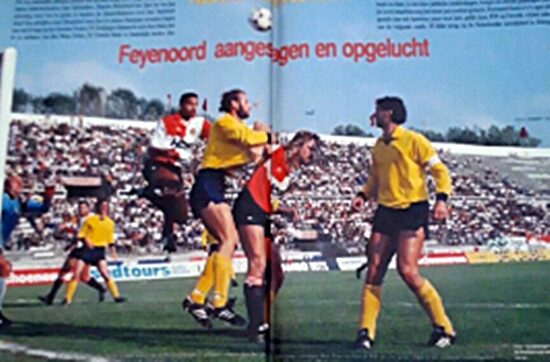
From heart-wrenching stories following the first leg in Tirana and goalkeeper Artur Lekbello to shirt sponsor Bakker Klootwijk and players desperately fleeing for their lives: on October 2, 1991 a truly memorable match took place: Feyenoord vs. Partizan.
It is the story of how an encounter with an impoverished Albanian team in the Cup Winners’ Cup became one of the most extraordinary fixtures in Feyenoord’s history one defined more by what happened off the pitch than on it.
It frequently happens that Dutch clubs face teams from lesser-known football leagues in European tournaments. Feyenoord, for instance, in fact has played against FC Drita from Kosovo but never an Albanian club . These are matches that both the neutral spectator and the die-hard supporter often quickly forget. Just get the win, reach the next round, and move on. The clash with FK Partizan UP in 1991 seemed to be just that kind of encounter, too ending in a 1–0 aggregate victory over two legs. But appearances can be deceiving.
No one has forgotten this match. Not the former players, not the supporters, not the journalists and not even an ordinary baker from Rotterdam.
In fact, all of them can still recount in vivid detail how the Feyenoord– FK Partizan match shaped by all the events surrounding it unfolded into one of the most extraordinary encounters in the Rotterdam club’s history. It was a match that, thirty four years later, still evokes astonishment, countless memories, and above all emotion.
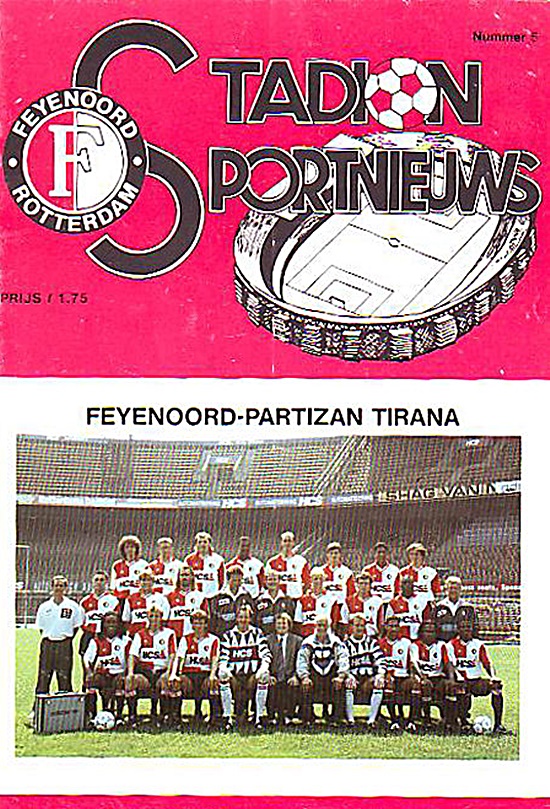
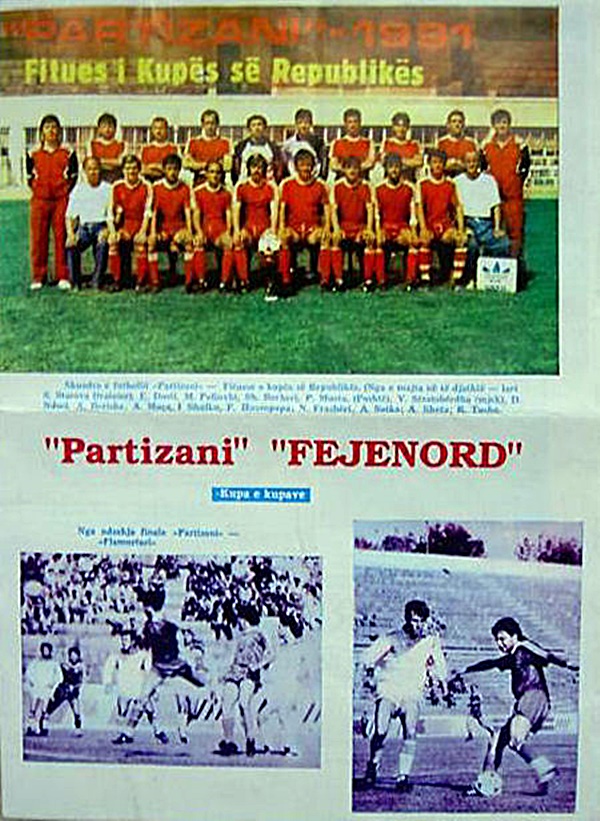
“In every respect, a remarkable match. Not because of the standard of play as was the case with Feyenoord vs. Juventus or Feyenoord vs. Real Madrid but precisely because of all the surrounding circumstances. It left a lasting impression on everyone associated with the club,” says Michel van Egmond, a writer and journalist who, shortly after this match, served for years as the resident journalist for Feyenoord’s media department.
3 .
Peter Bosz and Rob Witschge in Tirana.
“What stuck with me most from that match? The goalkeeper: Artur Lekbello. It was as if he had been plucked right off the street just moments before and asked if he wouldn’t mind putting on a goalkeeper’s kit. He was the kind of person you would never, in a million years, expect to be a goalkeeper when you saw him in his everyday clothes. Yet, he kept shots out in the most insane fashion. The crowd at De Kuip absolutely fell in love with him.”
This is just one of countless anecdotes surrounding the match played at De Kuip on October 2, 1991 a story that begins in Albania two weeks earlier. It is the story of a country that had been held in the grip of the communist of the notorious leader Enver Hoxha for years. It was Hoxha once a close associate of Joseph Stalin who, in 1976, proclaimed Albania the world’s first atheist state. It was not until his death in 1985, followed by the resignation of his successor, Ramiz Alia, in 1991, that the country was finally liberated from the communist system.
4.
Europe’s Poorest Country!
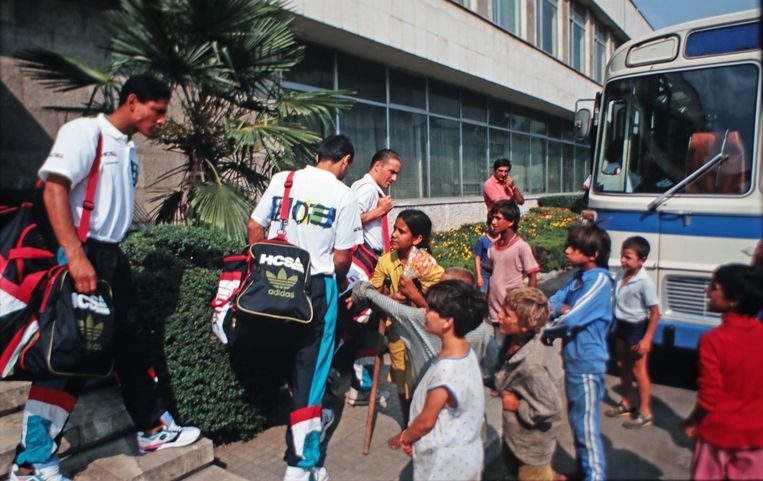
But while Europe celebrates with democracy in its heyday and everyone fully reveling in their newfound freedom little remains of the Balkan nation of Albania.At the time, it was described as the poorest country in Europe. And it is precisely from this country that Feyenoord’s opponent hails for the first round of the Cup Winners’ Cup.
The Rotterdam side appealed to UEFA to have the match played in Romania but to no avail. “Naturally, we weren’t happy about that. We were hoping for a great away match against an English club, not one against FK Partizan . But anyway, we went. We just weren’t at all prepared for what we experienced there,” says Gaston Taument, then a 20-year-old Feyenoord talent.
At the time, Taument was one of the young players tasked with helping Feyenoord get back on its feet. The Rotterdam side was underperforming, having finished eleventh and eighth in the two preceding seasons.
Nevertheless, the match against what was essentially a glorified amateur club for a Feyenoord squad featuring starters such as Henk Fraser, John de Wolf, and John Metgod should have posed no problems. Yet, at that point, no one had anticipated the total shock that would hit the Feyenoord squad upon their arrival in the Albanian capital.
That evening, Feyenoord couldn’t get anything right on the atrocious pitch in Tirana. Coach Wim Jansen watched his team play disastrously, managing nothing more than a 0–0 draw. The Rotterdam side looked shaken, weary, and visibly distressed. “Nobody was bothered by the draw. Of course, you’d rather win, but out there, it truly felt like a complete side issue.” Says Taument!
5.
Every Feyenoord supporter knows Lekbello
Van Egmond recalls, in particular, an incident involving clothing. “Photographer John de Pater had met Lekbello during the away match. For the match at De Kuip, he had specifically brought along some clothes for Lekbello and his family. Then, when John working as a photographer was standing behind Lekbello’s goal taking pictures during the game, Lekbello, out of gratitude, struck up a conversation with him. During the match, mind you.
That was certainly odd,” says Van Egmond with a laugh.
He is the goalkeeper who symbolizes the fighting spirit and strength of the Albanians. At De Kuip, it was the same routine every time: a shot from a Feyenoord player, a save by Lekbello, and the camera zooming in on the grinning goalkeeper.
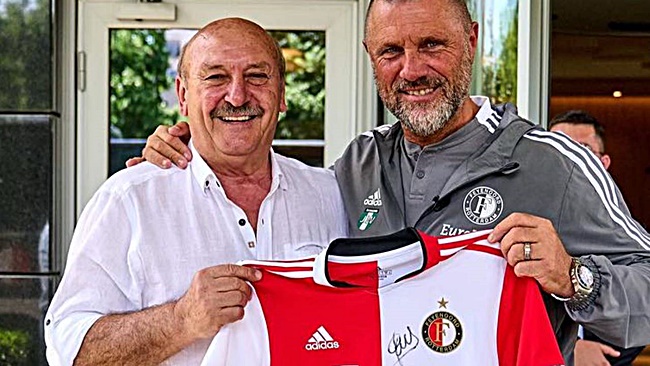
Van Egmond: “I think every Feyenoord supporter knows Lekbello. A very eccentric goalkeeper; he stole the show. With every passing minute, the crowd grew to appreciate him more.”
6.
Baker Klootwijk & $ 5000
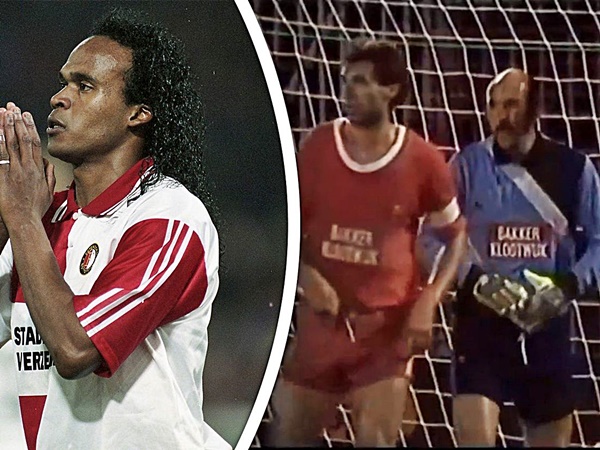
Although Leen Klootwijk is a Feyenoord supporter through and through, he rubs his hands together with extra delight at every save. It is hardly surprising; whenever a Partizan player appears on screen, a red-and-white logo is also visible on the Partizan jersey the logo of Bakker Klootwijk. “I traveled to Tirana as a Feyenoord sponsor two weeks earlier.
While I was there, Hans Hagelstein (Feyenoord’s team manager at the time Ed.) asked if I would be interested in sponsoring Partizan on behalf of Bakker Klootwijk,” says Klootwijk, owner of the eponymous Rotterdam bakery.
“It was meant as a joke, but the idea actually appealed to me. I saw how little money the people there had. I thought: let me give these people a little help. It wasn’t for my own publicity at all.”
For Klootwijk, it was a minor effort; for the Albanians, it was a matter of survival. It enabled them to cover the cost of their stay at the Atlanta Hotel on the Coolsingel in Rotterdam. “How much did I end up paying them? About five thousand dollars. I went to the bank personally to withdraw the money for them. In the meantime, the Bakker Klootwijk logo was quickly sewn onto their shirts,” says Klootwijk.
“People still ask me about it every now and then: ‘Didn’t you sponsor those guys from Partizan ?’ And sometimes the name Lekbello comes up, too. Usually, you see a greengrocer or a baker’s shop featured on the shirt of an amateur club. But suddenly, Bakker Klootwijk was emblazoned on the shirt of a team competing in the Cup Winners’ Cup. It was magnificent an anecdote for life.”
With the Bakker Klootwijk logo emblazoned on his chest, Lekbello kept out every shot during the match in Rotterdam sometimes more by luck than judgment. That is, until the 87th minute, when he allowed a long-range strike from Peter Bosz to sail just over the crown of his head and into the net. Taument recalls: “He was playing the game of his life, but he really should have saved that ball. Yet I got the distinct impression that they were perfectly fine with it.
It wasn’t as if they launched a desperate late offensive in an attempt to score. In hindsight, I suspect their minds might have already been on later that evening when something important was due to happen for them. As a player, though, I didn’t realize that at the time.”
7.
Fleeing Players
For the players of Partizan Tirana, the prospect of having to return to impoverished Albania is an absolute nightmare. Sipping a drink at the bar of the Atlanta Hotel in Rotterdam, they realize what life “could” be like full of freedom and conviviality, free from poverty. A stark contrast to their own country, an Albania in such a state of decay.
Several players decide they do not want to go back and flee. Some leave almost immediately after the match; others, in the dead of night all in search of freedom. “When I opened the newspaper the next day and read that they had fled, a smile spread across my face,” says Taument, who was not surprised by their actions.
“Not at all, in fact. I got the impression that their government had anticipated this as well. It seemed as though they had sent security personnel along. A number of men were constantly circling the players. I am fairly certain that they were not regular staff members. Do I understand the players? Absolutely. The conditions there were inhumane. They were hoping for a new life.”
Some are heading to Germany, while the destination of others remains unknown. To this day, it is not known how many players actually fled.
“That match still crosses my mind every now and then—especially when things aren’t going my way.”
— John Metgod
Lekbello did indeed make the return trip, clutching De Pater’s kit under his arm. In the hours surrounding the match, Lekbello had hoped to find a club in the Netherlands thereby enabling him to remain in the country legally after all but to no avail. Van Egmond remarks: “In a way, that only adds to the mystique surrounding him. It ensures that the memory of that one particular match lives on. I’ve never witnessed anything like it since a visiting player at De Kuip receiving such a reception. The crowd laughed at him the way you’d laugh at a comedian. It was a blend of mockery and respect. Thanks to him, everyone remembers that match against Partizan”
A match that, due to all the surrounding circumstances, will go down in the books as one of the most memorable in Feyenoord’s history. And as an encounter that had a profound impact on the players of that era. “Without a doubt. The match still crosses my mind from time to time—whenever things aren’t going my way. That’s when I think: things really aren’t so bad for us, after all. It was a life lesson for me,” says Metgod.
Taument adds: “That match will stay with me forever. It left such a deep impression on me. I have nothing but respect for the way those guys took the field—with such power. And to do so given their situation… That is something I will never forget.”
TABLES
UEFA Cup Winners’ Cup 1991/92,
Round of 32, 1st leg
Tirana: September 18, 1991 | “Qemal Stafa” – Stadium
FK Partizani UP (Albania) 0:0 (0:0) Feyenoord (Netherlands)
First Round 2nd leg | Tue, Oct 1, 1991 | 3:00 PM | 1st leg: 0:0
Stadion Feyenoord “De Kuip” | Attendance: 22.000
Referee: Rune Pedersen
Fatmir Hasanpapa
Yellow card
Feyenoord 1:0 FK Partizan UP
87` Bosz
Line ups:
Feyenoord: Ed de Goey – John Metgod, Henk Fraser, John de Wolf, Ruud Heus – Peter Bosz, Arnold Scholten, Rob Witschge – Marian Damaschin, Regi Blinker, Gaston Taument.
Coach: Hans Doriee
FK Partizan UP (3-6-1): Artur Lekbello – Shahin Berberi, Adnan Ocelli, Ilir Shulku – Armand Damo, Klarent Fejzolli (Astrit Sheta), Fatmir Hasanpapa, Alfons Muca, Andon Nikolla, Besnik Prenga – Edmond Dosti
Coach: Sulejman Starova
Pjerin Bj
New York: March 16-17, 2026
_____________________________________
Sports Vision + Plus | Hour of the Champions since 2013

Discover more from Sports Vision +
Subscribe to get the latest posts sent to your email.