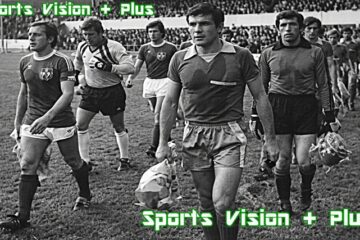
The Hurricane of the South Between the Sea and the Art of Scoring: Vasil Ruci, the Bomber Born from the Waves of Vlora!
Prologue
The cheers of Vlora’s “Flamurtari” Stadium erupt like a powerful wave and tear through the air of those unforgettable Sunday afternoons, spreading in resonance beyond the stands of the stadium and carrying the entire coastal city with them.
Football was not simply a match, while the voice of the stands was not merely a backdrop to the game; it was part of the drama itself.
From the radio sets broadcasting the weekly fever of the national championship live through the legendary programme “From One Match to Another”, comes the voice of the renowned journalist Ahmet Shqarri from the central studio in Tirana:
“We immediately switch the line to Vlora, as there is a penalty in favour of the home side Flamurtari…”
At that moment, as if the very sea of Vlora had risen to its feet, the stadium comes together in a single chorus. From the stands erupts the chant that had by then become a ritual of the terraces: “Let the kopetent take it!”… “Kopetenti!”… “Kopetenti!”
And the “specialist” (kopetenti) was him.
Vasil Ruci.
1.
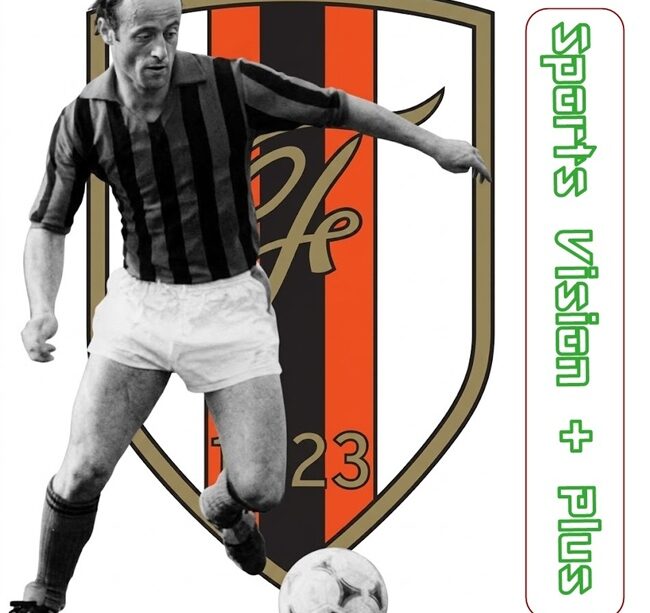
Vasil Ruci is undoubtedly one of the most distinguished bombers produced by football in Vlora and one of the most important figures in the history of “Flamurtari”. He remains a symbol of a rare sporting loyalty, a player who wore the red-and-black shirt as a second skin, from his debut in 1976, in the match against “Besa” under coach Bejkush Birçe, until the end of his playing career in 1993.
Throughout this long journey, the Vlora-born goalscorer left behind a legacy of 93 goals in 304 appearances, placing him 19th in the all-time table of Albania’s leading goalscorers.
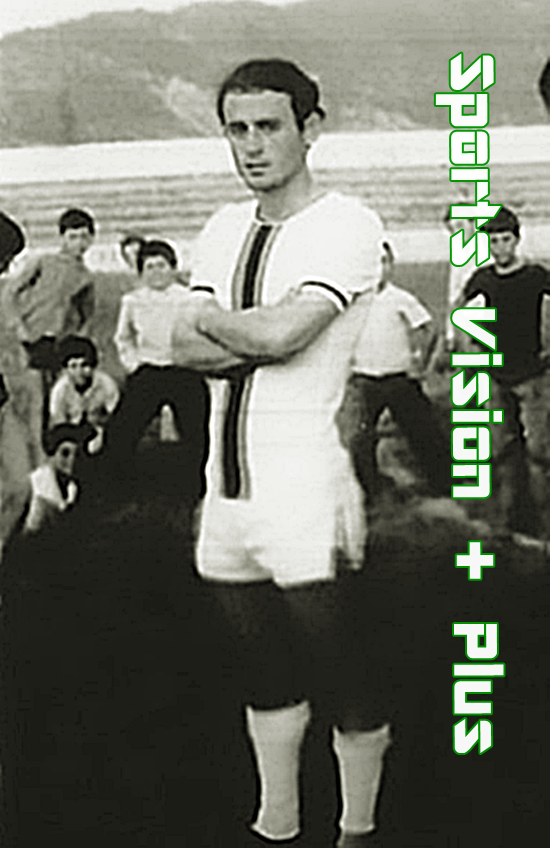
At the peak of his attacking productivity, Ruci won the “Golden Boot” twice, as the top goalscorer of the Albanian championship, in the 1981–1982 and 1983–1984 seasons. With “Flamurtari”, he was crowned champion in the 1990–1991 season, although an injury significantly limited his presence during that campaign, while he also lifted the “Republic Cup” trophy twice, in 1985 and 1988.
These are the cold numbers of a career, but behind them lies the story of a striker who had turned scoring goals into a distinctive art.
 2.
2.
In an era when the Albanian championship produced fierce contests and defensive lines were built around players of character, strength and tactical discipline, the goal area also had its own distinctive interpreter.
Vasil Ruci was a striker with an early football intelligence, capable of sensing the move before it took its final shape.
Often, before the pass even reached him, Ruci seemed already to have mapped the trajectory of the final shot in his mind. It was this ability to read the move that allowed a young footballer to play with the composure and maturity of a veteran and that very quickly placed him in a central role within “Flamurtari”.
His path to the elite had begun much earlier, in the modest surroundings of the “Pioneer House”, where his talent and natural instinct for goals came to the attention of specialists Ibrahimi and Elmazi. It was a formative period that would also shape his later characteristics as a footballer.
Elmazi, in particular, would pass on to him a principle that V. Ruci would carry throughout his entire career: to step onto the pitch without fear and to face every opponent as an equal.
Thus, he began measuring himself against a generation rich in great names of Albanian football, facing strong defensive lines and midfield units featuring players such as Musta, Targaj, Baci, Bimo, Hametaj, Cocoli, Hysi, and others.
From the very first youth competitions, Ruci began to display the quality that would later turn him into one of the most renowned strikers of his generation: the ability to sense the goal.
The year 1976 marked the beginning of an epic that would last 17 seasons. Under the guidance of Bejkush Birçe, the young striker made his debut at the highest level against “Besa” of Kavaja. It was the beginning of an extraordinary relationship between player and club, a bond that would continue until 1993.
For 17 seasons, Ruci would play for “Flamurtari”, making 304 appearances and building his entire Albanian career upon a rare bond of loyalty with the red-and-black shirt.
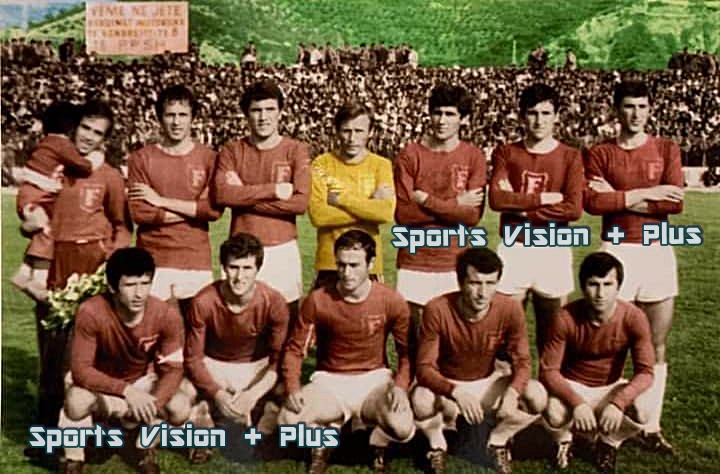
In an era when the relationship between footballer and club carried a different meaning, he became one of the most distinctive faces of Vlora’s sporting identity.
His style of play was built around a particular efficiency in the penalty area. Ruci did not need many touches to turn a move into a threat. He knew how to be in the right place at the right moment, and this quality made him, for many Albanian defences, an opponent who could not be left unmarked for even a second.
His signature as a goalscorer was stamped across many of the stadiums where “Flamurtari” played, turning Ruci’s name into a constant source of concern for opposing goalkeepers.
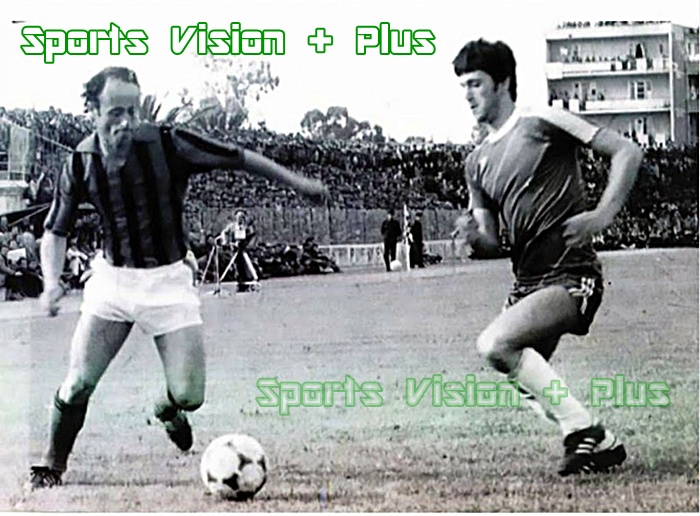
This productivity was crowned by two “Golden Boots”, in the 1981–1982 and 1983–1984 seasons, before his career also claimed the greatest trophy in Albanian football: the championship title with “Flamurtari” in 1991. Two Republic Cups would also be added to his honours, followed later by two Super Cups.
3.
But the stage on which Vasil Ruci’s name gained a dimension beyond the borders of Albanian football was the European arena.
The red-and-black “Seagull” of the coast played 27 European matches and scored 6 goals, facing some of the biggest names in football at the time.

Among the memories of those European adventures, the goal against “Barcelona”, with goalkeeper Andoni Zubizarreta between the posts, stands out in particular—a moment that gave Ruci a special place in the international history of “Flamurtari” as well.
He had the privilege of stepping onto the legendary “Camp Nou”, facing a team filled with stars of world football, among them Lineker, Schuster and Hughes. For a footballer who had come from Vlora, it was an extraordinary stage, but for Ruci the pitch did not fundamentally change: the ball remained the same, the goal remained the same, and his instinct for scoring continued to be his principal weapon.
There, in the European encounters, his career acquired another dimension. Ruci was no longer merely the bomber of “Flamurtari” and one of the leading goalscorers of the Albanian championship; he had become part of the generation that brought Vlora’s football face to face with some of the biggest names in European football.

The closing of his chapter as an active footballer in 1993 did not mean the end of his connection with the football pitch. For a footballer who had spent almost two decades among the grass, dressing rooms and packed terraces, stepping away from the game could not be an immediate process.
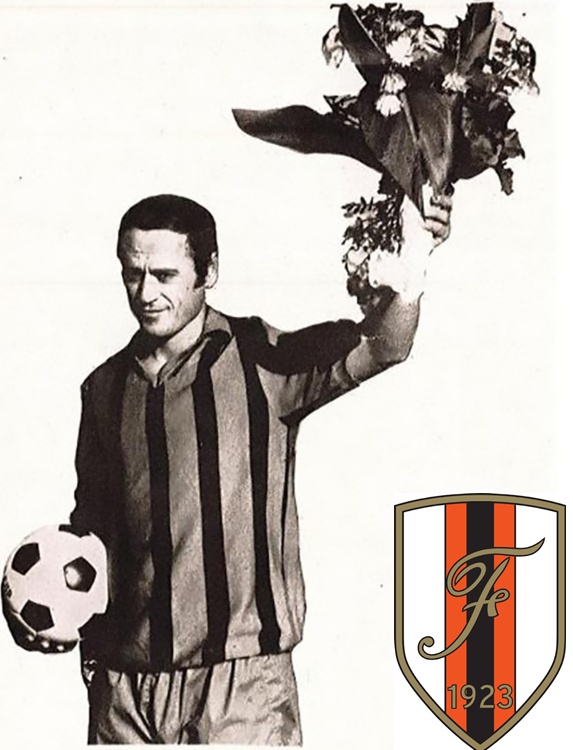
After a period away from active football, the desire to remain close to the game prevailed once again. In 2004, Vasil Ruci began a new chapter in his career, this time from the technical bench, entering the coaching profession and viewing football from a different perspective.
The pitch had changed, the role had changed, but the passion remained the same.
From the bomber who attacked the penalty area to the coach who had to read the match from beyond the white lines, Ruci remained connected to football. And perhaps this is also the most natural way to close this chapter: a player who never saw football simply as a profession, but as an inseparable part of his life and of the city that gave him the shirt, the stands, the goals and the memory.
© Copyright by Pjerin Bj
Bryant Park, New York: October 5, 2026
________________
Sports Vision +Plus | Champions Hour since 2013

Discover more from Sports Vision +
Subscribe to get the latest posts sent to your email.