“Partizani”–“Austria Wien” 1981: one night in Vienna, one answer in Tirana under torrential rain!
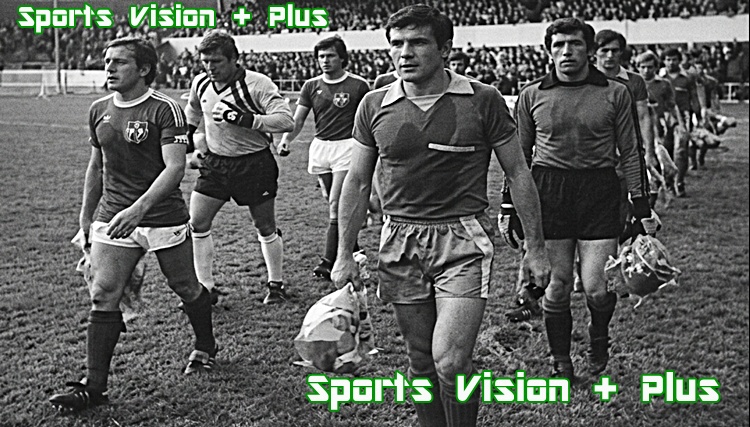
Prologue!
A champion arriving in Europe with a golden generation!
The autumn of 1981 found “Partizan” UP back on the biggest stage of European football.
When “Partizan” took the field in September 1981, it was not simply a representative of Albanian football in the European Champions’ Cup. It was the newly crowned champion of Albania, a team that only a few months earlier had won one of the most closely contested championships of that period.
Over 26 rounds, “Partizani” had collected 37 points, with 15 wins, 7 draws and only 4 defeats, finishing just one point ahead of “Dinamo” and two points above “17 Nëntori”. It had scored 36 goals and conceded only 17, a record that demonstrated not only the strength of the team but also the extraordinary balance of the competition.
Within that red-shirted team, representing the capital’s military club, there remained a generation made up of intertwined names.
Behind them stood a group of footballers who had already established their names in Albanian football and who represented one of the most interesting line-ups of the military club.
In goal was Perlat Musta, one of the most promising young goalkeepers of the time, with Artur Lekbello as his alternative.
In defence stood figures such as Safet Berisha, the captain and one of the most respected names in Albanian football, Kastriot Hysi, Arjan Hametaj and Sulejman Starova.
The midfield possessed the experience and class of Ilir Lame, Feim Breca and Haxhi Ballgjini, while the squad also included Genc Tomorri, Bujar Hado, Musa Fagu, Gëzim Mançe and Hasan Lika.
On the bench was Bejkush Birçe, the coach who had built a team with discipline, character and a clear footballing idea, precisely the man who had guided this generation to the championship and now had to confront it with another reality: Europe.
The list of “Partizani” champions for the 1980–81 season includes precisely this group of players, with Birçe as coach.
Opposite them was not an unknown name in Albanian football. “Austria Wien” had already crossed the path of Albanian clubs. In the 1971–72 season, the Austrians had eliminated “Dinamo” Tirana in the Cup Winners’ Cup after drawing 1–1 in Tirana and winning 1–0 in Vienna. Seven years later, in the 1978–79 European Cup, it was “Vllaznia’s” turn. The Shkodër side had taken what appeared to be a giant step towards qualification by winning 2–0 in Shkodër, but in the return leg in Vienna, “Austria Wien” turned everything around with a 4–1 victory.
Now it was “Partizani’s” turn. On the field, two teams would meet, but also two football traditions that already knew a little about each other.
The “Austria Wien” of 1981 was not an anonymous opponent that “Partizani” could surprise simply through determination. The Austrian line-up included players with international experience, among them Erich Obermayer, Ernst Baumeister and Felix Gasselich, names who were also connected with the Austrian national team. Gasselich would become one of the main protagonists of the first match, while Baumeister was one of the recognised figures of Austrian football during that period.
This made the challenge even more difficult for “Partizani”: it was not simply a club with tradition, but a team whose players were accustomed to the rhythm and pressure of international football.
Nevertheless, “Partizani” did not go to Vienna simply to defend its dignity. It went to play football.
In Vienna, on September 16, the match began exactly as the Albanians would have wanted: Genc Tomorri would score first, in the 22nd minute, putting “Partizani” ahead. But “Austria Wien” would respond and turn the match in its favour, winning 3–1
Now the story had to return to Tirana. On September 30, “Qemal Stafa” would host the second match. “Partizani” had a mountain to climb, but it also had a reason to believe: if “Austria Wien” had managed to win in Vienna, it had not emerged untouched from the first battle. And in the 31st minute, Ballgjini would set the stadium alight. 1–0. A goal that was not enough for qualification, but that kept the dream alive until the end.
“ Austria Wien” would advance with an aggregate score of 3–2.
“Partizani” had won the second match, but had lost the two-leg tie by a single goal.
And that is precisely where our story begins: one night in Vienna, one answer in Tirana.
1.
September 16, 1981 — the first blow came from “Partizani”
On September 16, 1981, in Vienna, “Austria Wien” and “Partizani” met in the first match of the first round of the European Champions’ Cup. The stadium was expecting a home side determined to settle the tie as quickly as possible, but it was “Partizani” that struck first. In the 21st minute, Genc Tomorri scored for the Albanians and, for a moment, the entire picture of the match changed. The champions of Albania had taken the lead on the field of an opponent with European experience.
But “Austria Wien” responded almost immediately. Gerhard Steinkogler equalised in the 26th minute and only one minute later Felix Gasselich turned the score in favour of the home side from the penalty spot. In the second half, Gasselich scored again from a penalty and “Austria Wien” finished the match 3–1. “Partizani” had lost, but the match had not shown a surrendered Albanian team. On the contrary, for roughly half of the first half it had been in front and had caused a moment of concern inside the Vienna stadium.
3–1 was a difficult result to overturn. In European football at the time, especially for an Albanian team playing in a two-leg elimination system, a two-goal deficit looked like a mountain. But there was another reason not to consider the tie over. “Partizani” would return to Tirana.
And Tirana was another story.
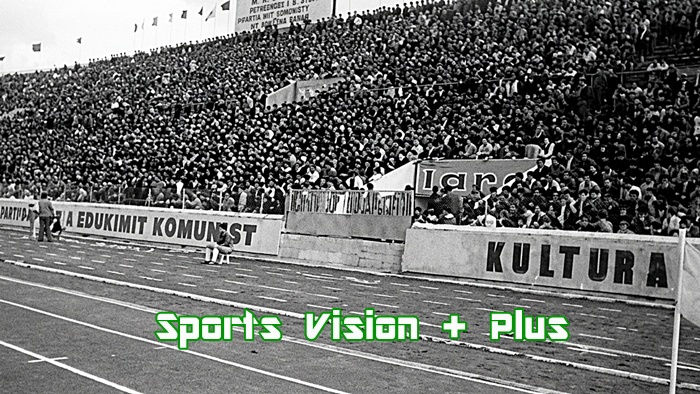
2.
September 30, 1981 — the answer at “Qemal Stafa”
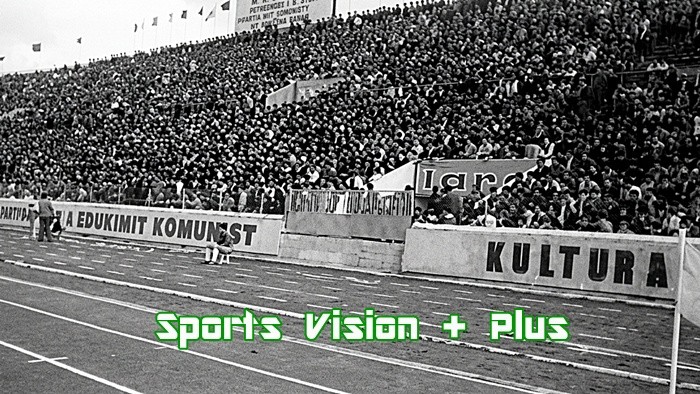
Two weeks after the first match, “Qemal Stafa” hosted the return leg. “Partizani” needed two goals to bring the tie to a new balance, and every minute without a goal made the task more difficult.
A victory under torrential rain, but one that was not enough!
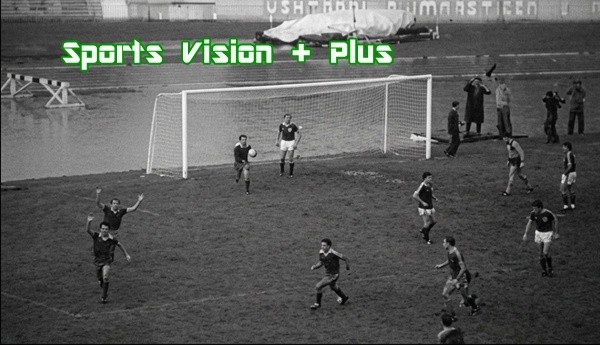
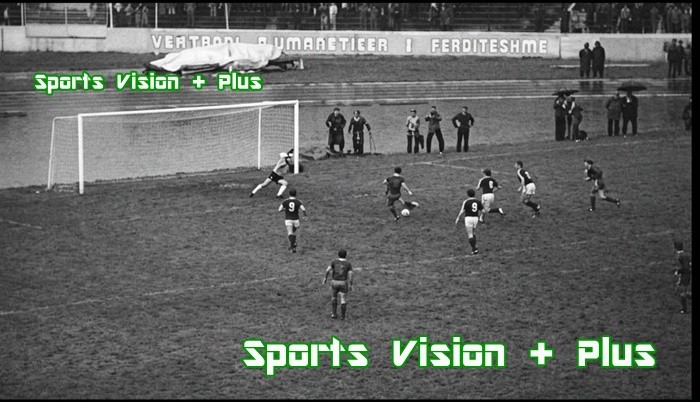
In the opening 45 minutes, despite the torrential rain, “Partizani” played at a high level, producing fast football built around immediate passing, high technical quality and confidence. “Partizani” applied a clear attacking strategy.

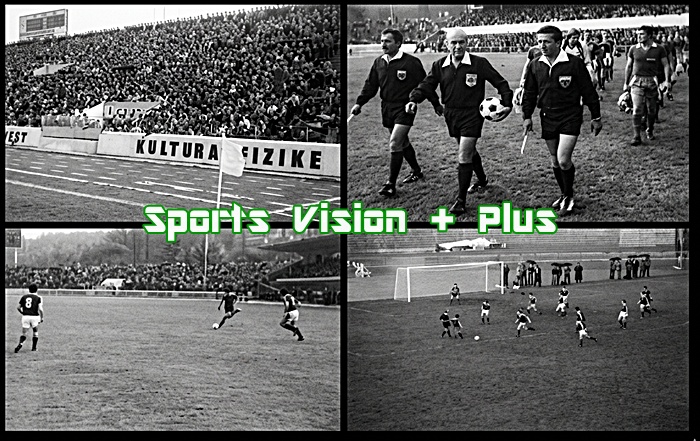
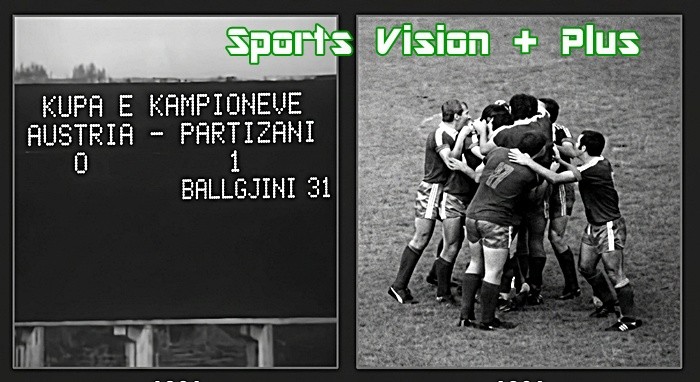
As a result of that pressure, the moment that ignited the stadium arrived in the 31st minute. Ballgjini scored and “Partizani” took a 1–0 lead.
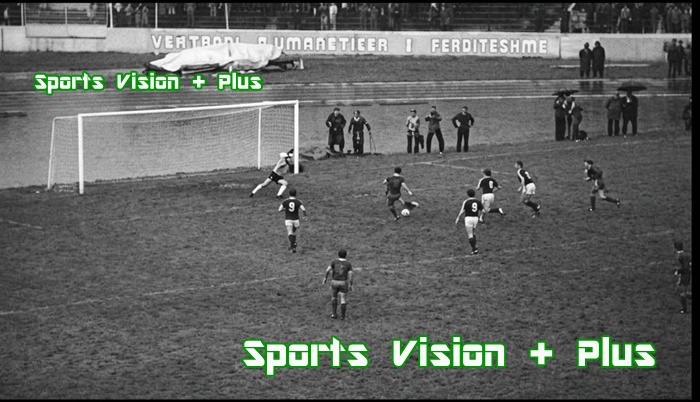
Now “Austria Wien” was only one goal away from being caught on aggregate.
But this was precisely where the real drama of the match began. “Partizani” still had time to search for the second goal, the one that would level the aggregate score and take the tie towards a completely different ending. “Austria Wien”, on the other hand, had to protect the 3–2 advantage it had established in Vienna.
The minutes passed.
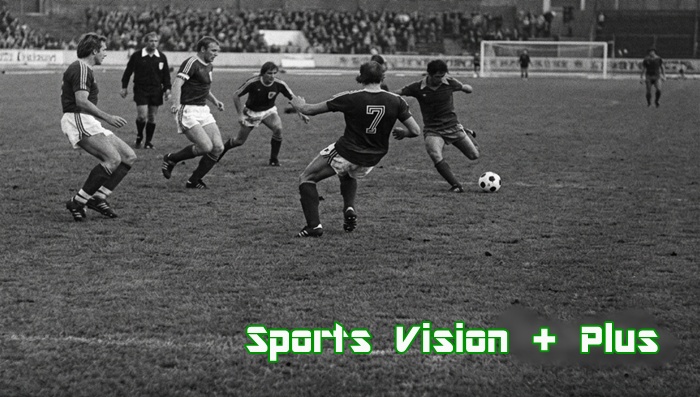
The “Partizani” players repeatedly came up against a tightly packed defensive line from the “Austria” players and, despite their efforts, they could not score another goal that would send them into the next round.
The second goal never came.
“Partizani” won 1–0, but “Austria Wien” retained its 3–2 aggregate advantage and continued its journey in the European Champions’ Cup.
On paper, it was an elimination by a one-goal margin. In the memory of those who watched it, it was something more: a confrontation in which “Partizani”, after losing 3–1 in Vienna, managed to win the return match and keep Austria under pressure until the end.
One goal in Vienna, one goal in Tirana and a Europe left behind!
The two matches had a special symmetry. In Vienna, Genc Tomorri had delivered the first signal. In Tirana, Xhike Ballgjini had delivered the answer. Two Albanian footballers had scored one goal each on the two nights of a tie that ended with a minimal advantage for the Austrians.
“Partizani” was not eliminated because it failed to win a match. On the contrary, it won the second match. It was eliminated because the result obtained in Vienna was heavier than what it could overturn in Tirana.
And perhaps this is one of the special beauties of football in that era: a second match could change everything, but it could not always erase what had happened in the first.
For “Austria Wien”, this was another victory on its path against Albanian clubs. For Albanian football, however, the 1981 match cannot be viewed separately from the two encounters that had come before.
In 1971, “Austria Wien” had eliminated “Dinamo” Tirana. In 1978, the story with “Vllaznia” had been even more dramatic: the Shkodër side won 2–0 at home, but “Austria Wien” overturned everything in the return match and won 4–1.
In 1981, “Partizani” did not manage to produce such a comeback, but it did something else: it won the return match and left qualification to be decided solely by the difference created in Vienna.
Thus, for several years, “Austria Wien” remained one of the opponents that the European history of Albanian football would associate with intense nights, comebacks, hopes and eliminations often decided by the smallest details.
Epilogue
Today, when we return to those two matches from 1981, it is easy to see only the final result: “Austria Wien” advanced 3–2 on aggregate and “Partizani” was eliminated from the European Champions’ Cup. But the story of a European tie does not always rest with the team that advances.
Sometimes it also rests with the way the eliminated team fights through the tie.
“Partizani” had gone to Vienna as the champions of Albania, with a generation in which Safet Berisha, Perlat Musta, Haxhi Ballgjini, Hasan Lika, Genc Tomorri and their teammates represented one of the important line-ups of Albanian football in the early 1980s. They had Bejkush Birçe on the bench and faced an “Austria Wien” that was not encountering an Albanian side for the first time.
In Vienna, “Partizani” fell 3–1.
In Tirana, it rose again.
Ballgjini scored.
“Qemal Stafa” believed.
But the second goal never came.
And Europe continued without “Partizani”.
Nevertheless, what remained was the beautiful image of those two matches: an Albanian champion that did not accept the first defeat as the end of the story and that, at home, defeated an opponent with a European tradition.
A story that did not end with qualification, but that today, so many years later, can be told again for what it truly was: another night of Albanian football facing Europe.
One night in Vienna. One answer in Tirana.
And between them, just one goal separating “Partizani” from the next round.
TABLE
“Austria Wien” – “Partizani” 3–1
Champions Cup 1981–82
First Round / First Leg
Data: September 16, 1981
Wien-Austria: ”Prater Stadion”
Time: 20:00,
Spectators: 27,000 – 30.000
Referee: Klaus Peschel, (W. G)
First Half: 2–1
“Austria Wienn”
Friedrich Koncilia; Walter Daxbacher, Erich Obermayer, Robert Sara, Josef Zore; Felix Gasselich, Johann Dihanich, Ernst Baumeister, Tschawdar Zwetkow; Gerhard Steinkogler, Alfred Drabits.
Coach: Erich Hof.
“Partizan” UP :
1.Perlat Musta; 2.Genc Tomorri, 3.Kastriot Hysi, 4.Arian Hametaj, 5.Safet Berisha, 6.Sulejman Starova; 7.Bujar Hado, 8. Ilir Lame, 9.Feim Breca, 10.Haxhi Ballgjini, 11. Musa Fagu.
Coach: Bejkush Birçe.
Scores:
0–1, Genc Tomorri — 21′
1–1, Gerhard Steinkogler — 26′
2–1, Felix Gasselich — 27′, pen.
3–1, Felix Gasselich — 62′, pen.
Substitutes
“Austria Wien”:
Petko Petkov for Alfred Drabits, 67′.
Harald Fürst for Ernst Baumeister, 76′.
“Partizani”:
Gëzim Mançe for Musa Fagu, 76′.
Important note: BDFutbol records Gasselich’s goal in the 58th minute, whereas RSSSF and the other archive source attribute it to the 62nd minute. For the SVP historical archive, we will use the 62nd minute, as it aligns with RSSSF and other competition sources.
“Partizani” – “Austria Wien” 1–0
First Round / Second Leg
Date: September 30, 1981
Tirana, Albania: “Qemal Stafa” Stadium
Time: 16:00
Spectateurs: 19,000 according to a statistic source; 30,000 according to eurocups-uefa.ru archive
Referee: Erkan Göksel, Turqi
“Partizani” 1–0 “Austria Wien”
First Half: 1–0
Agregate: “Austria Wien” 3–2 “Partizani”
“Partizani”:
Perlat Musta;Genc Tomori, Sulejman Starova, Kastriot Hysi, Arjan Ahmetaj; Kristaq Eksarko, Bujar Hado, Haxhi Ballgjini, Musa Fagu, Ilir Lame, Feim Breca.
Coach: Bejkush Birçe.
Substitution:
“Partizan”
Hasan Lika for Feim Breca, 64′.
Gëzim Mançe for Arjan Ahmetaj, 78′.
“Austria Wien”:
Friedrich Koncilia; Robert Sara, Erich Obermayer, Josef Sara, Franz Zach; Johann Dihanich, Karl Daxbacher, Felix Gasselich, Ernst Baumeister; Petko Petkov, Gerhard Steinkogler.
Coach: Erich Kohn.
Substituions:
“Austria Wien”
Tschawdar Zwetkow for Gerhard Steinkogler, 65′.
Alfred Drabits for Tschawdar Zwetkow, 70′.
Score:
1–0,Ballgjini 31′.
PHOTO GALLERY



© Copyright by Pjerin Bj
Bronx, New York: September 26, 2026
________________________________________
Sports Vision + Plus in activity since 2213

Discover more from Sports Vision +
Subscribe to get the latest posts sent to your email.