“Partizani”–“IFK Norrköping” 1962: The Day Albania Entered Europe for the First Time!
Prologue!
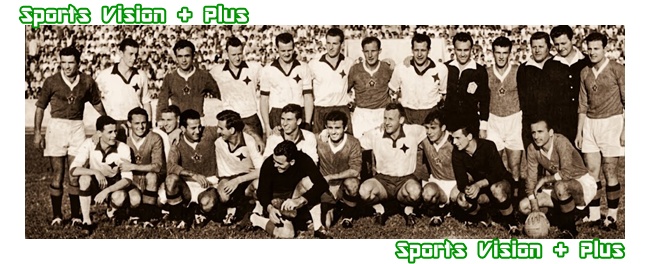
In the summer of 1962, Albanian football was preparing to take a step that had been missing from its history until then: to appear for the first time on the stage of the European Cups.
The Albanian champions, “Partizani”, were the team that would open that door. Drawn against them were “IFK Norrköping”, the champions of Sweden. For Partizani, this was not simply a confrontation with a foreign opponent. It was the first journey by an Albanian club into a competition that was already bringing together the champion clubs of the continent in a common tournament.
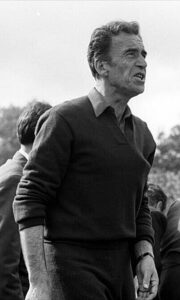
At the helm of Partizani was Loro Boriçi, no longer as the great footballer who had once led Albania on the pitch, but as a coach. He had ended his playing career in 1957 and had now begun building another chapter of his life on the bench.
That summer of 1962 found Albanian football at a special moment. Partizani had just completed another strong championship campaign and had been crowned champions of Albania after a close race with Dinamo.
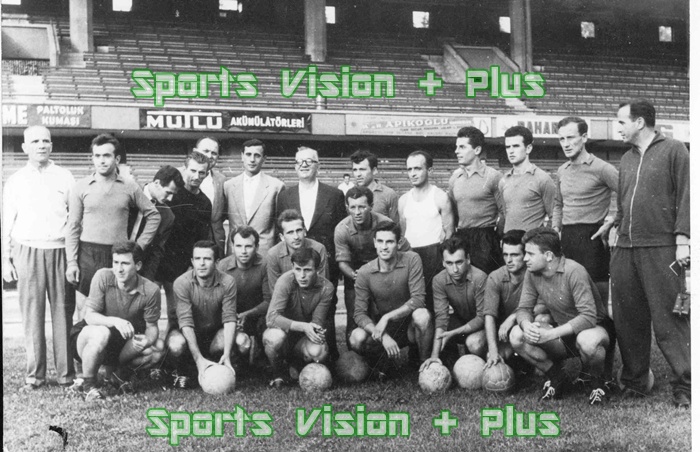 “Partizani” 1961-1962 in a friendly match against “Fenerbahce” in Istambul!
In the 18 matches of the championship phase, the team had recorded 4 wins, 2 draws and only 2 defeats, scoring 46 goals and conceding 13. Both teams had finished on 30 points, and the title had to be decided in two additional matches. Partizani came out on top once again and secured the right to represent Albania in the European Cup.
On the bench, as we mentioned above, was a name that needed little introduction: Loro Boriçi. The former captain and one of the greatest figures in Albanian football was building another chapter in his career, this time as a coach. In front of him was a generation that had won the championship and represented an important part of the Albanian football elite of the early 1960s.
 In goal was Mikel Janku, while the defense included players such as Fatbardh Deliallisi and Fatmir Frashëri. In midfield were Lin Shllaku, Miço Ndini and Tomorr Gjoka, while the attacking line featured a group that would leave a deep mark on the history of Albanian football: Kolec Kraja, Robert Jashari, Refik Resmja and Panajot Pano. The line-ups registered for this European campaign clearly document this first generation of Partizani on the continental stage.
But facing the Albanian champions was a team coming from a different footballing tradition.
“IFK Norrköping”.
The Swedish champions of 1962 had won the title with 32 points, after 14 wins, 4 draws and 4 defeats, finishing ahead of “Djurgårdens”, who ended with 30 points. “Norrköping” had scored 39 goals and conceded only 19 during the championship.
And within this team were several names that made the opponent even more interesting.
In goal was Bengt Nyholm, while Åke “Bajdoff” Johansson, one of the well-known figures of Swedish football, played in defense. Örjan Martinsson was also in the line-up, while the attack included Harry Bild, one of the team’s leading goalscorers. All four were Swedish international players during 1962.
And then there was another name.
A very young player who, at that time, had made only a handful of appearances for the first team, but who would soon become one of the most famous strikers in Swedish football.
Ove Kindvall.
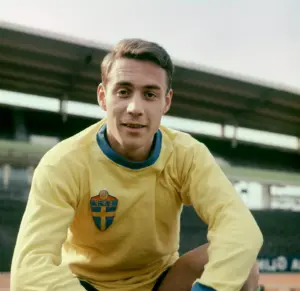
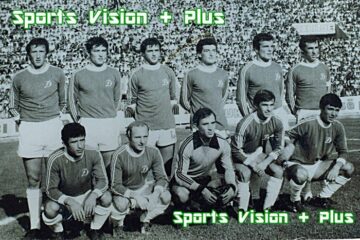
In photographs of the Norrköping team from that year, he appears alongside names such as Harry Bild, Åke Johansson, Örjan Martinsson and Björn Nordqvist. It was a generation representing a club with tradition and a Swedish football scene that had already earned respect in Europe.
Thus, the challenge awaiting Partizani was not simply a duel between the champions of Albania and the champions of Sweden.
On one side was an Albanian team built around a golden generation, with Boriçi on the bench and Pano, Kraja, Resmja, Jashari and Janku on the field.
On the other was a Swedish champion with four national-team players in 1962 and a generation of footballers in which the name of Ove Kindvall was beginning to emerge.
And above all, there was something that made this confrontation special beyond names and statistics.
It was the first time that an Albanian club was entering the European Cup.
An unknown journey.
Two stadiums.
Two champion teams.
And a story that, in that summer of 1962, had only just begun to be written.
Below, we will follow step by step the development of these two encounters, their atmosphere, the line-ups, the protagonists and what happened on the pitch — two matches that would establish Partizani’s first European chapter.
1.
Norrköping — The First Journey to Europe
For Partizani, the summer of 1962 was not simply the beginning of a new season. It was a journey into a world that Albanian football had not yet experienced. For the first time, an Albanian team would take the field in a European competition, and waiting for them were the Swedish champions, “IFK Norrköping”.
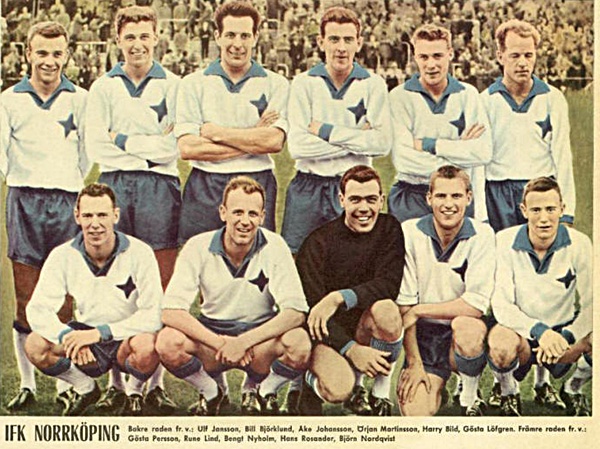
 On 26 August, “Idrottsparken” welcomed the Albanian team. There were 12,271 spectators in the stadium, and on the field, facing one another, were two teams with very different histories and realities. Norrköping’s line-up included Bengt Nyholm, Rune Lind, Hans Rosander, Åke Johansson, Björn Nordqvist, Harry Bild, Örjan Martinsson and Ove Kindvall; on the bench was Hungarian coach Vilmos Varszegi.
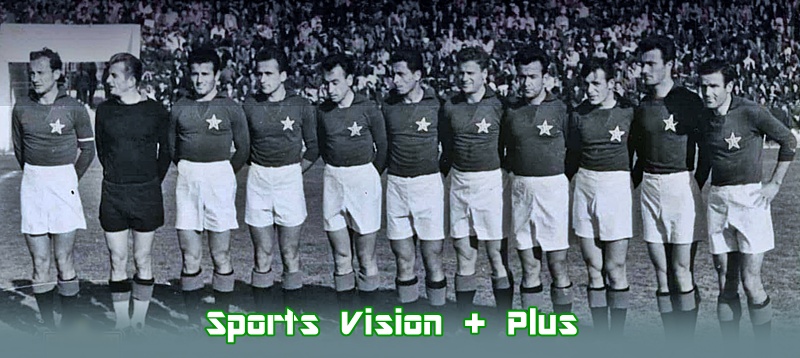
“Partizani” had Sulejman Maliqati in goal, with Fatbardh Deliallisi, Fatmir Frashëri, Miço Papadhopulli, Lin Shllaku, Miço Ndini, Gani Merja, Koleç Kraja, Panajot Pano, Refik Resmja and Robert Jashari, with Loro Boriçi on the bench.
It was a “Partizani” side that had not come to Sweden simply to make up the numbers. Against a team that already possessed international experience, the Albanians played with caution and discipline.
For more than an hour, Maliqati’s goal remained untouched and “Norrköping” had to wait a long time to find its first opening.
But in the 55th minute, Harry Bild broke the deadlock. Nineteen minutes later, Hans Rosander scored the second goal. Norrköping won 2–0, but the way “Partizani” had remained in the game for most of the match gave that first journey a different meaning.
Beyond the result, there was one fact that could not be erased from any scoreboard: Albania had played its first match in the European Cups.
And now the return leg awaited.
2.
“Qemal Stafa” — When History Entered the Stadium
On 12 September 1962, Tirana hosted the return match.
Around 18,000 spectators, according to the match records, were at “Qemal Stafa”, as the two champions met once again.
This time, Loro Boriçi changed his goalkeeper and Mikel Janku came into the line-up. In front of him were Deliallisi, Frashëri, Miço Papadhopulli and Ndini; in midfield were Shllaku and Tomorr Gjoka; while in attack were Kraja, Jashari, Pano and Resmja.
It was the line-up that would remain in the first photographs of “Partizani”’s European history.
But “Norrköping” was not the same team that had come simply to manage its advantage. Nyholm was again in goal; Johansson and Nordqvist held the center of the defense; while Bild, Martinsson and Kindvall were there up front. Varszegi remained on the bench.
The match began at a high tempo. “Norrköping” struck quickly, and Ove Kindvall scored in the sixth minute.
For Partizani, it was an early blow.
But not the end.
The Albanian team responded and continued looking for its opportunities. Koleç Kraja moved down the right; Panajot Pano looked for the ball; Resmja and Jashari tried to push the team forward. Behind them, Boriçi called for the team not to lose its structure.
And then came the moment.
In the 48th minute, Koleç Kraja equalized.
Qemal Stafa erupted.
1–1.
The goal was more than a temporary equalizer. It was the first goal scored by an Albanian team at home in the history of the European Cups. UEFA records Kraja as “Partizani”’s only goalscorer in this encounter and, across the two matches, he remains the scorer of both of “Partizani”’s goals against “Norrköping”.
“Partizani” pushed for more. But time passed and the score did not change again.
1–1.
Overall, “Norrköping” advanced with a 3–1 aggregate advantage.
Qualification did not belong to the Albanians.
But what had happened at Qemal Stafa could not be translated simply by the word elimination.
3.
A Team that Opened the Door!
If you look only at the European Cup table for the 1962–63 season, it simply says:
“Norrköping” 3, “Partizani” 1.
But football history is not always written only in numbers.
Across two matches, “Partizani” had faced a Swedish team containing international players and talents who would leave their mark on European football. Nyholm, Johansson, Nordqvist, Bild and Kindvall were not simply names belonging to a random opponent. They represented an important generation of Swedish football.
On the other side, “Partizani” had brought onto the European stage an Albanian generation that is now inseparable from the history of our football: Mikel Janku, Fatbardh Deliallisi, Fatmir Frashëri, Lin Shllaku, Miço Ndini, Tomorr Gjoka, Koleç Kraja, Robert Jashari, Refik Resmja and Panajot Pano, under the direction of Loro Boriçi.
And this is where the true importance of that September lies.
“Partizani” did not qualify.
But Albania had crossed the first frontier.
From that moment on, Albanian clubs would have a European history to follow, compare and expand. One year later, this same Partizani would achieve the first Albanian victory in the European Cups, against “Spartak Plovdiv”, once again with Kolec Kraja as the protagonist.
But that was another story.
In 1962, everything had begun here.
At “Idrottsparken”.
At “Qemal Stafa”.
With a defeat, a draw and a goal by Kolec Kraja.
And above all, with a team that had dared to cross the borders for the first time.
Epilogue!
The Names That Remained on Europe’s First Page
In the end, “Partizani” did not take the ticket to the next round with them.
“Norrköping” continued its European journey, while the Albanian team returned to Tirana with an elimination on the numbers: two matches, one defeat, one draw and a 3–1 aggregate score for the Swedes.
But there was something that no one could ever take away afterward.
The first place.
The first place occupied by an Albanian team in the European Cups.
Mikel Janku, Sulejman Maliqati, Fatbardh Deliallisi, Fatmir Frashëri, Miço Papadhopulli, Gani Merja, Miço Ndini, Lin Shllaku, Tomorr Gjoka, Koleç Kraja, Robert Jashari, Refik Resmja, Panajot Pano, and all those who were part of that Partizani team, remained written on the first page of the European history of Albanian football.
Kraja, the First Goalscorer for an Albanian Club in the European Cups
And above them was a name that had now moved from the field to the bench. Loro Boriçi!
He was no longer directing his team with the shirt on his back and the ball at his feet. He was directing them from outside the lines, giving this generation the opportunity to do what no one before them had done.
To go to Europe.
To travel to a foreign stadium.
To face a champion of the continent.
To return to Tirana.
And to play in front of thousands of people at “Qemal Stafa”, showing that Albanian football was no longer a name that had to be sought only within its own borders.
Perhaps, many years later, the aggregate score of 3–1 may look like an ordinary elimination.
But for those boys, it was not.
They had not inherited a European history.
They were beginning it.
And that is precisely why, today, when we look back through the first pages of the European adventure of Albanian football, their names are there.
In the first line.
In the first chapter.
In the history that began with “Partizani”–“Norrköping”.
And perhaps this is the greatest legacy of that generation: they did not manage to go further in Europe, but they managed to do something that no one before them had done.
They opened the door.
And beyond that door, the generations that followed in Albanian football would continue searching for the way forward.
ARCHIVAL TABLE
European Champion Clubs’ Cup
First Round / First Leg
26 August 1962 — “Idrottsparken”, Norrköping
IFK Norrköping – Partizani 2–0
Scorers:
55′ Bild
74′ Rosander
Attendance: 12,271
Referee: Leif Gulliksen (Norway)
Line Ups
“IFK Norrköping”:
Nyholm; Lindh, Rosander; Ohlsson, Johansson, Nordqvist; Lagerlund, Björklund, Martinsson, Bild, Bergstrand.
Coach: Vilmos Varszegi
“Partizani”:
Maligati; Deliallisi, Frashëri; Papadophulli, Shllaku, Merja; Kraja, Ndini, Pano, Resmja, Jashari.
Coach: Loro Boriçi
________
First Round / Second Leg
12 September 1962 — “Qemal Stafa” Stadium, Tirana
Partizani – IFK Norrköping 1–1
Scorers:
6′ Kindvall (N)
48′ Kraja (P)
Attendance: 18,000–25,000 (variable)
Referee: Václav Korelus (Czechoslovakia)
Line Ups
“Partizani”:
Janku; Deliallisi, Frashëri; Ndini, Papadophulli, Shllaku; Gjoka, Kraja, Pano, Jashari, Resmja.
Coach: Loro Boriçi
“IFK Norrköping”:
Nyholm; Lindh, Johansson; Bergstrand, Rosander, Björklund; Nordqvist, Lagerlund, Martinsson, Kindvall, Bild.
Coach: Vilmos Varszegi
© Copyright by : Pjerin Bj
Piero SVP, Bronx, New York: October 1, 2026
________________
Sports Vision +Plus / Champions Hour in activity since 2013

Discover more from Sports Vision +
Subscribe to get the latest posts sent to your email.