
Clubs in Balcan Cup | The Albanian Journey — From Participation to Trophies – Part One!

Balkan Clubs Trophy: 1961 – 1965
“Partizani” and the Trophy That Became Part of the Club’s History
In the history of Albanian participation, “Partizani” occupies a special place. The capital’s club faced teams from several participating countries in the early editions and, in 1970, went on to win the Balkan Cup. This achievement remains one of the important international accomplishments of Albanian club football. The club’s own archives list the Balkan trophy among its international honors.
But Albania’s history in this competition is not made up of the winner alone. It also includes teams that came close to the trophy, others that progressed through the group stages, and clubs that faced opponents with extensive regional experience. Each appearance must be considered in the context of the season, the format used at the time and the team representing Albania.
“Dinamo” — From the Group Stages to the Fight for the Trophy
“Dinamo” was among the Albanian clubs involved in the early Balkan Cup campaigns. Archives from the 1960s document its participation in the group stages, while in 1969 the Tirana side faced “Beroe Stara Zagora” in the competition’s final. That tie took an unusual course and did not conclude as an ordinary final with both matches played as planned. For this reason, its history must be told carefully, distinguishing the result of the first match from the decision concerning the return leg.
“Besa” — The 1971 Final
In 1971, “Besa” of Kavajë reached the final, where it faced the Greek side “Panionios”. For an Albanian club, reaching that stage offered an opportunity to test itself on an international stage and represent its city’s football beyond the domestic league. “Besa” did not win the trophy, but its name remained on the list of Balkan Cup finalists.
“17 Nëntori” — Another Final for Tirana
Another important chapter came with “17 Nëntori”, the team now known as “Tirana”. In the 1981–83 edition, it reached the final against “Beroe Stara Zagora”. This appearance placed the club among the competition’s most prominent contenders and demonstrated that Albanian clubs continued to compete at regional level even as the Balkan Cup entered a period of more complicated formats and schedules.
“Vllaznia”, “Flamurtari” and “Labinoti”
“Vllaznia” of Shkodër and “Flamurtari” of Vlorë also have their place in this history. The Balkan Cup archives document “Vllaznia’s” matches in the 1967–68 edition, including its encounters with “Beroe”, as well as “Flamurtari’s” participation in the group stage of the 1980–81 edition against “Velež Mostar” and “AEK”. These campaigns will be examined separately, with the results, progress and confirmed players for each match.
These names do not yet constitute the complete inventory. They are the starting points of a map that must be filled in by checking every edition and match, ensuring that no Albanian participation is left out of the account.
 A History Measured by More Than Trophies
Looking back at the history of the Balkan Cup, we see that Albanian football was represented by several of its most important clubs. “Partizani” won the trophy, “Besa” and “17 Nëntori” reached the final, while “Dinamo”, “Vllaznia” and “Flamurtari” left their mark in different editions and stages of the competition.
Each of these teams had its own story. Some travelled to neighbouring countries to test their strength; others hosted opponents with established traditions on their own grounds. Some came close to the trophy, while others ended their campaigns in earlier rounds. But all belonged to a period when international encounters were rarer and every journey carried special significance for the club, its players and its supporters.
The Balkan Cup was not Europe’s biggest competition, but it was an important stage for the clubs of the region. It created opportunities for new rivalries, encounters between different footballing traditions and stories that cannot be understood from the winners’ list alone.
For Albania, this history deserves to be preserved in all its detail: not only through the names of the teams that achieved success, but also those that tried, the players who represented them and the matches that shaped their journeys.
This article will be an attempt to reconstruct that history year by year. The aim is not simply to collect results, but to turn them into a documented chronicle of Albanian clubs in Balkan football.
Trophies tell us who won. The archives help us understand who was there, how they reached that point and what they left behind.
And those are precisely the stories we want to bring back to memory.
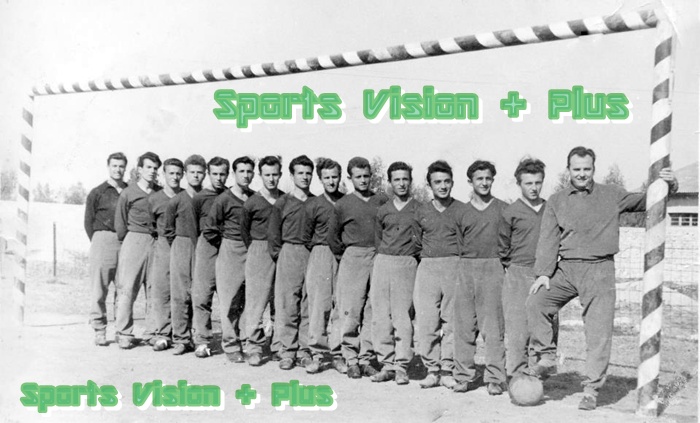 “Partizani” UP-Tirane (1961)
1961 — First Edition of the Balkan Cup
“Partizani” in the Tournament That Opened a New Chapter for Balkan Clubs
1. The Birth of a New Competition
In 1961, Balkan football gained a new international club competition. The Balkan Cup brought together teams from Albania, Bulgaria, Greece, Romania, Turkey and Yugoslavia. It offered clubs an opportunity to measure their strength beyond their domestic leagues, at a time when many clubs in the region had limited opportunities to participate in UEFA competitions.
The sources consulted date the beginning of the tournament to 1961, but they do not identify a single individual as its founder.
The first edition was played in a group format involving five teams: “Steagul Roșu” of Brașov, “Levski” of Sofia, “Partizani” of Tirana, “Fenerbahçe” of Istanbul and “AEK” of Athens. “Dinamo Zagreb”, which had been mentioned as a possible participant from Yugoslavia, chose to play in the Cup Winners’ Cup and was not replaced by another Yugoslav club.
As a result, the inaugural edition had no representative from Yugoslavia, but it brought together some of the best-known clubs in South-Eastern European football.
2. The Competition Format
The tournament was played as a group, with the teams facing one another. The standings were determined by points and, in the event of a tie, by goal statistics. “Steagul Roșu” finished in first place, while “Levski” and “Partizani” finished second and third respectively, each with eight points.
“Partizani’s” participation also carried particular significance in Albania. The team came from a domestic championship in which it had finished first in the 1961 season, with 30 points after 18 matches. “Dinamo” had also collected 30 points, so the title was decided in an additional match, which “Partizani” won after the first encounter had ended in a draw.
At the time, the team was coached by Rexhep Spahiu and included players who would become important names in Albanian football: Sulejman Maliqati, Iljaz Dingu, Miço Papadhopulli, Lin Shllaku, Kolec Kraja, Panajot Pano and Refik Resmja. The documented line-up from the match against “Levski” gives us a concrete picture of the team’s core.
 3. “Partizani’s” Campaign: Matches and Analysis
“Partizani” finished the group with three wins, two draws and three defeats in the official standings, including two administrative victories against “AEK” after the Greek club withdrew. Its goal record was eight scored and six conceded.
This record requires clarification: only six of “Partizani’s” matches were actually played on the field. The other two were recorded as administrative victories. This matters when analysing the season, because those matches cannot be treated as games that were played normally.
Match 1 — “Steagul Roșu” 1–0 “Partizani”
9 March 1961 · Brașov, Romania
“Partizani” began its campaign abroad with a narrow defeat. The only goal was scored by Hașoti in the fifth minute. The match was played at “Tractorul” Stadium in Brașov in front of approximately 18,000 spectators.
Such an early goal forced the Albanian side to spend most of the match chasing the result. Nevertheless, the 0–1 defeat did not end the campaign. The next match in Tirana would give “Partizani” an opportunity to respond against another strong opponent, “Levski”.
Archival match record
Date: 9 March 1961
Venue: “Tractorul” Stadium, Brașov
Result: “Steagul Roșu” 1–0 “Partizani”
Goalscorer: Hașoti, 5′
Attendance: 18,000
Referees: Not identified in the sources consulted
Line-ups: Not found in the sources consulted
Match 2 — “Partizani” 2–0 “Levski”
29 March 1961 · “Dinamo” Stadium, Tirana
This was the match that left the clearest record in the archives of the edition. “Partizani” defeated Sofia’s “Levski” 2–0 under the guidance of Rexhep Spahiu, in an atmosphere charged with emotion and attended by between 15,000 and 20,000 spectators.
The opening goal was scored by Kolec Kraja in the 15th minute, directly from a corner kick. In the 23rd minute, following an attacking move involving Panajot Pano and a save attempt by Bulgarian goalkeeper Dervenski, Berti Jashari scored with a backheel. “Partizani” created further chances after the break, including a powerful shot by Miço Ndini that struck the post.
“Partizani” had not only talented individuals but also a style of play capable of imposing its rhythm against a well-known Bulgarian club.
Archival match record
Date: 29 March 1961
Venue: “Dinamo” Stadium, Tirana
Result: “Partizani” 2–0 “Levski”
Goalscorers: Kolec Kraja, 15′; Berti Jashari, 23′
Attendance: 15,000
Referees: Krucescu, Toth, Mihailescu — Romania
Coaches: Rexhep Spahiu; Vasili Spasov
Line-ups
“Partizani”: Maliqati; Deliallisi, M. Papadhopulli, Dingu; Ndini, Shllaku; Kraja, Bukoviku (G. Merja), Pano, Resmja, Jashari.
“Levski”: Dervenski; Vasiliev, Filipov, Donçev; Prodanov, Vucov (Pejev); Abaxhiev, Sokollov, Jordanov, Georgiev, Gajdarov.
Match 3 — “Fenerbahçe” 1–0 “Partizani”
20 August 1961 · Istanbul, Turkey
In the away match against “Fenerbahçe”, “Partizani” suffered another narrow defeat. The only goal was scored by Nedim Doğan in the 13th minute. The match records list “Şükrü Saracoğlu” Stadium, an attendance of 20,773 and Romanian referee Alexandru Tóth. One further detail should be noted: RSSSF records some uncertainty over the date, suggesting in parentheses that the match may have been played on 24 August.
For “Partizani”, this was another match decided by a single goal, but it also offers a useful indication of the opposition’s level. “Fenerbahçe’s” line-up included Lefter Küçükandonyadis, a well-known name in Turkish football, alongside Nedim Doğan and Yüksel Gündüz.
Archival match record
Date: 20 August 1961; RSSSF also suggests 24 August
Venue: “Şükrü Saracoğlu” Stadium, Istanbul
Result: “Fenerbahçe” 1–0 “Partizani”
Goalscorer: Nedim Doğan, 13′
Attendance: 20,773
Referee: Alexandru Tóth
Coaches: László Székely; Rexhep Spahiu
Documented line-ups
“Fenerbahçe”: Şükrü Ersoy; Özcan Köksoy, Atilla Altaş; Necati Toker, Naci Erdem, Kadri Aytaç; Yüksel Gündüz, Lefter Küçükandonyadis, Hilmi Kiremitçi, Ergun Öztuna, Nedim Doğan.
“Partizani”: Sulejman Maliqati; Iljaz Dingu, Gani Merja, Miço Papadhopulli; Miço Ndini, Lin Shllaku, Qamil Halluni; Kolec Kraja, Panajot Pano, Refik Resmja, Stavri Lubonja.
Match 4 — “Partizani” 0–0 “Fenerbahçe”
30 September 1961 · Tirana
In the return match, “Partizani” managed to keep the Turkish side from scoring. The game ended 0–0. The sources consulted identify “Dinamo” Stadium and report an attendance of 20,000.
The draw showed that “Partizani” could stand up to “Fenerbahçe” in Tirana. Compared with the narrow defeat in Istanbul, it was an important defensive response, although the Albanian side did not find the net.
Archival match record
Date: 30 September 1961
Venue: Tirana; the stadium requires further verification
Result: “Partizani” 0–0 “Fenerbahçe”
Goalscorers: None
Attendance: 20,000
Referees: Not identified in the sources consulted
Line-ups: Not found in the sources consulted
Match 5 — “Levski” 4–0 “Partizani”
12 October 1961 · Sofia, Bulgaria
In Sofia, “Partizani” suffered its heaviest defeat among the six matches played on the field. “Levski” won 4–0, scoring three times in the first half. The stadium listed in the edition’s source is “Rakovski”.
This result also mattered for the final standings. “Levski” and “Partizani” finished the group with eight points each, but the Bulgarian side had a better goal record. That was why “Partizani” finished third despite having the same number of points as the second-placed team.
Archival match record
Date: 12 October 1961
Venue: “Rakovski” Stadium, Sofia
Result: “Levski” 4–0 “Partizani”
Half-time: “Levski” led 3–0
Goalscorers: Not identified in the sources consulted
Attendance: Not identified in the sources consulted
Referees: Not identified in the sources consulted
Line-ups: Not found in the sources consulted
Match 6 — “Partizani” 0–0 “Steagul Roșu”
5 November 1961 · Tirana
In “Partizani’s” final match actually played on the field in this edition, the Albanian side drew 0–0 with “Steagul Roșu”. According to the edition’s archive, the match took place in Tirana at “Dinamo” Stadium.
For the Romanian champions, the draw was another step towards securing first place. For “Partizani”, it did not change the standings, but it brought the on-field portion of the campaign to a close with a match in which the team conceded no goals.
Archival match record
Date: 5 November 1961
Venue: “Dinamo” Stadium, Tirana
Result: “Partizani” 0–0 “Steagul Roșu”
Goalscorers: None
Attendance: Not identified in the sources consulted
Referees: Not identified in the sources consulted
Line-ups: Not found in the sources consulted
4. Two Matches That Were Not Played: “AEK” Withdraws
To complete “Partizani’s” record, we must also include the two scheduled matches against “AEK”. After the match of 15 November 1961, the Greek club withdrew from the tournament. As a result, the remaining fixtures were recorded as administrative victories for the opponents.
There is a discrepancy here that should not be avoided: RSSSF records 3–0 administrative wins for “Partizani” in both the away match and the match in Tirana, while another source for the edition gives
2–0. The final RSSSF table, which lists eight goals scored and six conceded for “Partizani”, is consistent with the two administrative results of 3–0. For the time being, we will therefore use the RSSSF figures in our inventory while keeping the discrepancy documented.
Administrative match records
Athens fixture
Opponent: “AEK” — “Partizani”
Status: Administrative victory
Result according to RSSSF: 0–3
Date, venue and line-ups: No match was played to document
Tirana fixture
Opponent: “Partizani” — “AEK”
Status: Administrative victory
Result according to RSSSF: 3–0
Date, venue and line-ups: No match was played to document
5. Final Group Standings
According to RSSSF, including the administrative results.
1st — “Steagul Roșu” Brașov
Played: 8 · Wins: 5 · Draws: 3 · Losses: 0 · Goals: 18–7 · Points: 13
2nd — “Levski” Sofia
Played: 8 · Wins: 3 · Draws: 2 · Losses: 3 · Goals: 16–11 · Points: 8
3rd — “Partizani” Tirana
Played: 8 · Wins: 3 · Draws: 2 · Losses: 3 · Goals: 8–6 · Points: 8
4th — “Fenerbahçe”
Played: 8 · Wins: 2 · Draws: 4 · Losses: 2 · Goals: 9–11 · Points: 8
5th — “AEK” Athens
Played: 8 · Wins: 1 · Draws: 1 · Losses: 6 · Goals: 8–24 · Points: 3
6. What Does the First Edition Tell Us?
For “Partizani”, the first edition of the Balkan Cup was an experience with two sides. At home in Tirana, the victory over “Levski” showed that the Albanian team could produce technically accomplished and imaginative football against a well-known opponent.
In the away matches against “Steagul Roșu”, “Fenerbahçe” and “Levski”, the results showed how difficult it was to maintain the same level away from home.
Nevertheless, third place should not be read merely as a position in the table. “Partizani” finished level on points with “Levski” and “Fenerbahçe”, but ranked behind them because of the goal statistics. The points difference between the teams was small, but the goal records proved important in determining the final order.
 “FK Partizani UP” in Istambul against “Fenerbahce” in Freindly Match 1962
* * *
Balkan Cup, 1962–1965: “Dinamo” and “17 Nëntori” in the Test of Balkan Football.
Four Years Between Domestic Rivalry and International Challenges.
At the beginning of the 1960s, the Balkan Cup was one of the rare opportunities for Albanian clubs to regularly measure themselves against teams from other countries in the region. During these years, Albanian representation was based mainly on Tirana’s “Dinamo”, which participated in two consecutive cycles, and later on “17 Nëntori”, which entered the group of the 1964–1966 edition.
In the 1962–1963 Albanian championship, “Dinamo” finished second, behind “Partizani”, with 32 points from 22 matches. “17 Nëntori” finished fourth. Two seasons later, the picture changed: “17 Nëntori” were crowned Albanian champions in the 1964–1965 season, with 31 points, ahead of “Partizani” and “Dinamo”. These standings help us understand that the Albanian clubs that appeared on the Balkan stage were part of a competitive domestic competition, in which the positions of the teams changed from one season to another.
Opposing them were well-known names of Balkan football: Sofia’s “Levski”, Bucharest’s “Dinamo”, Istanbul’s “Fenerbahçe”, “Beşiktaş” and Bucharest’s “Rapid”, as well as Varna’s “Cherno More”. These teams included footballers who were part of the elite level of football in their respective countries; however, in order to mention with certainty the names of players who were simultaneously members of their national teams, we must rely on the documented line-ups of each match.
1962 — Tirana’s “Dinamo” Against Bucharest’s “Dinamo”
Tirana’s “Dinamo” – Bucharest’s “Dinamo” 1–1
24 December 1961 | Group B, 1961–1963 cycle
Although the match was played in December 1961, it belongs to the cycle that continued throughout 1962. Tirana’s “Dinamo” began this part of the competition with a 1–1 draw against the Romanian side. According to the RSSSF archive, the score at half-time was 1–0 for the Albanian side.
This was an important beginning for “Dinamo”, which would have to face three strong opponents in the group. However, the source consulted does not provide the names of the goal scorers, the minutes, the referee, the number of spectators, or any other details.
Bucharest’s “Dinamo” – Tirana’s “Dinamo” 2–3
11 March 1962
In the Romanian capital, Tirana’s “Dinamo” achieved one of the most important results of its participation. The Albanian side won 3–2, after the first half had ended 3–1 in its favour. The result shows that “Dinamo” had built its advantage during the first 45 minutes and managed to maintain it until the end.
The victory in Bucharest was evidence of the competitiveness of the Albanian side in a group where every point was important for the final standings.
“Levski” – Tirana’s “Dinamo” 2–2
22 March 1962
In Sofia, Tirana’s “Dinamo” earned a point after drawing 2–2 with “Levski”. At half-time, the Bulgarian side was leading 2–1, but “Dinamo” managed to score once more in the second half and leave with a draw.
The result was important for the progress of the Albanian side. Earning a point away from home against a team such as Sofia’s “Levski” was not an easy task, especially at a time when international travel and preparation for such matches required special organisation.
“Fenerbahçe” – Tirana’s “Dinamo” 1–0
Aytaç 56′
25 March 1962. Just three days after the match in Sofia, “Dinamo” played in Istanbul against “Fenerbahçe”. This time, the Albanian side lost 1–0 (Aytaç 56′).
The archive records a goalless first half, which shows that the match remained open until after the interval.
The congested schedule was an important factor in this cycle. Within a few days, “Dinamo” faced two strong opponents away from home, in two different cities.
Tirana’s “Dinamo” – “Levski” 0–0
21 June 1962
In Tirana, “Dinamo” and “Levski” ended in a goalless draw. Although there were no goals on the scoreboard, the result had value for the Albanian side, which managed not to concede against an opponent that would win the group.
Tirana’s “Dinamo” – “Fenerbahçe” 3–2
Vorfi 2′, 25′, 65′; Yazıcı 4′; Becedek 36′
23 November 1962
In the final recorded group match for “Dinamo”, the Tirana side defeated “Fenerbahçe” 3–2. Vorfi was to be the protagonist of this match from the 2nd minute, when he put “Dinamo” ahead. But in the 4th minute, the Turks equalised through Yazıcı. The match showed signs of producing many goals, and Vorfi disagreed when he scored again in the 25th minute. At half-time, “Dinamo” led 2–1, showing that it had built an advantage in the first half. In the second half, the players of “Fenerbahçe” equalised in the 36th minute through Becedek, but they had not calculated correctly, as Vorfi scored for the third time, this time in the 65th minute, sealing the 3–2 victory for “Dinamo”.
This victory ended the Albanian side’s cycle on a positive note. In the final standings, Tirana’s “Dinamo” finished second with seven points, behind Sofia’s “Levski” with nine points.
1963 — “Dinamo” Begins Another Cycle
“Beşiktaş” – Tirana’s “Dinamo” 1–0
30 August 1963 | 1963–1964 Edition
In the first match of the new group, Tirana’s “Dinamo” lost 1–0 in Istanbul. At half-time, “Beşiktaş” held the same 1–0 advantage. The source provides no further details about the development of the match.
For the Albanian side, this was a difficult start to the cycle, but the narrow margin kept the match open until the end.
Tirana’s “Dinamo” – “Beşiktaş” B 2–0
17 October 1963
“Dinamo” won 2–0 against “Beşiktaş”’s reserve side. This match has a particular note in the historical archive. The Turkish club had planned matches in Tirana and Bucharest with only one day between them, with the aim of reducing travel expenses. Due to transportation difficulties, the reserve side arrived late in Tirana and the match was postponed from 16 to 17 October.
On the same day, “Beşiktaş”’s first team played against “Rapid” in Bucharest. Thus, the Turkish club ended up playing two Balkan Cup matches on the same day, in two different cities.
For “Dinamo”, the victory was a valuable result, but it should be viewed in light of the fact that the opponent was a reserve side supported also by players from the youth team.
Tirana’s “Dinamo” – “Rapid” 1–1
15 December 1963
In Tirana, “Dinamo” drew 1–1 with Bucharest’s “Rapid”. At half-time, the Romanian side was leading 1–0, but the hosts managed to equalise in the second half.
This result was an important point for “Dinamo”, against a team that would finish the group in first place. The draw showed that the Tirana side could remain competitive even against the stronger opponents in the group.
1964 — The End of “Dinamo”’s Cycle
Tirana’s “Dinamo” – “Levski” 1–1
8 April 1964
In the match played in Tirana, “Dinamo” and “Levski” drew 1–1. The archive does not specify the half-time score, so it cannot be said which team started the match better.
The draw gave “Dinamo” another point in a group where the final differences would be small. In the end, the Albanian side would finish the cycle in third place, with five points, the same number as “Levski”, but in a lower position.
“Levski” – Tirana’s “Dinamo” 1–1
14 July 1964
In Sofia, “Dinamo” achieved another 1–1 draw. This time, “Levski” led 1–0 at half-time, but the Albanian side equalised in the second half.
The point earned away from home was a good result for “Dinamo”, although it was not enough to change its position in the group standings.
“Rapid” – Tirana’s “Dinamo” 2–1
15 July 1964
One day after the draw in Sofia, “Dinamo” played in Bucharest against “Rapid”. The Romanian side led 1–0 at half-time and eventually
won 2–1.
Two away matches in two days represented a difficult physical and organisational test. For “Dinamo”, this defeat was another setback in the closing stage of the cycle.
In the final standings, “Rapid” finished first with ten points, while “Levski” and Tirana’s “Dinamo” finished with five points each. “Dinamo” finished third.
 “17 Nentori” in 1964-1965 Season
1964–1965 — “17 Nëntori” Takes Over
“17 Nëntori” – “Cherno More” 0–0
1964 | Exact date not recorded in the archive
“17 Nëntori” began its participation in the group with a goalless draw against Varna’s “Cherno More”. The result provides no information about goal scorers, but it shows that the Tirana side managed to finish the match without conceding a goal.
For “17 Nëntori”, this was the beginning of a cycle that would continue during 1965 and conclude in 1966.
“Cherno More” – “17 Nëntori” 1–0
1965 | Exact date not recorded in the archive
In the return match, “Cherno More” won 1–0. The archive does not provide the half-time score or the name of the goal scorer, therefore, in the absence of information, we cannot say with certainty how the match developed.
The away defeat made “17 Nëntori”’s path in the group more difficult, as the team had to compete with “Rapid”, “Cherno More” and “Beşiktaş”.
“Beşiktaş” – “17 Nëntori” 1–1
2 June 1965
In Istanbul, “17 Nëntori” earned a 1–1 draw against “Beşiktaş”. At half-time, the Albanian side was leading 1–0, but the hosts managed to equalise in the second half, in the 56th minute through C. Ehlidil.
This was a positive result for “17 Nëntori”, which showed that it could earn points away from home as well. However, in order to assess the match in greater detail, chronicles documenting the goal scorers and key moments must be found.
“Rapid” – “17 Nëntori” 3–1
14 July 1965
In Bucharest, “Rapid” defeated “17 Nëntori” 3–1. At half-time, the Romanian side was leading 2–1. This detail shows that “17 Nëntori” had managed to score, but could not maintain the balance of the match against the hosts.
The defeat was a setback in the group competition. “Rapid” would finish in first place, ahead of “Cherno More” and “17 Nëntori”.
“17 Nëntori” – “Beşiktaş” 2–0
26 November 1965
In Tirana, “17 Nëntori” achieved a convincing 2–0 victory over “Beşiktaş”. At half-time, the hosts were leading 1–0. It was one of the Albanian side’s best results in this group and an indication that “17 Nëntori” could take advantage of its home matches.
“17 Nëntori” – “Rapid București” 1–2
Date: May 19, 1966.
Stadium:
First half: 1–0.
Goalscorers: “17 Nëntori” scored the opening goal, but “Rapid” turned the match around to win 1–2.
Commentary: One of those matches where the final score does not tell the whole story. “17 Nëntori” ended the first half in the lead, but the group leaders responded in the second half. With this result, the Romanian side effectively secured the top spot in the group.
The victory was an important result for the team, which had been crowned Albanian champions in the 1964–1965 season. However, in the Balkan Cup, the overall record was not enough to take the team to the final stage.
The Record of 1962–1965
During this period, Tirana’s “Dinamo” finished second in the group in the 1961–1963 cycle and third in the 1963–1964 edition. “17 Nëntori” continued Albanian representation in the 1964–1966 cycle and finished third in the group.
These participations did not take the Albanian clubs to the final, but they gave them the opportunity to face some of the well-known teams of Balkan football. At the same time, their standings in the Albanian championship show that international participation was part of a broader sporting history, in which the clubs also had to cope with the demands of domestic competition.
 “FK Partizani UP” in 1964
Note on archival verification: the main source is the history of the Balkan Cup for clubs provided by RSSSF. It contains the results and, for some of the matches, the half-time scores.
For the Albanian matches discussed here, the goal scorers, minutes, referees, spectators and line-ups have not been published on the consulted page. These details should be sought in contemporary sports press reports and club archives before being included as confirmed facts – (Author of this article)
To be continued……
© Copyright by Pjerin Bj
Bronx, Bryant Park, Hudson Yard – New York
October, 2026
_____________________-
Sports Vision +Plus in activity since 2013

Discover more from Sports Vision +
Subscribe to get the latest posts sent to your email.


