Flamurtari–Barcelona: From Vasil Ruci to Sokol Kushta, Four Matches Vlorë Will Never Forget!
 Prologue!
Before Barcelona arrived in Vlorë!
To understand why the “Flamurtari”–“Barcelona” encounters remained in the memory of Albanian football for so long, we have to go back in time. Not to “Camp Nou”. Not to the stars of “Barcelona”. But to Vlorë.
Because when “Barcelona” arrived in Albania for the first time, in September 1986, “Flamurtari” was no longer a peripheral name in the Albanian championship. For years, the Vlorë side had gradually established itself among the contenders at the top level, repeatedly challenging near the summit and becoming one of those teams capable of upsetting any prediction in Albanian football.
The championship title had not yet arrived. “Flamurtari” had not touched that crown.
But something else was being built in Vlorë: the belief that the team could play against anyone.
That belief had not been born from a single season, but from an entire generation of footballers.
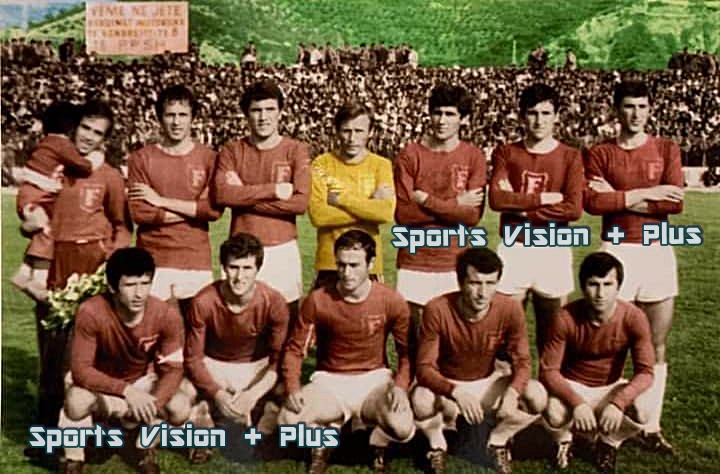 “Flamurtari” 1981-1982 Season!
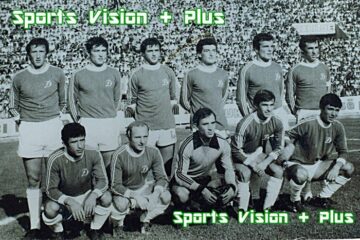
In the 1980s, the red-and-black shirt of “Flamurtari” became associated with names that today sound like a separate chapter in Albanian football: Uran Xhafa, Spiro Curi, Alfred Zijaj, Petro Ruci, Vasillaq Ziu, Edmond Licaj, Kreshnik Çipi, Rrapo Taho, Latif Gjondjeda, Vasil Ruci, Sokol Kushta, Alfred Bubeqi, and many others who created a strong, courageous team with a distinctive identity.
Years later, the President of the Republic would single out several of them for their contribution to that generation: Kreshnik Çipi as captain, Rrapo Taho at the heart of the defense, Sokol Kushta as a master of goals and Latif Gjondjeda as the conductor of midfield, while Petro Ruci remained another important figure of that “Flamurtari”.
But if we had to find one player who connected “Flamurtari” with goals, the name would be Vasil Ruci.
The bomber of Vlorë.
The striker who needed very little space to change a match.
And he would be the man who opened the story of “Flamurtari” against “Barcelona”.
September 1986
At the time, Albanian football was experiencing one of the most interesting periods of its European history.
Albanian clubs still faced major restrictions and every trip abroad carried the weight of a rare event. But on the field, a new generation had begun to show that the gap between Albanian teams and foreign sides was not always as wide as it might have seemed.
“Flamurtari” had reached that point.
And the draw gave them an opponent who needed no introduction:
“Barcelona”.
Not a distant “Barcelona”, known only from newspapers.
The “Barcelona” of “Camp Nou”.
The “Barcelona” of the blaugrana shirt.
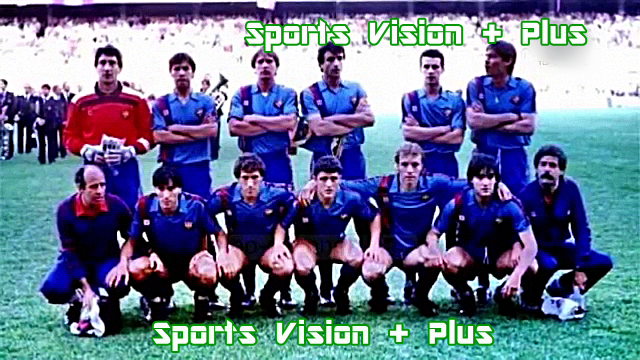
“Barcelona” with internationally renowned players and a stadium where every opponent could feel the weight of history before even touching the ball.
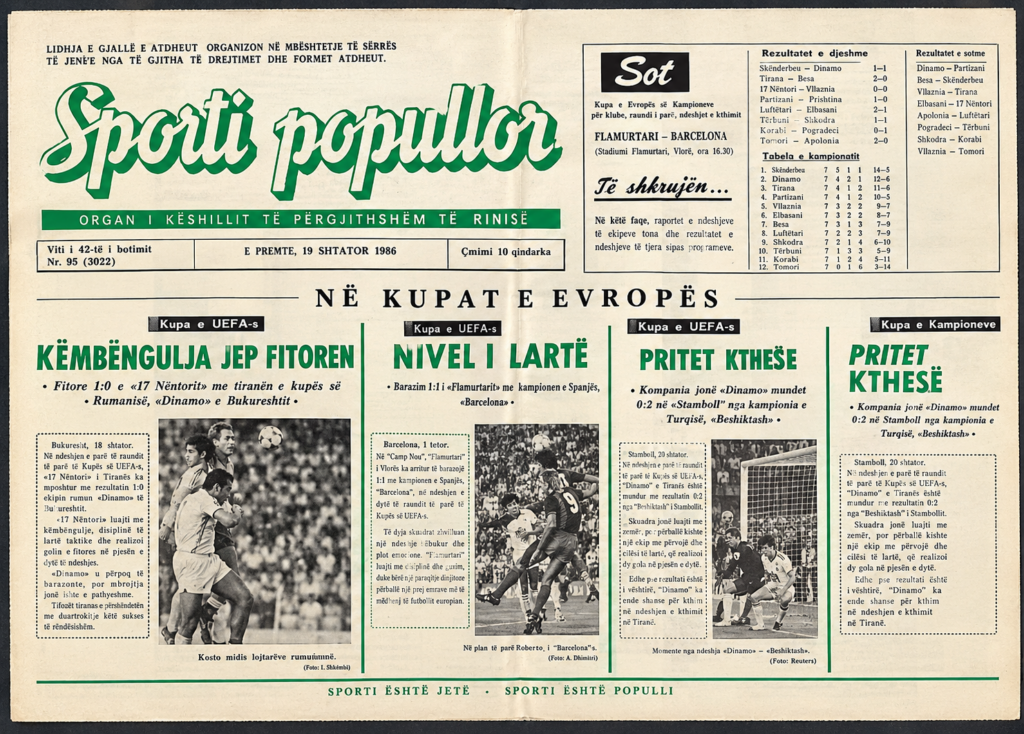
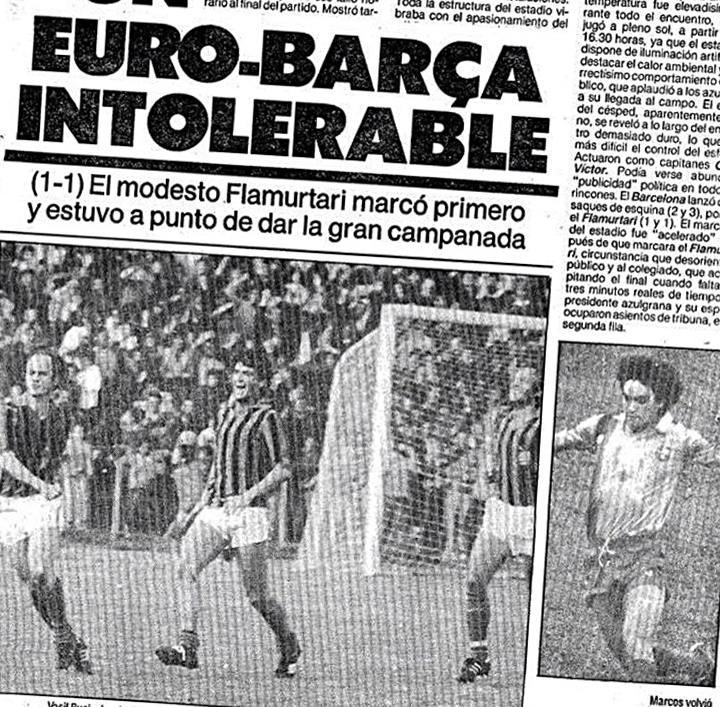
On 17 September 1986, at “Stadiumi Flamurtari”, the first match took place.
And Vlorë was not afraid.
“Flamurtari” played, fought and waited for its moment. In the 68th minute, Vasil Ruci scored.
“Flamurtari” 1–0 “Barcelona”.
For several minutes, Vlorë believed that the seemingly impossible night had arrived.
“Barcelona” responded.
Esteban Vigo equalized in the 88th minute.
1–1.
But even after that draw, something had changed.
“Flamurtari” had looked “Barcelona” in the eye.
And “Barcelona” had understood that it was not facing a team that had come merely to fill a place in the draw.
Eighty-five minutes later, at “Camp Nou”, “Flamurtari” would do even more.
On 1 October 1986, “Barcelona” and “Flamurtari” drew 0–0.
Two matches.
Two draws.
“Barcelona” advanced because of the away goal scored in Vlorë.
But for “Flamurtari”, the story did not end there. On the contrary, that was where a dream began to take shape—a dream that would return to the same road one year later.
Because Vlorë had not forgotten.
Neither had “Barcelona”.
One year later, “Flamurtari” was no longer the same
In the 1987–88 season, “Flamurtari” returned to the UEFA Cup with a team that had gained something extremely important: experience.
This time the road did not begin with “Barcelona”.
It began with “Partizani” Belgrade.
On 16 September 1987, in Vlorë, “Flamurtari” won 2–0.
Two weeks later, in Belgrade, “Partizani” won 2–1.
But “Flamurtari” had done what it needed to do.
3–2 on aggregate.
The next round brought another strong opponent: “Wismut Aue”.
In the first match, in Aue, “Flamurtari” lost 1–0.
But this team had already learned something: a defeat away from home did not necessarily mean the end.
On 4 November 1987, in Vlorë, “Flamurtari” turned everything around.
2–0.
Rrapo Taho scored in the fourth minute.
Vasil Ruci completed the story in the 73rd minute.
“Flamurtari” advanced 2–1 on aggregate.
And now, after “Partizani” Belgrade and “Wismut Aue”, the opponent standing in front of “Flamurtari” was once again the same team that had come to Vlorë one year earlier.
“Barcelona”.
But this time something had changed.
“Flamurtari” was not going to “Barcelona” as a team arriving simply to enjoy an experience.
It was going as a team that had eliminated two European opponents.
As a team that had gained confidence.
As a team that now knew it could compete at this level.
On 25 November 1987, “Camp Nou” welcomed “Flamurtari”.
“Barcelona” won 4–1.
Vasil Ruci scored again for the Vlorë side.
But the result did not close the story.
Because two weeks later, on 9 December 1987, “Barcelona” would come back to Vlorë.
And this time, Vlorë had prepared another answer.
“Flamurtari” 1–0 “Barcelona”.
Sokol Kushta.
The 15th minute.
One goal.
One victory.
One night that immediately entered the history of Albanian football.
UEFA records the four-match head-to-head as one victory for “Flamurtari”, two draws and one victory for “Barcelona”; across those four matches, Vasil Ruci scored three goals.
And so the story that had begun in September 1986 with a 1–1 had arrived one year later at a 1–0.
In between were “Camp Nou”, “Flamurtari”, “Partizani” Belgrade, “Wismut Aue”, Vasil Ruci, Rrapo Taho, Sokol Kushta and an entire generation that had turned Vlorë into one of the best-known addresses of Albanian football in Europe.
Four matches.
Two seasons.
One story.
And one question that will accompany us throughout this journey:
How did “Flamurtari”, a team that had not yet won the Albanian championship, manage to play “Barcelona” four times—and finish the story with a victory in Vlorë?
This is the story we will follow.
From the first match.
To “Camp Nou”.
From “Partizani” Belgrade.
To “Wismut Aue”.
And finally, back to Vlorë.
Where Sokol Kushta would score the goal that made an entire city believe that, for one night, even giants could be brought down.
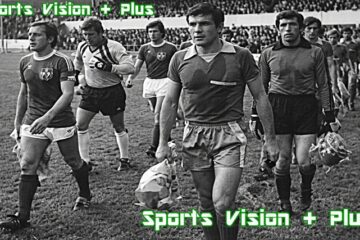
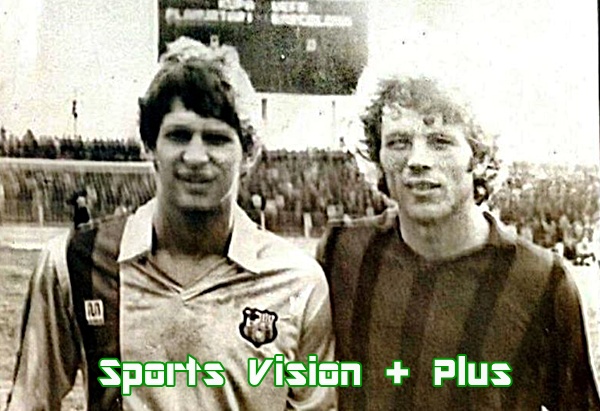
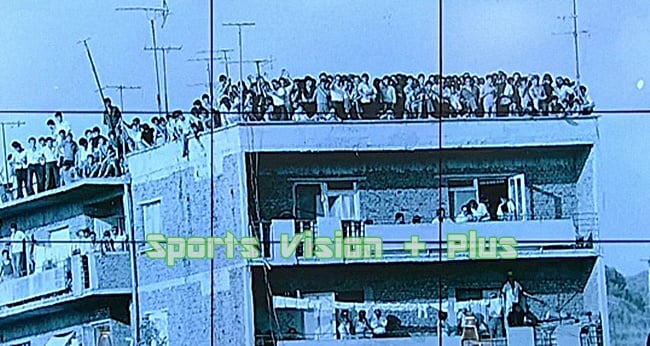 This picture is taken during the match “Flamurtari” vs “Barcelona” 1-1
Match One — 17 September 1986
Vlorë, where the sea collided with “Barcelona”
There are cities that meet history in silence.
Vlorë was not one of them.
On 17 September 1986, the coastal city seemed to have decided to move toward the stadium as one. “Barcelona” had arrived in Vlorë with names that needed no introduction in European football: Andoni Zubizarreta, Migueli, Víctor Muñoz, Bernd Schuster, Mark Hughes and Gary Lineker.
Opposite them stood “Flamurtari”, the team of a city with the sea in front of it and character behind it.
The Spanish newspaper “El País” described the occasion as an event for the whole of Albania and reported a crowd of around 15,000, a figure that exceeded the stadium’s usual capacity.
It was one of those moments when small football and great football meet, and the size of a club’s history or the scale of its budget suddenly matter less. On one side was “Barcelona”, coming from “Camp Nou”, from Spain, from one of the great centers of European football. On the other was “Flamurtari” of Vlorë, raised in a city where the Adriatic wind and sunlight had helped shape a particular character: open in appearance, but strong at heart.
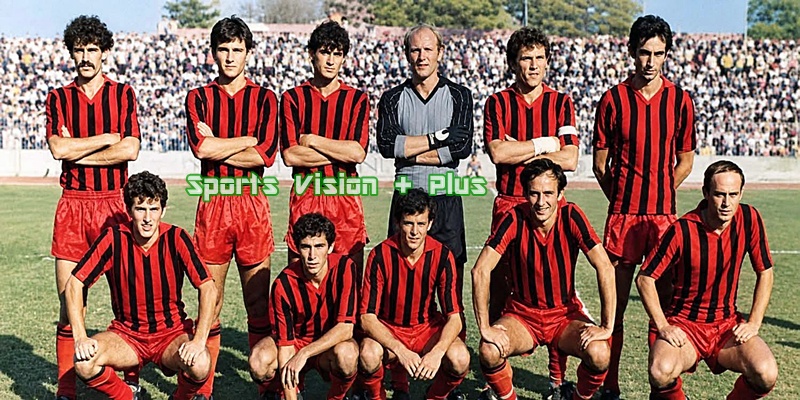
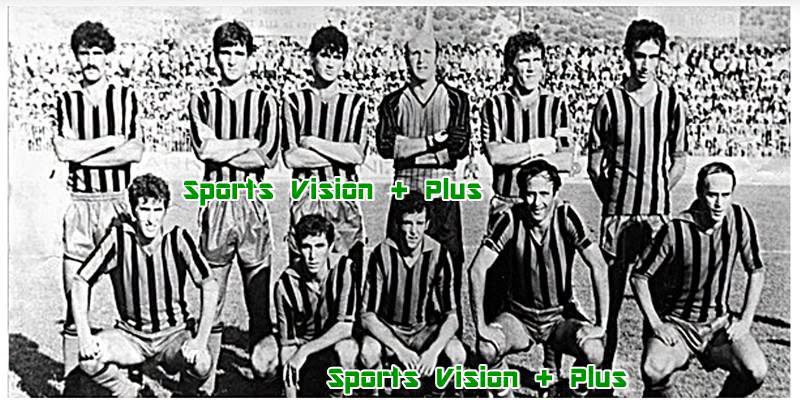 “Flamurtari” just before the first historic match against “Barcelona” in 1986 – Vlore
And if David had faced Goliath with a stone in his hand, “Flamurtari” had something else: a ball, a passionate stadium and the belief that giants are not always invincible.
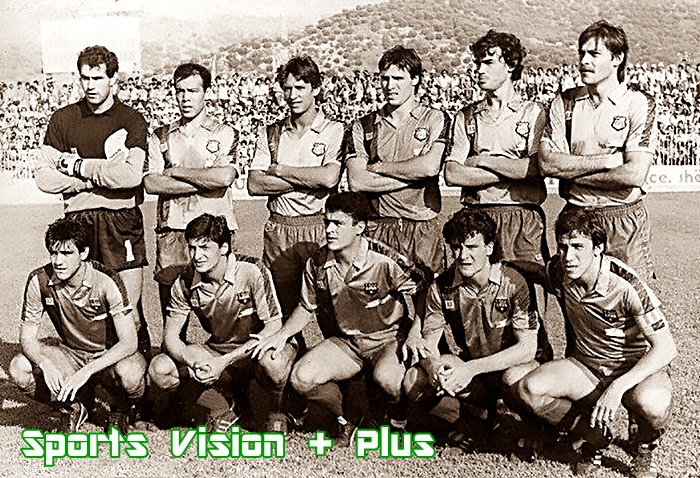 “FC Barcelona” in 1986 at the “Flamurtari” Stadium, just before the match.
The match began with the caution of two teams aware that one mistake could change everything. “Barcelona” had class, but “Flamurtari” had not come simply to watch. In goal stood Artur Lekbello; ahead of him Petro Ruci, Rrapo Taho, Kreshnik Çipi and Roland Iljadhi; in midfield Alfred Ferko, Latif Gjondjeda, Alfred Zijai and Vasillaq Ziu; while Vasil Ruci and Agim Bubeqi formed the attack.
On the other side, Terry Venables had brought a team featuring Zubizarreta, Migueli, Moratalla, Manolo, Gerardo, Pedraza, Urbano, Víctor Muñoz, Marcos Alonso, Hughes and Lineker.
But football does not always ask about names.
In the opening minutes, “Flamurtari” began to understand that “Barcelona” was great, but not unreachable. And the deeper the match went, the more the stadium seemed to push the home side forward. It was an invisible advantage that no statistic can record: the voices of thousands of people, the sea just beyond, the city behind the stands and the feeling that Vlorë was watching one of those matches that would be told for years.
Then came the moment.
Vasil Ruci.

The minutes passed and the Vlorë striker waited. In a match like this, a striker needs the patience of a hunter and the instinct of a predator that does not need many chances. Ruci had that instinct.
In the second half, “Flamurtari” found its reward.
1–0. Vasil Ruci.
Statistical sources record the goal in the 68th minute, while the official “FC Barcelona” archive places it in the 65th; there is therefore a small discrepancy over the minute, but not over the scorer or the course of the match.
For an entire city, history suddenly took an extraordinary turn.
“Flamurtari” was ahead of “Barcelona”.
Not in a friendly.
Not in a summer match.
But in the UEFA Cup.
And in Vlorë, for several minutes, Goliath had forgotten that he was Goliath.
But “Barcelona” was not “Barcelona” by accident.
Great teams possess a quality that often becomes visible only when they are in trouble: they know how to wait. They know how to suffer. And they know how to strike when their opponent believes the story is already in his hands.
“Flamurtari” resisted.
But only until the final minutes.
In the end, Esteban Vigo equalized and the match finished 1–1.
BDFutbol records the “Barcelona” goal in the 88th minute, while the official “FC Barcelona” archive places it in the 85th.
It was a blow for Vlorë.
But it was not a defeat.
On the contrary.
When the referee ended the match, “Flamurtari” had gained something much greater than a result. It had gained the belief that “Barcelona” could be challenged.
And perhaps that was the biggest difference between the two teams.
“Barcelona” had come to advance in a European tie.
“Flamurtari” had begun to believe that it could be the team to advance.
Match Two — 1 October 1986
“Camp Nou”: when the giant welcomed David
Two weeks later, the story traveled from the Adriatic to Catalonia.
From Vlorë to Barcelona.
From “Stadiumi Flamurtari” to “Camp Nou”.
This time there was no Albanian sea behind them, no streets of Vlorë, no stands exploding after every challenge. Ahead of “Flamurtari” was one of the largest and most famous stadiums in Europe.
And “Barcelona” had one more reason not to underestimate its opponent.
“Flamurtari” had done something unexpected.
It had come out of the first match with a 1–1 draw.
The newspaper “El País”, one day before the return, reported that Terry Venables did not consider “Flamurtari” an easy opponent and warned specifically against underestimating them.
That small detail says a great deal.
But this time, “Camp Nou” would not only provide the setting for a match. Barcelona would also provide its voice. For the first time, a match involving an Albanian club abroad would be broadcast live by Radio Tirana. On the other end of the line was journalist Ahmet Shqarri, who was in Barcelona and would bring every emotion of that night into Albanian homes.
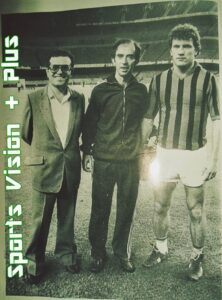 It was a broadcast produced under extraordinary circumstances: the line had not been secured beforehand, and only shortly before the match did Shqarri manage to get into a “Camp Nou” commentary booth, with the help of Radio Catalunya commentator José Luis Fernando Abajo. When Nevzat Dibra’s voice from Tirana announced, “Dear listeners, we are now connecting by telephone with Barcelona, Spain…”, that night acquired another dimension for many Albanians. They were not simply listening to “Barcelona”–“Flamurtari”.
They were hearing their own history arrive live from one of Europe’s great stadiums.
In Vlorë, “Barcelona” had arrived as the giant.
In Barcelona, it already knew that the opponent had to be respected.
“Flamurtari” entered “Camp Nou” without the fear that usually accompanies a smaller team in such a temple of football.
And the match became a battle of patience.
“Barcelona” had the ball, the names, the stadium.
“Flamurtari” had discipline.
It was as if Vlorë had brought a piece of itself into the heart of Catalonia: strong, quiet and stubborn.
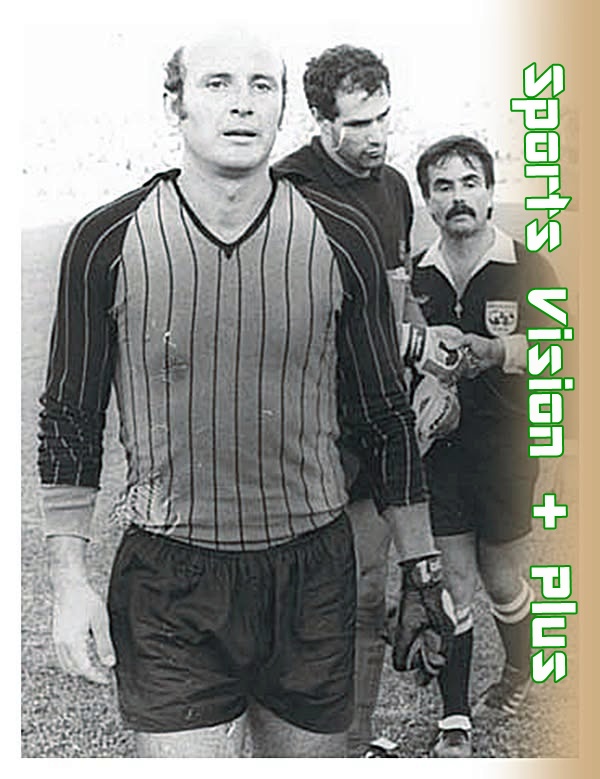
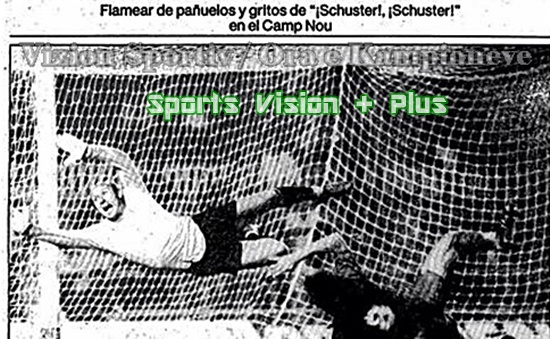 Spectacular Dive of the Artur Lekbello goalkeeper! The Man of the Match!
The minutes passed: 20, 40, 60, 80…
And the more time disappeared, the more the name of Artur Lekbello began to become part of the story of that night. The goalkeeper from Durrës had been placed in the toughest possible examination from the very beginning. Opposite him was Gary Lineker, the English striker who only months earlier had been crowned the leading scorer of the 1986 World Cup in Mexico.
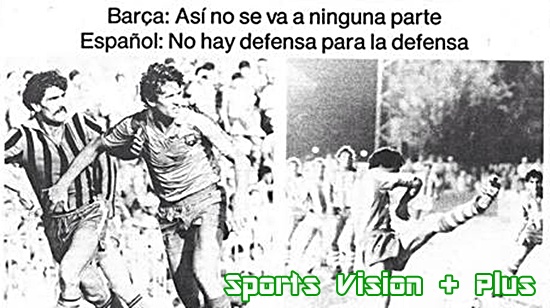
One of his early shots gave Lekbello the signal that this would not be an ordinary evening. But the Albanian goalkeeper did not retreat. Instead, his interventions began to take on the shape of saves that become greater the closer the end of the match approaches. Every ball pushed away from danger seemed to give “Flamurtari” a little more breath.
On the microphone, Ahmet Shqarri was trying to convey to Albanian listeners not only what was happening on the field, but also the extraordinary atmosphere inside “Camp Nou”. And at the center of this battle, amid the noise of 35,000 spectators and “Barcelona” attacks, stood Lekbello—the goalkeeper who that night seemed to be guarding not only a team, but an entire city.
The minutes continued to slide toward the end. “Barcelona” had the ball, “Camp Nou” and the full weight of its name. “Flamurtari” had Lekbello, its defense and that old Vlorë stubbornness that was not easily broken.
But the goal of “Flamurtari” did not open.
Nor did “Barcelona” find the net.
0–0.
The result was confirmed by the match data from “Camp Nou”.
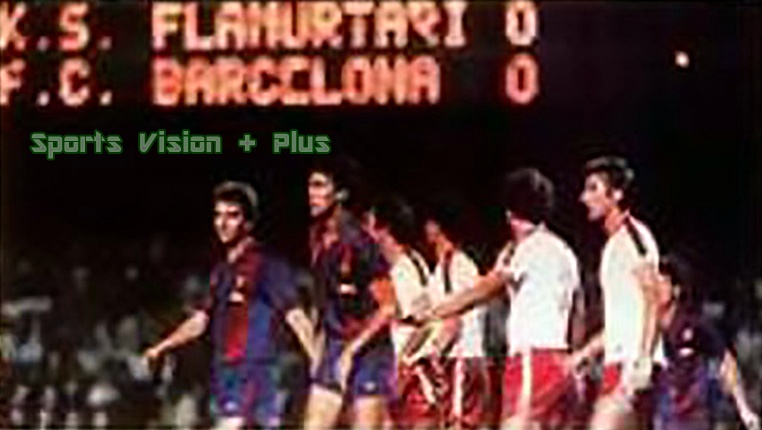
And when the match ended, the two-leg story could be reduced to two simple lines:
“Flamurtari” 1–1 “Barcelona”.
“Barcelona” 0–0 “Flamurtari”.
“Barcelona” advanced.
But another story had been born in Albanian football.
“Flamurtari” had not eliminated “Barcelona”.
But it had done something that, for that time, seemed almost as unbelievable: it had come through two matches against “Barcelona” unbeaten.
One victory and one draw would have been history.
Two draws were a small legend that had only just begun to take shape.
But Vlorë would not have to wait long.
One year later, “Flamurtari” would return to the UEFA Cup.
And this time, the story would be even more extraordinary.
Match Three — 25 November 1987
“Camp Nou”, once again: this time “Flamurtari” arrived as a team that had already passed two European gates
One year can change many things.
In September 1986, “Flamurtari” had faced “Barcelona” with the curiosity of a team touching one of the great walls of European football for the first time.
In the autumn of 1987, the story was different.
“Flamurtari” had learned not to be frightened by names.
In the first round, it had eliminated “Partizani” Belgrade: 2–0 in Vlorë and a 1–2 defeat in Belgrade, advancing 3–2 on aggregate. We will return to that tie in a separate article.
But that was not all.
In the next round came “Wismut Aue”.
In East Germany, “Flamurtari” lost 0–1.
Many teams would have seen the end of the road there.
“Flamurtari” saw only half of it.
On 4 November, in Vlorë, came the comeback: 2–0.
Rrapo Taho scored early and Vasil Ruci sealed qualification in the second half. DFB records 2–0 with Taho scoring in the third minute and Ruci in the 72nd; RSSSF gives Ruci’s goal in the 73rd.
Two obstacles.
Two stories.
Twice, “Flamurtari” had shown the same character: if the door did not open, it had to be pushed.
And after “Partizani” and “Wismut Aue”, “Barcelona” was waiting again.
This time in the Round of 16.
As if football had decided to play a joke on fate.
As if the draw were saying: All right, Vlorë, let’s try it one more time.
But at “Camp Nou”, on 25 November 1987, “Barcelona” was stronger.
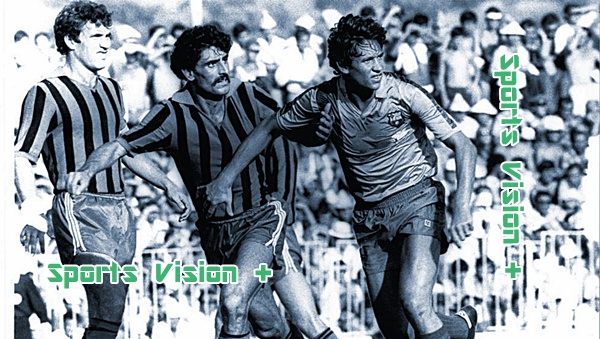
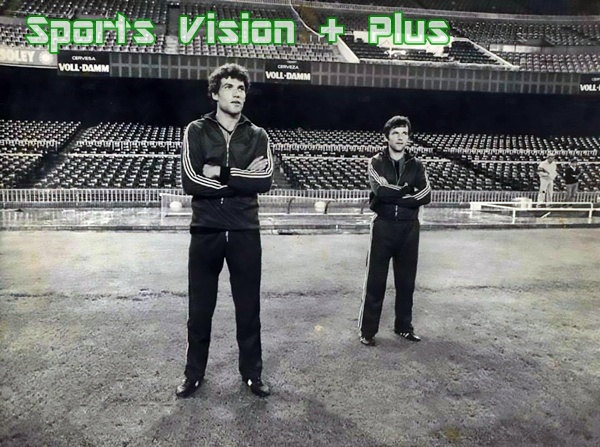 Anesti Arapi and Latif Gjondeda at the “Camp-Nou” Barcelona!
On the field was a team coached by Luis Aragonés, with Zubizarreta in goal, Migueli, Moratalla, Julio Alberto, Schuster, Víctor Muñoz, Carrasco and Gary Lineker. “Flamurtari” had Anesti Arapi, Kreshnik Çipi, Petro Ruci, Rrapo Taho, Roland Iljadhi, Alfred Ferko, Latif Gjondjeda, Alfred Zijai, Sokol Kushta and Vasil Ruci.
And the match began as one might expect on a difficult night.
“Barcelona” attacked.
“Flamurtari” resisted.
But shortly before halftime, Urbano Ortega scored.
1–0.
In the second half, “Barcelona” increased the tempo.
Lineker scored twice, and Carrasco added another.
Within a few minutes, 1–0 became 4–0.
But even when a team is close to a heavy defeat, there can be a moment that saves the night from becoming merely a statistic.
For “Flamurtari”, that moment once again carried the same surname:
Ruci.
Vasil Ruci won and converted the penalty that made it 4–1. BDFutbol records his goal in the 70th minute.
A goal that did not change qualification.
But it changed memory.
Because Ruci had scored against “Barcelona” in Vlorë in 1986.
He had been there in the second encounter.
And now he was scoring again at “Camp Nou”.
In football, some players are simply goalscorers.
Others become part of a story.
Vasil Ruci had become one of the symbols of this story.
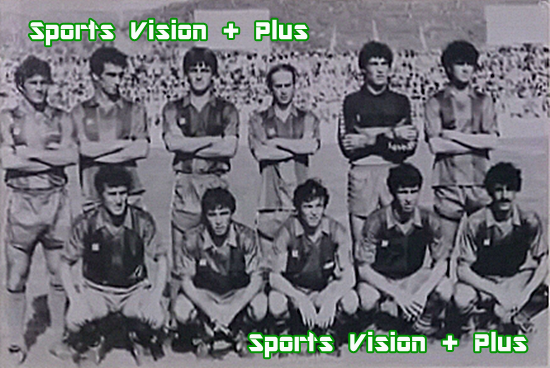
Match Four — 9 December 1987
Vlorë, once again: “Flamurtari” refused to let the story end in silence
Two weeks later, “Barcelona” came back to Vlorë.
And this time the question was not whether “Flamurtari” could eliminate “Barcelona”.
It was something simpler and, in a way, greater:
Could it beat them?
The answer came quickly.
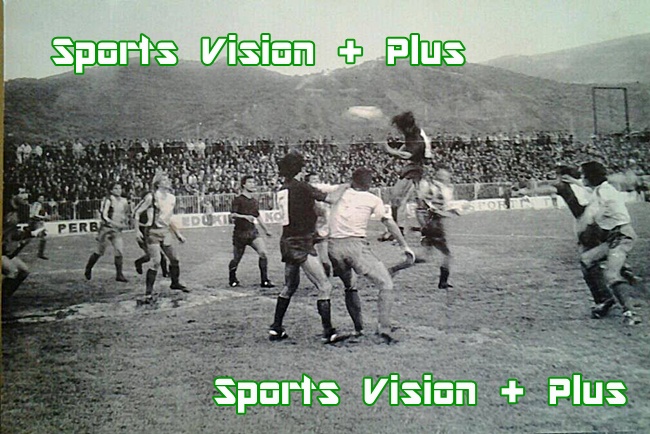
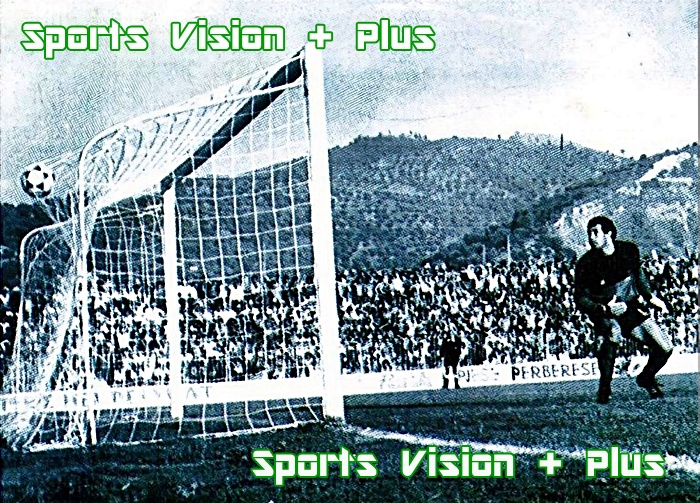
The 15th minute.
Sokol Kushta.
“Flamurtari” 1–0 “Barcelona”.
And the stadium exploded.
It was as if the whole of Vlorë had been waiting for precisely that moment.
That evening, the sea was there again, just beyond the stadium. The Llogara mountains stood on the horizon. The city was there. The people were there. And in front of them was “Barcelona”.

But this time, “Barcelona” was the side that had to think about protecting the result.
“Flamurtari” wanted more.
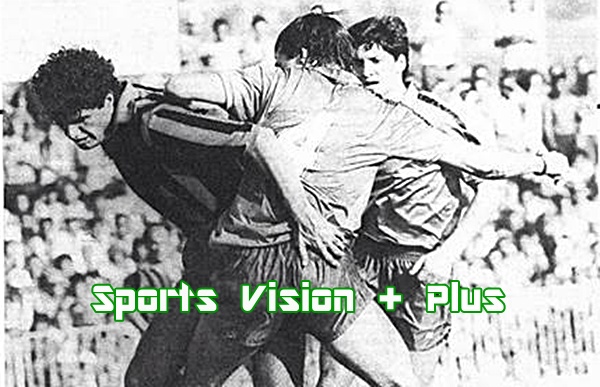
But the second goal never came.
“Barcelona” resisted.
And the match ended:
“Flamurtari” 1–0 “Barcelona”.
“Barcelona” advanced 4–2 on aggregate.
But here football has a beautiful paradox.
In the dry statistics, “Flamurtari” had been eliminated.
In the memory of the people, it had won the match.
And that is not excessive romanticism. It is the very nature of football.
Sometimes a result does not change the draw, but it changes the way a generation remembers itself.
“Barcelona” continued its journey.
“Flamurtari” remained in Vlorë.
But after four matches, the story had taken a form that could no longer be erased.
Four encounters.
One victory for “Flamurtari”.
Two draws.
One victory for “Barcelona”.
And across the four matches, “Barcelona” scored five goals, while “Flamurtari” scored three. UEFA’s head-to-head data confirms that record, with Vasil Ruci scoring twice of “Flamurtari”’s goals and Sokol Kushta one.
Four matches.
But much more than four results.
They were four chapters in a story in which a small coastal city, with a team built on work, character and belief, sat at the same table as one of the biggest names in European football.
And it did not rise from that table frightened.
It rose with its head held high.
Four Matches, One Story
Perhaps that is what made the “Flamurtari” of those years so special.
It was not only talent.
It was not only Vasil Ruci.
It was not only Sokol Kushta.
It was not only Kreshnik Çipi, Rrapo Taho, Latif Gjondjeda, Petro Ruci, Alfred Ferko, Alfred Zijai, Anesti Arapi or all the others who wore that shirt.
It was a spirit.
A kind of football that resembled Vlorë itself: open to the sea, but firmly connected to the land; beautiful to look at, but hard when survival demanded it.
And perhaps that is where the metaphor of David and Goliath also belongs.
David did not defeat Goliath because he was bigger.
He defeated him because he refused to fight the battle according to the giant’s rules.
“Flamurtari” did something similar.
It did not try to become “Barcelona”.
It tried to be “Flamurtari”.
And that was precisely where it found its strength.
In 1986, it held “Barcelona” in Vlorë.
At “Camp Nou”, it stopped them at 0–0.
In 1987, after eliminating “Partizani” Belgrade and “Wismut Aue”, it returned to face them again.
It lost 4–1 in Barcelona.
But in Vlorë, on 9 December, it gave the only answer a city like this could give:
1–0.
A goal by Sokol Kushta.
A victory.
And a memory that never left Vlorë.
EPILOGUE
When History Returned to Vlorë
There are football stories that end with a result. Others, even after decades have passed, find a way to return to the place where they were born.
The story of “Flamurtari” and “Barcelona” was one of them.
The encounters of 1986 and 1987 remained for many years a special memory of Albanian football: four matches, two cities, two different football worlds and a rivalry that, although lasting only ninety minutes at a time, left a mark that lasted much longer.
But 38 years later, that story took an almost cinematic turn.
In June 2024, “Flamurtari” invited “Barcelona” back to Vlorë.
Not for the UEFA Cup.
Not for a place in the next round.
This time, for memory.
For nostalgia.
To meet again the people who had once stood on opposite sides of the same field.
The match was organized under the title “History and Nostalgia”, as a symbolic return to the unforgettable encounters of 1986 and 1987. The veterans’ team of the “Barcelona” Players Association traveled to Vlorë, while protagonists of those historic matches were also present at “Stadiumi Flamurtari”.
Among the Catalan delegation was Esteban Vigo, the man who had equalized in the final minutes in Vlorë in September 1986. With him was Salva García, another of the footballers involved in that first match.
And suddenly, it seemed as if time had completed a circle.
Once, in that stadium, Vasil Ruci had lifted Vlorë with his goal against “Barcelona”.
Now, almost four decades later, the same people were returning to the same city, not to fight for a result, but to greet one another.
Some of the names of that era appeared on the field again. The bodies were no longer those of the 1980s, the steps no longer had their old speed, but the shirts and the memories remained. It was one of those matches in which the result becomes almost irrelevant, because the real opponent is no longer the team across the field.
It is time.
And time, that day in Vlorë, lost for a moment.
“Flamurtari” and “Barcelona” met again at “Stadiumi Flamurtari”, 38 years after that first UEFA Cup night.
The veterans’ match became a celebration of memory, while an institutional dinner later brought together former players of both teams. The two clubs also exchanged commemorative gifts, with representatives of the city of Vlorë and the “Barcelona” Players Association taking part in the event.
And here the story becomes even more beautiful.
Because in the 1980s, “Flamurtari” and “Barcelona” had been David and Goliath only at first glance.
On the field, they were two teams that respected one another.
One came from one of the great cities of European football.
The other came from a city where the Adriatic crashes against the shore every day and where people had learned that even when the wind blows hard, it is no reason to lower your head.
In 1986, Vlorë.
In 1986, “Camp Nou”.
In 1987, “Camp Nou” again.
And then Vlorë once more.
Four matches that became history.
And 38 years later, a reunion that showed that football possesses a gift very few sports have: the ability to turn former opponents into friends who share the same memory.
Perhaps that is why some matches never grow old.
Players grow old.
Stadiums change.
Shirts change.
Football changes.
But memory remains.
And in Vlorë, whenever “Barcelona” is mentioned, there will always be someone who remembers Vasil Ruci, Artur Lekbello, Sokol Kushta, Kreshnik Çipi, Rrapo Taho, Petro Ruci, Latif Gjondjeda and that generation of footballers who once made an entire city believe that even against giants, you could remain standing.
Because the story of those four matches is not merely the story of “Flamurtari” playing against “Barcelona”.
It is the story of a city that, on several unforgettable nights, saw itself reflected in the mirror of Europe.
And when, 38 years later, “Barcelona” returned to Vlorë, it did not come to play another match.
It came to meet a part of its own history.
And history, as happens only rarely in football, welcomed both teams in the same place where everything had begun.
Vlorë.
“Flamurtari”.
“Barcelona”.
And a memory that was never defeated by time.
Archival Table — The Four “Flamurtari”–“Barcelona” Matches
17 September 1986 — “Flamurtari” 1–1 “Barcelona”
Stadium: “Stadiumi Flamurtari”, Vlorë
Goals: Vasil Ruci 68’; Esteban Vigo 88’
“Flamurtari” manager: Leonidha Curi
“Barcelona” manager: Terry Venables
Line-up – “Flamurtari”: Artur Lekbello; Petro Ruci, Rrapo Taho, Kreshnik Çipi, Roland Iljadhi; Alfred Ferko, Latif Gjondjeda, Alfred Zijai, Vasillaq Ziu; Vasil Ruci, Agim Bubeqi.
Line-up – “Barcelona”: Andoni Zubizarreta; Migueli, Josep Moratalla, Manolo, Gerardo Miranda, Ángel Pedraza; Urbano Ortega, Víctor Muñoz, Marcos Alonso; Mark Hughes, Gary Lineker.
Substitutions – “Flamurtari”:
Shkëlqim Muça for Vasillaq Ziu.
Substitutions – “Barcelona”:
Esteban Vigo for Marcos Alonso; Esteve Fradera for Víctor Muñoz.
NOTE* Statistical sources differ slightly on the exact minute of the goals: BDFutbol records Ruci in the 68th and Esteban Vigo in the 88th, while the official “FC Barcelona” archive places them in the 65th and 85th respectively.
1 October 1986 — “Barcelona” 0–0 “Flamurtari”
Stadium: “Camp Nou”, Barcelona
Goals: None.
“Barcelona” manager: Terry Venables
“Flamurtari” manager: Leonidha Curi
Line-up – “Barcelona”: Andoni Zubizarreta; Migueli, Josep Moratalla, Julio Alberto, Gerardo Miranda, Ángel Pedraza; Urbano Ortega, Roberto Fernández, Marcos Alonso; Mark Hughes, Gary Lineker.
Line-up – “Flamurtari”: Artur Lekbello; Kreshnik Çipi, Petro Ruci, Rrapo Taho, Përparim Lushaj; Alfred Ferko, Latif Gjondjeda, Alfred Zijai, Vasillaq Ziu; Agim Bubeqi, Vasil Ruci.
Substitutions – “Barcelona”:
Víctor Muñoz for Urbano Ortega; Esteban Vigo for Ángel Pedraza.
Substitutions – “Flamurtari”:
Roland Iljadhi for Vasil Ruci; Shkëlqim Muça for Petro Ruci.
25 November 1987 — “Barcelona” 4–1 “Flamurtari”
Stadium: “Camp Nou”, Barcelona
Goals – “Barcelona”: Urbano Ortega 42’; Gary Lineker 54’, 58’; Lobo Carrasco 55’.
Goal – “Flamurtari”: Vasil Ruci 70’ (penalty).
“Barcelona” manager: Luis Aragonés
“Flamurtari” manager: Leonidha Curi
Line-up – “Barcelona”: Andoni Zubizarreta; Migueli, Josep Moratalla, Salva, Julio Alberto; Urbano Ortega, Ramón Calderé, Víctor Muñoz, Bernd Schuster; Lobo Carrasco, Gary Lineker.
Line-up – “Flamurtari”: Anesti Arapi; Kreshnik Çipi, Eqerem Memushi, Petro Ruci, Rrapo Taho, Roland Iljadhi; Alfred Ferko, Latif Gjondjeda, Alfred Zijai; Sokol Kushta, Vasil Ruci.
Substitutions – “Barcelona”:
Robert Fernández for Ramón Calderé.
Substitutions – “Flamurtari”:
Vasillaq Ziu for Alfred Ferko; Viktor Daullja for Sokol Kushta.
9 December 1987 — “Flamurtari” 1–0 “Barcelona”
Stadium: “Stadiumi Flamurtari”, Vlorë
Goal: Sokol Kushta 15’.
“Flamurtari” manager: Leonidha Curi
“Barcelona” manager: Luis Aragonés
Line-up – “Flamurtari”: Anesti Arapi; Kreshnik Çipi, Eqerem Memushi, Petro Ruci, Rrapo Taho, Roland Iljadhi; Alfred Ferko, Vasillaq Ziu; Viktor Daullja, Sokol Kushta, Vasil Ruci.
Line-up – “Barcelona”: Andoni Zubizarreta; Migueli, Josep Moratalla, Manolo, Gerardo Miranda; Urbano Ortega, Ramón Calderé, Robert Fernández, Bernd Schuster; Lobo Carrasco, Gary Lineker.
Substitution – “Barcelona”: Salva for Josep Moratalla.

Overall record
17 September 1986: “Flamurtari” 1–1 “Barcelona”
1 October 1986: “Barcelona” 0–0 “Flamurtari”
25 November 1987: “Barcelona” 4–1 “Flamurtari”
9 December 1987: “Flamurtari” 1–0 “Barcelona”
Record: 1 victory for “Flamurtari”, 2 draws and 1 victory for “Barcelona”.
Goals: “Barcelona” 5 – 3 “Flamurtari”.
Top “Flamurtari” scorer against “Barcelona”: Vasil Ruci, 2 goals.
One goal: Sokol Kushta.
© Copyright by Pjerin Bj
Bronx, New York: September 27–28, 2026
_____________
Sports Vision +Plus in activity since 2013

Discover more from Sports Vision +
Subscribe to get the latest posts sent to your email.