The General of the Goalposts: Artur Lekbello and the Night Camp Nou Stood Frozen!
Prologue:
The Midnight Anthem and the Steel of the Red Citadel
The history of the domestic game is filled with traditional stories of athletes whose paths to the stadium were calculated from early childhood, but the remarkable chronicle of “Partizani” Tiranë and “Kombëtarja” goalkeeper
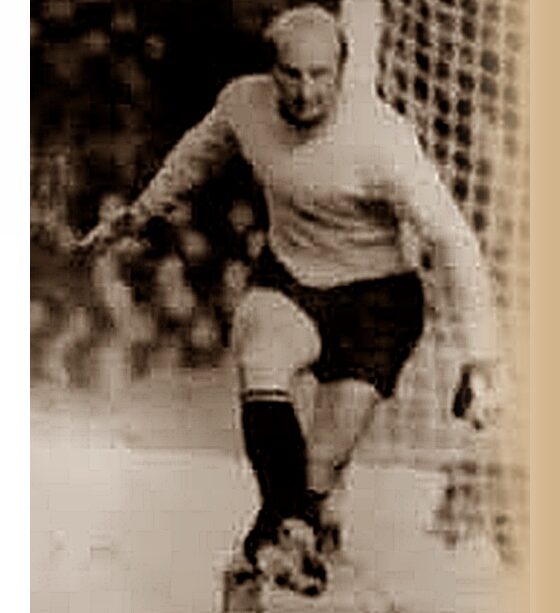
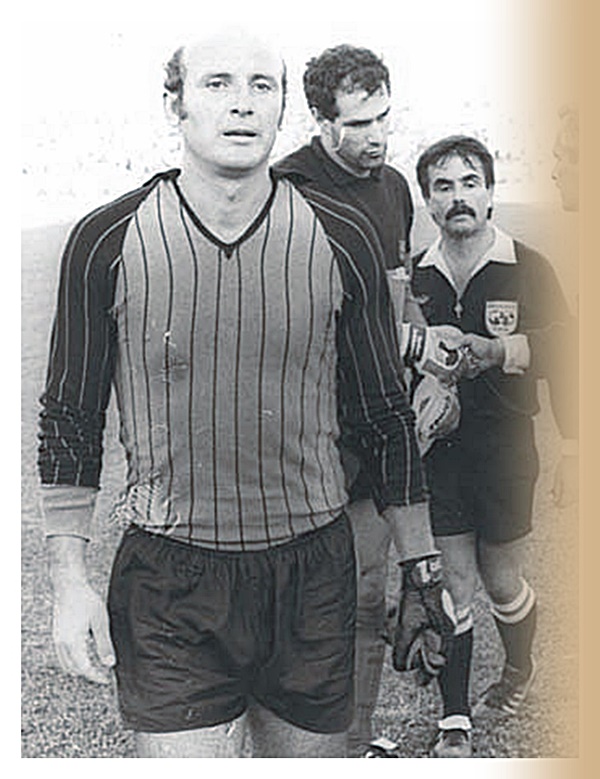
Artur Lekbello defies any conventional script. He was a man of diverse passions, an artist who could play chords on a guitar and sing traditional melodies with immense soul before transforming into a high-ranking military officer, a “portier” for the Army giants, and a national hero in Spain.
In an era dominated by rigid institutional discipline, Lekbello navigated the pitch with a unique charisma, demonstrating that defensive stability is built on absolute focus and tactical maturity.
To understand the scale of his athletic impact, one must look at the autumn of 1986, when a regional squad from the coast stepped into the grandest arenas of European football. Lekbello did not merely play as a temporary reinforcement; he became the immovable anchor of a defensive performance that left world-class international attackers completely stunned. On October 1, 1986, under the bright lights of a capacity stadium in Spain, his presence transformed the penalty box into an impenetrable fortress.
This is the un-compromised, third-person chronicle of an outstanding champion—the military officer who looked a footballing global superpower in the eye, balanced artistic elegance with tactical steel, and proved that a keeper’s true legacy is written in moments of absolute defiance.
The unique journey of Artur Lekbello began with no sports heritage in his family, but rather with a simple enrollment in the strict “Skënderbej” military academy in the early 1970s, aimed entirely at building a career as a disciplined state officer. His natural physical intuition for the goalmouth was discovered by a passionate school driver and youth coach named Sherif Çiçiku, who brought him into the academy’s team alongside future icons Perlat Musta and Arjan Ahmetaj.
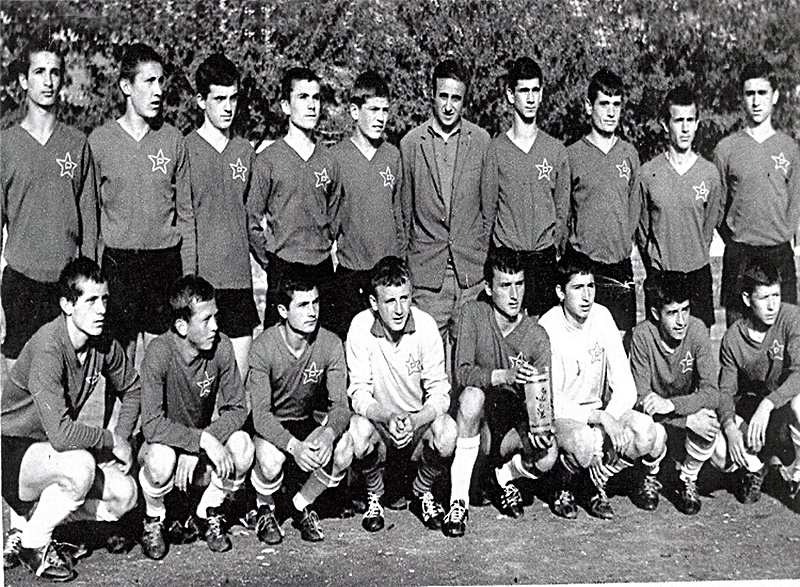
It did not take long for the legendary technical duo of Refik Resmja and Iljaz Dingu to recognize his top-flight potential, moving the young prospect directly into the youth system of “Partizani”.
By the late 1970s, a sudden institutional reshuffling behind starting keepers Bujar Muhedini and Jani Kaçi forced the senior Reds to seek an immediate backup. At just 17 years old, Lekbello was elevated to the senior squad, forming a long-term partnership with Musta.
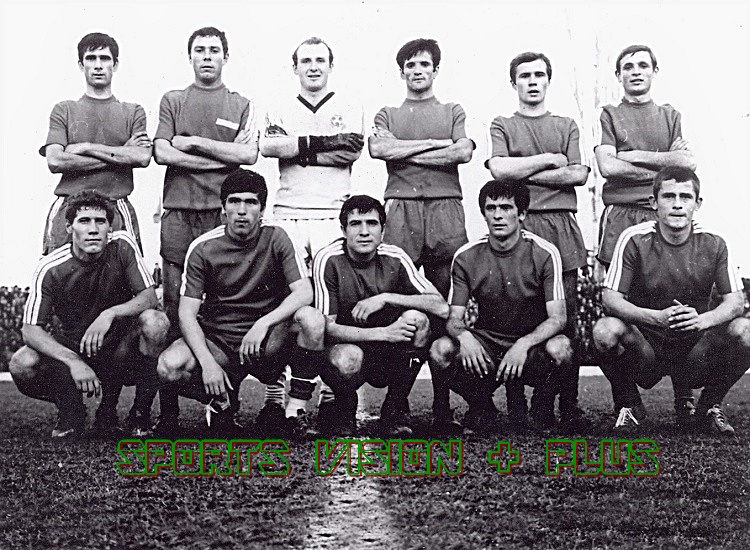
To justify his permanent placement in Tirana, the Ministry of Defense formally commissioned him as a senior officer within the Tank Brigade in Sauk, though his duties remained entirely on the pitch; he never spent a single day operating the heavy armored vehicles, focusing his entire energy on protecting the net.
By the summer of 1985, state directives shifted his career to his family’s home city, as high-ranking political official Muho Asllani arranged a formal transfer to “Lokomotiva” Durrës to anchor an ambitious squad featuring the Ballgjini brothers. However, his quiet domestic routine was disrupted while staying at a coastal hotel with teammate Niko Jani, when an undercover message revealed that a high-priority telegram had arrived from the football federation.

The contents were explosive: “Flamurtari” Vlorë needed emergency reinforcement for their UEFA Cup Winners’ Cup campaign against the mighty “Barcelona” of Spain because their starting keeper faced international travel restrictions and their backup lacked experience. Lacking modern transit options on that Monday morning, two close friends offered to drive him in a private Volga automobile. Meeting at the Ura e Dajlanit in Durrës, they drove south to Vlorë, where club directors and players like Taho and Çipi were waiting at the stadium gates, checking him into the Hotel Adriatik to share a room with star striker Vasil Ruci.
After missing the first leg in Vlorë due to registration rules, Lekbello launched a grueling, multi-city transit route through Han i Hotit, Titograd, Belgrade, and Rome before touching down at Barcelona’s El Prat Airport.
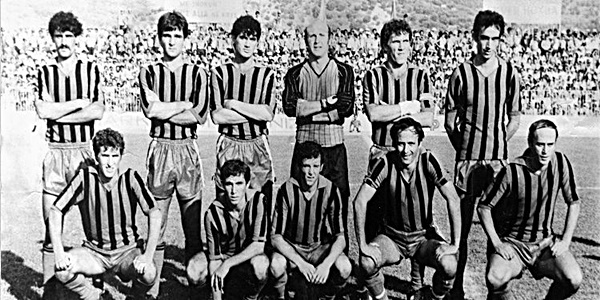
Stepping off the plane with simple sports bags and lacking corporate luxury suits, the team checked into the Hotel President. Though Lekbello harbored deep anxiety regarding a potential high-scoring defeat against an attack featuring Gary Lineker, his veteran teammates maintained absolute composure, ending their brief pre-match analysis with a classic Vloran declaration to their manager that they knew exactly what to do. Across 90 historic minutes on October 1, 1986, Lekbello produced a magnificent masterclass, completely neutralizing the Spanish attack and frustrating Lineker to the point where the English forward could only shout in despair after every squandered chance.
In the final five minutes, a desperate “Barcelona” was forced to retreat into their own half to preserve a 0–0 aggregate draw, prompting the Spanish press the next morning to run the legendary headline calling Lekbello the charming boss of Albania.

The trip generated highly unique personal memories, including a warm friendship with the team’s local bus driver, Marcio, a former youth goalkeeper who secretly presented Lekbello with a parting gift of two cassette tapes of Julio Iglesias, reminding him that the global pop icon had also guarded the net for Real Madrid’s youth ranks in his early years.
Lekbello’s relationship with the Spanish international goalkeeper, Andoni Zubizarreta, took an equally legendary path. Though Zubizarreta had coldly ignored Lekbello’s jersey exchange request in the tunnel in Vlorë, he completely corrected his behavior in Barcelona, presenting Lekbello with a massive bag of premium sports gear and the club’s official corporate tie.
The ultimate twist occurred a year later in Seville when “Kombëtarja” traveled to face Spain; Zubizarreta tracked down Lekbello and hosted him at a local night venue, sharing a glass of wine and music in an unforgettable evening that lasted until the early hours of the morning.
The return from Spain marked an unprecedented chapter in domestic sports history, as the entire “Flamurtari” squad collectively revolted against their tight state itinerary, flatly refusing to board the scheduled flight back to Tirana so they could spend an extra 24 hours celebrating and exploring the streets of Barcelona. Stranded without state funds, the president of “Barcelona” personally intervened, checking the entire team into his private Hotel Crystal and covering all expenses until their departure.
Upon landing in Titograd, the team was met by an escort of domestic police vehicles; while the players panicked, fearing state retaliation, the official order was purely celebratory, transforming their transit through Hani i Hotit and Shkodër into a festive triumph. The team bus pulled up at the Ura e Dajlanit in Durrës, where Lekbello stepped off and walked straight home, completing a legendary circle from Barcelona back to the old bridge.
His dual-club status eventually hit a bureaucratic roadblock ahead of “Flamurtari”‘s famous 1987 UEFA Cup campaign against “Partizan” Belgrade, when the Yugoslav sports newspaper “Sportski” published a detailed expose revealing that Lekbello was actively starting for “Lokomotiva” Durrës while remaining registered for Vlorë’s European roster.
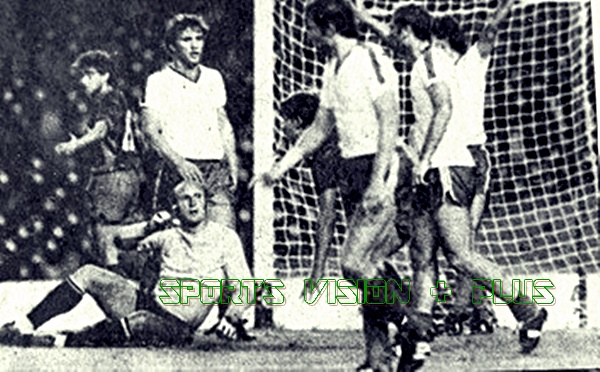
To avoid a punitive UEFA disqualification, the football federation pulled him from the squad, forcing him to watch from the sidelines as Anesti Arapi took the net for the famous triumphs over the Yugoslavs, while Lekbello focused on the impending birth of his child.
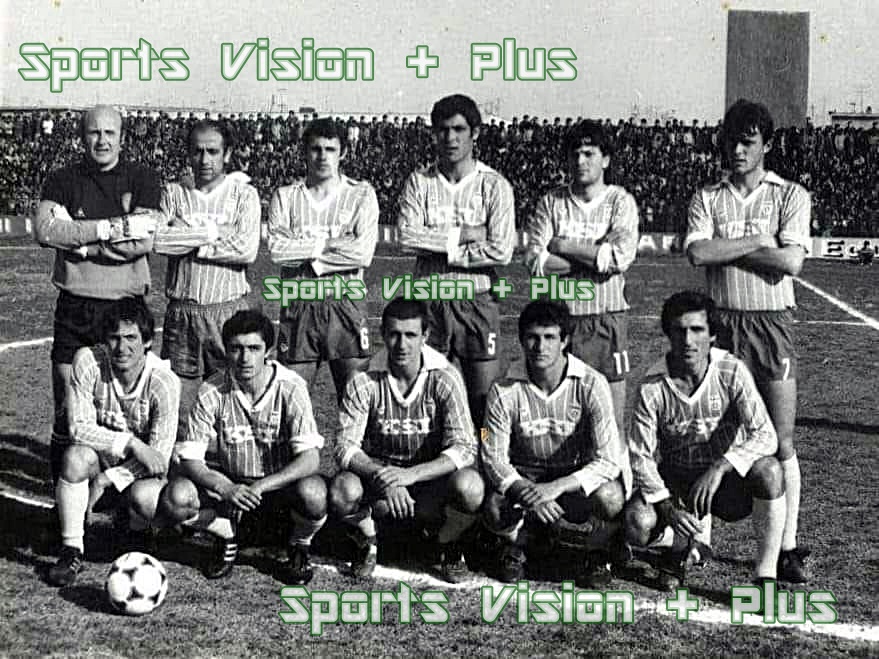
By 1991, having parted ways with “Lokomotiva”, a despondent Lekbello assumed his playing days were permanently over. However, a sudden, historic opportunity rewrote his retirement ahead of a high-stakes European Cup tie against the Dutch heavyweights “Feyenoord” when “Partizani”‘s starting keeper transferred abroad.
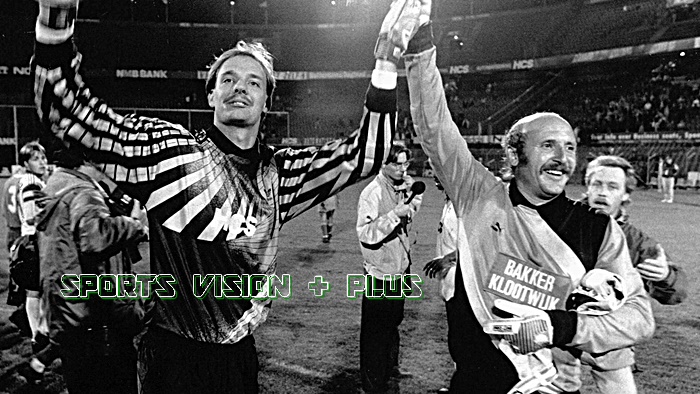
Desperate for elite experience, club directors Sulejman Starova and Hasan Lika dispatched an urgent emergency telegram to Durrës requesting Lekbello’s immediate return. In a shocking display of local club politics, Durrës intentionally hid the telegram, leaving Lekbello completely unaware. Two weeks later, while walking up the steps of the historic Hotel “Dajti” in Tirana on a personal trip, Lekbello ran directly into Starova and Lika, who demanded to know why he had ignored their call-up.
Despite being completely out of training and noticeably overweight, Lekbello immediately entered the training camp, keeping a clean sheet in a spectacular 0–0 draw in Tirana and bringing his career to a poetic close at 36 years of age exactly where it had begun: with the Reds of “Partizani”.
Beyond his legendary aerial reflexes, Lekbello’s inner world was fundamentally driven by music, an artistic inheritance from a family of skilled multi-instrumentalists who mastered the guitar and mandolin.
Lekbello was an accomplished vocalist and guitarist, preserving two premium instruments at home, including a classic American Gibson. During his imperial years with “Partizani”, the iconic trio of Lekbello, Lame, and Sulejman Starova functioned as the artistic engine of the team, keeping morale alive during long training camps.
In Vlorë, his vocal harmony with Alfred Taho created a legendary musical duet, a tradition he continued at “Lokomotiva” alongside Niko Jani. This deep musical spirit forged a lifelong brotherhood with the iconic artist and former “Vllaznia” youth keeper, Osman Mula.
The two shared an uncanny, near-identical physical resemblance that frequently led fans to mistake them for biological brothers, spending decades performing private duets with Mula on the saxophone and Lekbello on his guitar.
Today, Lekbello maintains his disciplined, humble lifestyle in Durrës, serving as a military officer at the Special Forces Academy and later directing the Military Convalescence Center in Plepa before ascending to his current post as the Chief of the Emergency Management Office for the Prefecture of Durrës, handling major modern crises.
Though his daughters broke the sporting tradition to become doctors and pharmacists, and his part-time coaching role with Teuta’s youth ranks keeps him close to the pitch, his heart remains anchored to that frosty autumn night in Catalonia—a timeless moment where an officer from the tank brigade became an immortal king of the European sky.

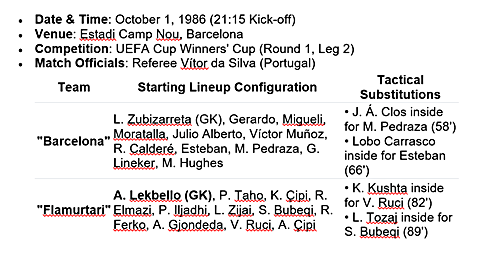
Technical Match Sheet: The 1986 Camp Nou Vault
The verified operational match sheets from the European archives record the exact lineups and structural parameters of Lekbello’s legendary clean sheet in Catalonia:
© Copyright by Pjerin Bicaj
Hudson Yard, New York City: August 2026
________________
Sports Vision + Plus | Champions Hour in Activity since 2013

Discover more from Sports Vision +
Subscribe to get the latest posts sent to your email.