
The Steel of Myzeqe | The Decade of Resilience and the Golden Season of “Traktori”!
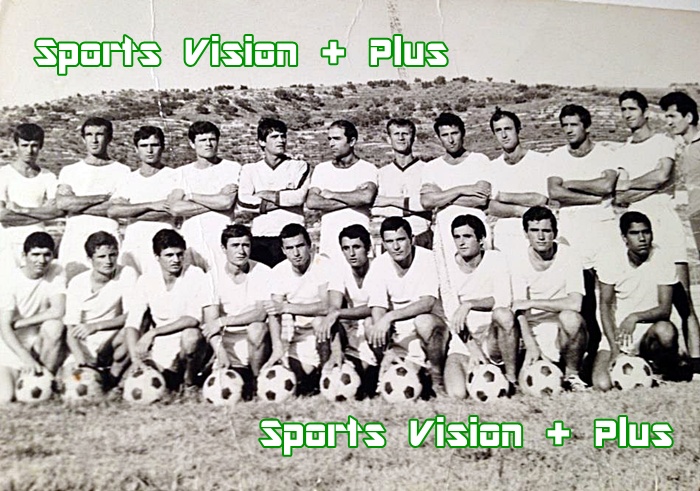
Prologue: The “Furrows” of the “Traktori” in First Category!
In the historical archives of the national game, certain football clubs carry an identity deeply bound to the pure, rugged structural endurance of their home soil. Thus, “Traktori” Lushnje was never engineered to operate as a delicate or commercialized football brand; it was designed to reflect the heavy agricultural machinery that transformed the sweeping Myzeqe plains.
For more than four consecutive decades between 1948 and 1990, the green-and-white shirts established a turbulent legacy, acting as ultimate survivalists within the elite division, repeatedly dropping into the lower tiers only to instantly reignite their engines and storm back into the top flight. Yet, to categorize them as mere survivalists is to completely overlook the golden decade of stability that redefined their historical narrative.

1963 – The Players of Traktori
Between the 1962–1963 and 1972–1973 seasons, “Traktori” constructed an unyielding, ten-year residency inside the First Category, culminating in a mythic, legendary 1972–1973 campaign where they broke their way into the “Top 5” bracket of the nation’s elite teams.
This is the authentic, third-person chronicle of that unyielding football machine—a complete compilation accounting for every promotion, every tactical drop, and the match-by-match anatomy of their greatest season.
1. The Inauguration of “Traktori” in the Fields of the First Category!
The top-flight odyssey of the club formally opened during the historic 1948 championship under the name “Traktori”, where the debutants asserted their early parameters by securing a 6th-place finish in Group B.
Following temporary structural shifts, the squad re-entered the elite grid system in 1952 under the banner “Puna” Lushnje, precisely replicating that 6th-place ranking in Group B.
A multi-seasonal rebuild followed until the directors permanently restored the iconic “Traktori” title, storming back into the First Category in 1961 to claim the 8th position on the table with 12 official points.
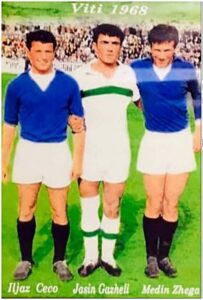
2. Nearly Two Decades of Unbroken Engines for the “Traktori”
The subsequent 1962–1963 marathon became a grueling battle for survival, with the squad narrowly evading relegation by finishing in 11th place—the penultimate slot—with 15 points. This thin margin, however, sparked the structural engine for a continuous, unbroken ten-year residency in the top tier.
The team consolidated its rank in the 1963–1964 season by taking 10th place with 14 points, before producing their finest twentieth-century campaign up to that point in 1964–1965, surging into 7th place with 19 points and finishing ahead of “Vllaznia” Shkodër due to a superior goal differential.
The table placement fluctuated over the following years, as “Traktori” recorded an 11th-place finish with 13 points in 1965–1966, a 10th-place finish with 16 points in 1966–1967, and a solid 9th-place ranking with 21 points in 1968.
By the 1969–1970 season, the club hit a new competitive high, conquering 6th place with 27 points behind a balanced grid of 8 victories, 11 draws, and 7 losses, with an offensive-defensive margin of 23–27 goals. A temporary drop occurred in 1970–1971, where they slid to 12th place with 19 points, followed by an 11th-place finish with 19 points in the 1971–1972 season, maintaining their unbroken top-flight status since 1962.
3. The Golden Season of “Traktori”: The Club’s Ultimate Twentieth-Century Competitive Apex and the Stadium Ban!
This continuous structural stability set the stage for the historic 1972–1973 national marathon—the absolute competitive apex of the club’s twentieth-century history. Under the tactical guidance of head coach Fatmir Deliadhisi, “Traktori” fielded a legendary, synchronized starting eleven featuring Shefa in goal, a defensive backline of Aliko, Stamo, Kadiu, and Gogoni, a midfield engine room coordinated by Dranga, Qerimi, and Marku, and a dynamic attacking front spearheaded by Naci, Haxhiu, Sefa, and Shurdhi.
They opened the championship campaign on September 17, 1972, in the capital against the powerhouse “17 Nëntori” Tiranë. According to the official sports registry in the newspaper “Sporti Popullor” published on September 19, 1972, “Traktori” completely deserved the 2–0 triumph through a display of superior collective coordination and aggressive attacking transitions. In the 49th minute, Sefa intercepted a defensive miscommunication between the capital’s central defender and goalkeeper to strike the opening goal. Standing on a 1–0 advantage, Deliadhisi’s tactical grid shifted into a more controlled, fluid structure where the units supported each other flawlessly, culminating in the 75th minute when the calm, dominant midfielder Haxhiu fired home a magnificent second goal to lock down the victory.
The momentum intensified during Week 2 in Lushnje, where “Traktori” hosted an elite developmental squad from “Shkëndija” Tiranë—a roster featuring future icons of the national game like goalkeeper Ajazi, Gurma, Astrit Hafizi, and Vasillaq Zëri. In front of a raucous home crowd, the green-and-whites produced a brilliant 3–1 victory, with Bulku opening the scoring for the visitors in the 28th minute before Naci, Shurdhi, and Marku executed a clinical comeback to put “Traktori” solo at the top of the league table with 4 points and a 5–1 goal differential.
By Week 3, the club extended its perfect record to three consecutive wins and 6 points, traveling to Fier to secure a hard-fought 1–0 victory via a local own goal, anchored by a series of world-class, decisive saves from goalkeeper Shefa.
Sitting at the apex of the championship ahead of powerhouse “Dinamo” Tiranë, “Traktori” welcomed the reigning national champions, “Vllaznia” Shkodër, in Week 4. Before a heavily packed, over-capacity home stadium, the Shkodra defensive grid managed to withstand the host’s relentless attacking waves, breaking the deadlock in the 66th minute when Rakiqi struck a clinical away winner for “Vllaznia”.
This 1–0 heartbreak forced “Traktori” to share the league lead with “Dinamo” before a grueling 0–0 draw away against “Lokomotiva” Durrës in Week 5 permanently pulled them from the top slot.
The technical shape fractured in the subsequent weeks due to a heavy 4–0 loss away to “Flamurtari” Vlorë in Week 6 and a tight 1–0 home defeat to “Dinamo” in Week 7.
Following an intense crowd incident during the match against the Blues, the Albanian Football Federation handed down a strict punitive sanction, forcing “Traktori” to play several home matches away from their home stadium.
Despite this severe logistical blow, the team displayed immense resilience, closing the historic season in 5th place with 29 points, a 22–25 goal margin, 10 wins, 9 draws, and 7 losses, sitting proudly in the “Top 5” bracket alongside giants “Dinamo”, “Partizani”, “Besa”, and “Vllaznia”.

4. The 1970s and the Republic Cup Final!
The post-apex era brought a return to survival dynamics. In the 1973–1974 season, the team secured 10th place with 23 points, followed by a solid mid-table consolidation in the 1974–1975 campaign, taking 8th place with 27 points.
A sharp decline occurred in 1975–1976, where they slid to the penultimate slot with 19 points, followed by a defensive struggle in 1976–1977, finishing 4th in Group B during the specialized relegation play-off bracket.
The 1977–1978 campaign brought a beautiful paradox: while the squad struggled to an 11th-place finish with 19 points in the league, they produced an historic knockout campaign in the Republic Cup, fighting all the way to the grand final before falling to “Dinamo” to claim the highest cup medal in their history up to that point.
The grueling multi-seasonal strain finally broke the engine room in the 1978–1979 season, as “Traktori” closed the table in last place with 17 points, saying goodbye to the top division after 15 consecutive years in the elite tier of Albanian football.
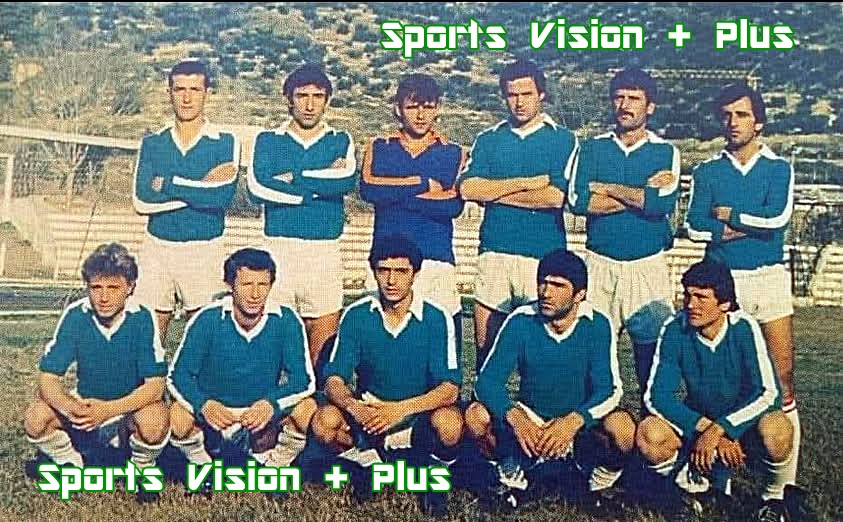
5. The 1980s: A Decade Characterized by Ups and Downs
They engineered an immediate promotional comeback for the 1980–1981 national marathon, shocking the reigning champions “Dinamo” 1–0 in Lushnje on opening day (September 21, 1980), but the campaign ultimately ended in heartbreak as they finished dead last in 14th place with 16 points, dropping right back down.
1980s became defined by an entirely new generation of domestic talent.
Under the technical guidance of manager Xh. Sefa, “Traktori” deployed a tightly-knit roster configuration that included goalkeepers Sevo and Linatopi; a defensive backline featuring Dervishi, Stambolliu, Knuti, Shurdhi, Gjeçi, Gaxheli, Veliu, and Jazexhiu; a midfield unit coordinated by M. Lala, Manahasa, Risto, Muça, Guçe, Haxhiu, Dimo, Çukani, and Hoxha; and an attacking frontline spearheaded by J. Lala, Buxheli, Taullahu, and Linatopi.
This unit secured another swift promotional comeback for the 1982–1983 season, claiming 12th place on the table with 21 points to narrowly evade the drop.
During the 1983–1984 national marathon, they finished in 13th place with 22 points, but preserved their elite status by winning a grueling play-off battle against “Apolonia” Fier. This structural survival sparked their finest campaign of the decade in the 1984–1985 season, where the club surged into 8th place with 24 points, followed by a solid 9th-place finish with 22 points in the 1985–1986 championship.
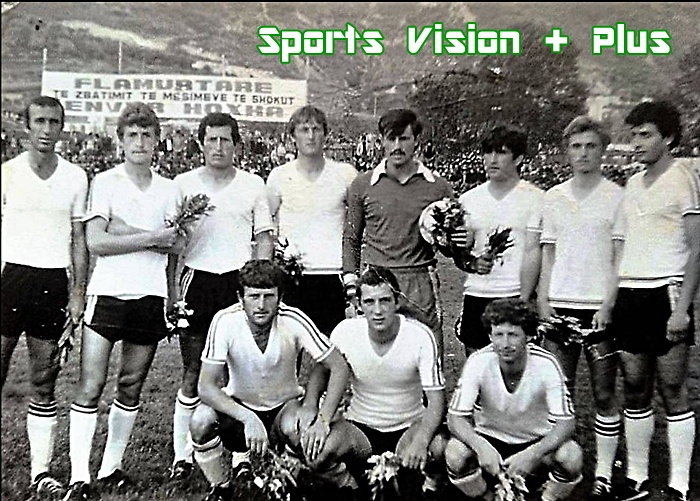
(Up from the left) Pirro Gjeçi, Vladimir Hoxha, Gafurr Taullau, Elmaz Çukani, Perlat Sevo, Fatos Linatopi, Alfred Boriçi, Kastriot Dervishi (Down from the left) Përparim Veliu, Edmond Alite, Ilir Haxhiu .
The structural baseline completely collapsed in the 1986–1987 season—the exact year “Partizani” captured the championship title—as a depleted Lushnje roster finished dead last at the bottom of the table with a meager 12 points, a performance far removed from their glorious 1970s form.
A final, brief top-flight return materialized during the 1988–1989 championship, but the club was instantly relegated after finishing at the absolute bottom of Group B in the specialized play-off phase, permanently closing out the structural era of the historic Tractor heavy machinery.
The Comprehensive First Category Ledger (1948–1990)
The operational databases cleanly archive the complete structural performance, point tallies, and league placements of the Lushnje infrastructure across four decades of elite competition:
| Championship Season | Club Identity / Name | Final Table Placement | Points | F–A Goals / Status |
| 1948 | “Traktori” Lushnje | 6th Place (Group B) | — | Inaugural Top-Flight Campaign |
| 1952 | “Puna” Lushnje | 6th Place (Group B) | — | Regional Placement Matrix |
| 1961 | “Traktori” Lushnje | 8th Place | 12 Pts | Return to First Category |
| 1962–1963 | “Traktori” Lushnje | 11th Place | 15 Pts | Structural Relegation Escape |
| 1963–1964 | “Traktori” Lushnje | 10th Place | 14 Pts | Core Midfield Consolidation |
| 1964–1965 | “Traktori” Lushnje | 7th Place | 19 Pts | Finished ahead of “Vllaznia” |
| 1965–1966 | “Traktori” Lushnje | 11th Place | 13 Pts | Defensive Attrition Battle |
| 1966–1967 | “Traktori” Lushnje | 10th Place | 16 Pts | Table Placement Stability |
| 1968 | “Traktori” Lushnje | 9th Place | 21 Pts | Balanced Campaign Metrics |
| 1969–1970 | “Traktori” Lushnje | 6th Place | 27 Pts | 8 W | 11 D | 7 L (23–27 Goals) |
| 1970–1971 | “Traktori” Lushnje | 12th Place | 19 Pts | Relegation Play-Off Survival |
| 1971–1972 | “Traktori” Lushnje | 11th Place | 19 Pts | Eve of the Golden Generation |
| 1972–1973 | “Traktori” Lushnje | 🏆 5th Place | 29 Pts | 10 W | 9 D | 7 L (22–25 Goals) – Apex |
| 1973–1974 | “Traktori” Lushnje | 10th Place | 23 Pts | Post-Apex Table Realignment |
| 1974–1975 | “Traktori” Lushnje | 8th Place | 27 Pts | Mid-Table Security Grid |
| 1975–1976 | “Traktori” Lushnje | 11th Place | 19 Pts | Penultimate Slot Finish |
| 1976–1977 | “Traktori” Lushnje | 4th (Group B) | — | Relegation Play-Off Bracket |
| 1977–1978 | “Traktori” Lushnje | 11th Place | 19 Pts | Republic Cup Grand Finalists |
| 1978–1979 | “Traktori” Lushnje | 14th Place | 17 Pts | Technical Drop to Second Tier |
| 1980–1981 | “Traktori” Lushnje | 14th Place | 16 Pts | Relegated after opening vs. “Dinamo” |
| 1982–1983 | “Traktori” Lushnje | 12th Place | 21 Pts | Modern Decade Return |
| 1983–1984 | “Traktori” Lushnje | 13th Place | 22 Pts | Remained via “Apolonia” Play-Off |
| 1984–1985 | “Traktori” Lushnje | 8th Place | 24 Pts | Ultimate 1980s Peak Position |
| 1985–1986 | “Traktori” Lushnje | 9th Place | 22 Pts | Balanced Roster Campaign |
| 1986–1987 | “Traktori” Lushnje | 14th Place | 12 Pts | Technical Drop to Lower Division |
| 1988–1989 | “Traktori” Lushnje | Group B Play-Off | — | Final Structural Relegation |
© Copyright by Pjerin Bj
Bronx , New York: August 21, 2026
____________________________________
Sports Vision + Plus | Champions Hour in activity since 2013

Discover more from Sports Vision +
Subscribe to get the latest posts sent to your email.


