Fehmi Rama, the Hawk of “Besëlidhja” Who Sensed the Goal a Step Ahead of Everyone Else!
Prolog!
In the history of football in Lezhë, there are names that cannot be measured solely by the years of their careers, the number on their shirt, or the goals preserved in the archives, because a footballer’s place in the memory of a city is also shaped by the way he interpreted the game and by the mark he left on a team that came to embody an entire period of local football.
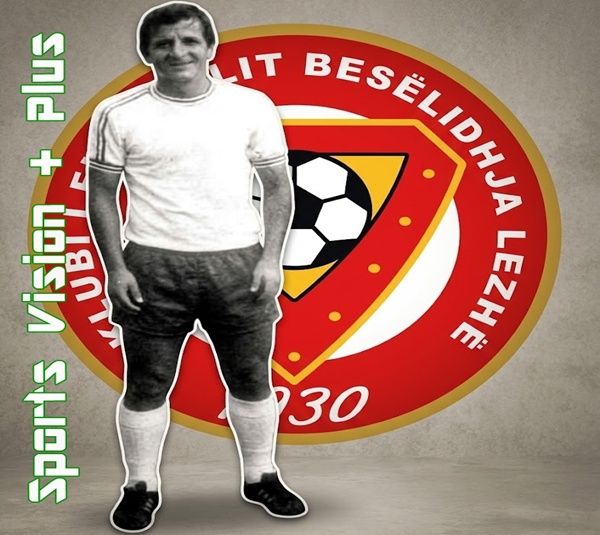
In that memory, the name of Fehmi Rama is closely associated with “Besëlidhja”, with Lezhë’s red-and-black shirt, and with the figure of a striker who possessed an almost instinctive sense for goal, often reading an attacking move a moment before it took shape for everyone else on the pitch.
For Fehmi Rama, the story began long before his name became familiar in the stands of Lezhë. First came the ball, then the pitch, and then the shirt. It was a journey that cannot be separated from the city where he developed as a footballer or from the team that would become almost synonymous with his career: “Besëlidhja”.
A childhood lost in the archives, but not in memory
The public records available today do not provide a complete picture of Fehmi Rama’s early years, and any attempt to reconstruct his childhood in detail would therefore be closer to speculation than documented history.
What can be stated with certainty is that his sporting journey became closely connected with football in Lezhë and that his name emerged during a period when “Besëlidhja” was establishing its identity as one of the important teams in Albanian football.
This was not simply a relationship between a player and a club, because in Rama’s case the “Besëlidhja” shirt became part of his sporting identity, while his name remained associated with the club even after his career took him beyond Albania.
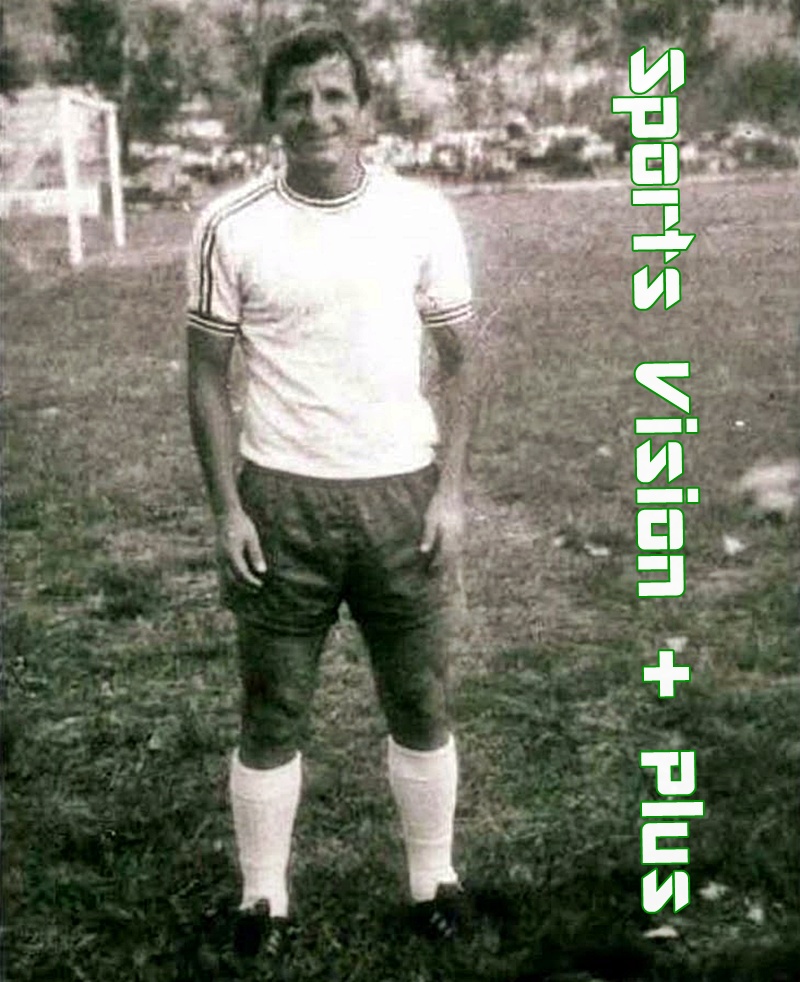
In the history of the club, the 1980s represent “Besëlidhja”’s most successful period, while Fehmi Rama is remembered among the notable players of that era.
Number 11 and a distinctive way of attacking the goal
On the pitch, Fehmi Rama was a striker, and sporting accounts describe him as a physically strong footballer, powerful in challenges, gifted with outstanding dribbling ability and capable of striking the ball with a force that could trouble any defence.
He was not among the tallest players on the field, but that did not prevent him from having a commanding presence in the opposition penalty area, because his advantage was built not on height but on strength, technique, speed of execution and that particular ability to anticipate where an attacking move was going to end.
The number 11 is another element closely associated with his sporting identity and makes Rama’s place in the memory of “Besëlidhja” even more distinctive, because the number was not merely a figure on his back; it became associated with the profile of a striker who constantly searched for the space from which he could deliver the decisive blow.
“Furdja”, a name that became part of his identity.
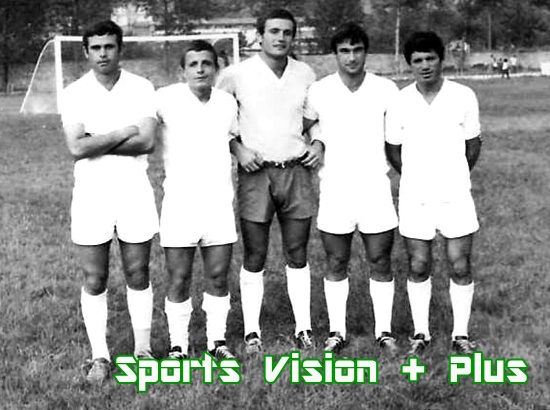
In Lezhë, Fehmi Rama was also known by the nickname “Furdja”, a name that has become part of the way he is remembered in the sporting history of the city.
Like many nicknames that emerge within sporting communities, it gradually became part of the player’s identity, and today “Furdja” does not sound like a separate name detached from the footballer himself, but rather one of the distinctive marks through which Fehmi Rama is recognized in the memory of Lezhë football.
In the case of a striker with his profile, the nickname takes on another dimension when viewed alongside his style of play, because Rama was not simply a player who waited for the ball to arrive at his feet; he sought to read the space, move ahead of the defender and position himself where the attacking move was about to reach its decisive stage.
The hawk who sensed the move before the goal opened up
This is also one of the reasons why Fehmi Rama can be imagined as a hawk on the football pitch: not as an ornamental metaphor, but as a reflection of the way a striker perceives the decisive moment.
A hawk does not blindly follow everything happening below; it watches, waits for the right instant and descends when the opportunity appears, while a striker of Rama’s calibre must do something similar with an attacking move, understanding its direction before the defence has time to close it down.
That is why a striker can be dangerous without necessarily being the tallest, fastest or most spectacular player on the pitch at every moment of a match: what matters is the instant in which he appears, the direction he chooses, the way he attacks the available space and his ability to turn an ordinary ball into a genuine scoring opportunity. In this sense, Rama’s profile naturally evokes the image of a hunter of attacking moments, a player who sought not only the ball itself but also the place where the ball was going to arrive.
A striker who never shied away from the battle
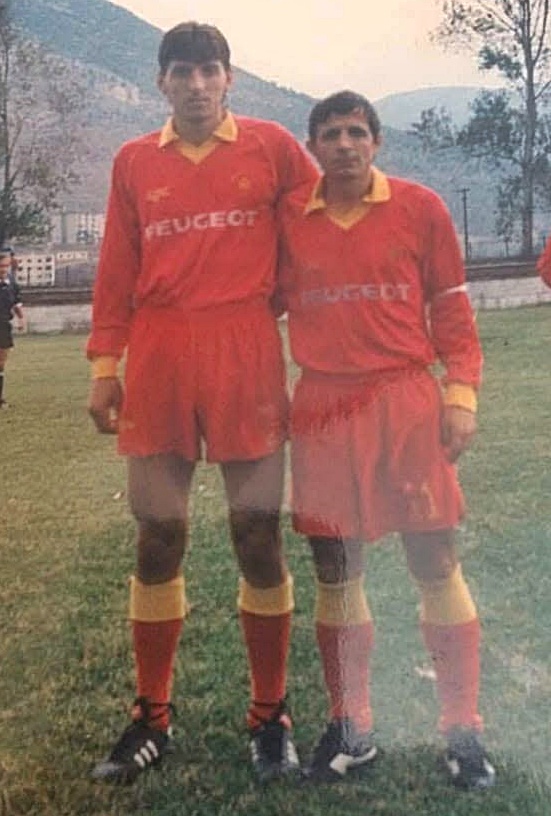
Sporting descriptions of Fehmi Rama emphasize his physical strength, dribbling ability and dangerous shooting, three qualities that together created the profile of a striker who was difficult to contain. The defender facing him was not dealing simply with a player looking to receive the ball, but with a footballer capable of protecting it under pressure, beating an opponent through dribbling or shooting the moment a gap appeared.
In the football of that era, when tempo, space and physical confrontation were natural elements of the game, such a profile had particular value, especially for a team seeking to compete at the highest level of Albanian football. Rama possessed this combination of strength and technique, making himself a point of reference in “Besëlidhja”’s attacking department.
1974 and the door to representative football
The year 1974 represents another documented point in Fehmi Rama’s journey, as his name appears in a training environment connected with the structures of youth representative football, during a period when he was part of a group of players regarded as having potential.
This episode is significant because it shows that Rama was not simply an important name within Lezhë football, but had also attracted the attention of structures responsible for following and assessing young Albanian football talent. Nevertheless, the publicly available documentation does not provide complete information about official matches, appearances, minutes or goals for him at representative level, and this part of his history should therefore remain within the boundaries established by the available records.
Although his name did not become part of the senior national team, that does not diminish the place he occupied in club football and, particularly, in the history of “Besëlidhja”.
The goals we have been unable to count
One of the greatest difficulties in writing today about footballers from earlier generations is the absence of a complete statistical archive. In Fehmi Rama’s case, his profile as a goalscorer can be documented, as can the fact that he was particularly productive during his time with “Besëlidhja”, but a definitive and verifiable figure for the total number of goals in his career cannot be established clearly from the publicly available records.
This statistical gap should not be filled with speculation, because a responsible history gives equal importance to what is known and to what has yet to be documented. In Rama’s case, what is clear is that he became identified as a striker capable of scoring and that his attacking production was one of the reasons he became a prominent figure for “Besëlidhja”.
 The great years of “Besëlidhja”
To better understand Fehmi Rama’s place in the history of “Besëlidhja”, it is necessary to look at the period in which he played, because the history of a footballer cannot be separated from the history of the team that gave him the opportunity to display his qualities. The 1980s represent one of the most important chapters in the history of the Lezhë club, a decade marked by promotion, relegation, comebacks and, above all, by a generation of players who gave “Besëlidhja” a strong identity in the elite of Albanian football.
https://www.sportsvisionplus.com/the-unyielding-bastion-beselidhja-lezhe-in-the-1980s/
Within the chronology of this period, the 1988–89 season marks the highest point achieved by the team: after the first two phases, “Besëlidhja” stood in fifth place, while following the third phase in Group “A”, it finished the championship in sixth place with 27 points, a result that remains the club’s highest-ever finish in the Albanian top flight.
Within this journey through the 1980s, Fehmi Rama was part of a side whose attack included players such as Mlika, Filipi and Rama himself, while the team had also built a strong foundation in its other departments, with players who gave character to that era of “Besëlidhja”.
The sixth-place finish in the 1988–89 season should therefore not be viewed as an isolated statistic, but as the culmination of a turbulent yet important decade in which “Besëlidhja” faced relegation and fought its way back into the top flight several times before achieving a position that remains the highest reference point in the club’s league history.
In that team, Rama represented an attacking profile suited to a form of football in which strikers had to withstand physical contact, win duels and, above all, exploit with extraordinary speed the moment when an opposing defence left even a small area unprotected.
In Lezhë, the name “Besëlidhja” represented more than a club designation, because it was connected with a sporting tradition that had taken shape over the years and with a city that had made football part of its identity. Within that history, Fehmi Rama occupies the place of a striker whose name became associated with goals, with the number 11 and with a style of play that required instinct as much as it required strength.
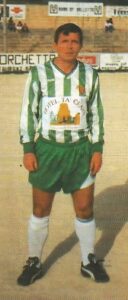 From Albania to Malta
After his years in Albanian football, Fehmi Rama’s sporting journey continued in Malta, where he lived for several years and played in the country’s top-level championship. Sporting accounts describe him during this stage as a footballer with notable dribbling ability and as a distinguished goalscorer, showing that his attacking qualities were not confined to Albanian football.
However, the publicly available information concerning the Maltese clubs for which he played and the exact seasons of this stage of his career is not sufficiently complete to establish a reliable year-by-year chronology for every club, and this period therefore deserves further archival research before being presented in detail in a statistical biography.
The fact that Rama continued playing at the highest level of Maltese football demonstrates that his career did not end within the boundaries of domestic football, but extended into another sporting environment where he continued to rely on the qualities that had defined him: technique, dribbling and the ability to find the goal.
A player whose value cannot be measured by statistics alone
Statistics are the most precise way of measuring a career when complete statistics exist, but in the case of earlier generations of Albanian football, the archives are often not as comprehensive as we would like them to be today. For that reason, Fehmi Rama’s history should be built upon the information that can be documented and upon the role he played during his years with “Besëlidhja”, without inventing figures that cannot be verified.
What remains documented is his profile as a striker, the number 11, his exceptional dribbling ability, physical strength, dangerous shooting, productivity in front of goal, strong connection with “Besëlidhja” and continuation of his career in Malta’s top division. These elements are sufficient to understand why his name has remained part of Lezhë’s sporting history.
“Grand Master”, an honour that came many years later
In 2022, Fehmi Rama was awarded the title “Mjeshtër i Madh” (Grand Master), an honour that placed his name among the distinguished figures of sport in Lezhë.
The title came many years after his active playing career, but precisely this passage of time makes the continued weight of his sporting career in the memory of the community even more significant. The pitch changes, generations succeed one another and shirts pass from one player to another, while the names that left their mark on an important era of a club remain part of its history.
Lezhë, “Besëlidhja” and Fehmi Rama
In the story of Fehmi Rama, Lezhë and “Besëlidhja” are not simply the backdrop to a sporting career, but two essential elements in understanding his identity as a footballer. The city was where his connection with football was formed, “Besëlidhja” was the shirt that became synonymous with his career in Albania, while the number 11 and the nickname “Furdja” became identifying marks of a striker who treated the goal as the natural destination of his game.
If the strongest years of “Besëlidhja” are remembered through the team, its results and the players who represented it, Fehmi Rama will be remembered for that part of football that does not always appear in a statistical table: the way a striker reads space, the courage to attack it and the instinct that takes him to the ball at the very moment when the defence has yet to recognize the danger.
Epilogue: the hawk remains in the sky of memory
Football is constantly changing, and every generation brings new ways of playing, scoring and telling the story of a player, but the figures of an era do not disappear simply because the years have passed. Fehmi Rama remains one of the names associated with the history of “Besëlidhja”, a strong, technically gifted and dangerous striker with an instinct that drove him toward the right space, while the nickname “Furdja” gave his identity that distinctive mark through which a footballer passes from the sporting record into the memory of a city.
And this is precisely where the image of the hawk belongs: in the ability to see from a distance what others understand only when it is too late, to detect the smallest opening in a defence and turn that instant into an attacking move capable of changing a match. Fehmi Rama built his name in another era of football, with one shirt, the number 11 and a style of play that made him distinctive, and today, many years later, his name remains part of that sporting landscape in which Lezhë and “Besëlidhja” have their own chapter and where “Furdja” remains one of the strikers who gave that chapter strength, character and an instinct for goal.
© Copyright by Pjerin Bj
Bronx , New York: October 4, 2026
____________
Sports Vision + Plus | Champions Hour since 2013

Discover more from Sports Vision +
Subscribe to get the latest posts sent to your email.