
Cinema of Illusions: Besnik Dizdari’s “Ëndërra në beze” and the Cursed 1966–1967 Championship | Part One!
Part One!
1.
Stripping the Beautiful Game of Post-Cold War Mythologies
The history of football in the twentieth century is routinely subjected to a lazy, retroactive form of political reductionism. When modern commentators find an outcome they dislike, they immediately default to blaming state machinery, secret police, or ideological vendettas.
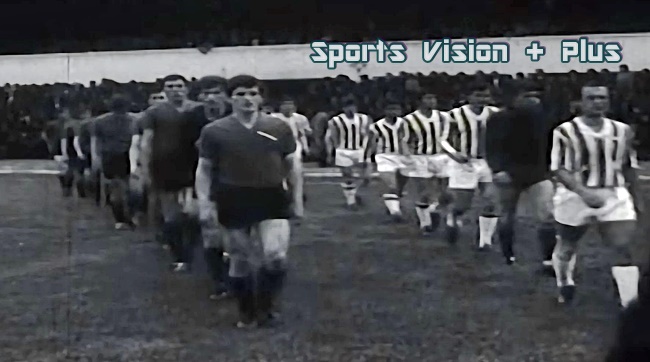
Nowhere is this historical distortion more pervasive than in the narratives surrounding the 1966–1967 Albanian National Championship. Specifically, the infamous derby match between Partizani and 17 Nëntori, which ended 1–2 on June 24, 1967.
The dominant post-1990s thesis claims that the communist dictatorship orchestrated the dual exclusion of Partizani and “17 Nëntori” to intentionally strip Tirana of a title and hand it to Dinamo.
This narrative is not historical analysis. It is an abusive, highly colored mythology manufactured by opportunistic modern journalists.
At the forefront of this extremely abusive and absurd thesis is unfortunately one of the best journalists in Albanian sports, or so it is considered by most, z. Besnik Dizdari.
These commentators claim to expose old propaganda while acting as the modern equivalents of the state-controlled press they criticize. They manipulate factual sports history to serve contemporary agendas.
Like a defense attorney presenting cold evidence, this article separates sport from politics to restore the athletic credibility of two legendary Albanian institutions: Partizani, Dinamo.
2 . The Reality on the Pitch vs. Retroactive Political Fables
The central fallacy of the modern political narrative is the claim that 17 Nëntori was targeted as a “dissident, anti-regime” club, while Dinamo and Partizani operated purely as coddled instruments of oppression. This claim crumbles under historical scrutiny.
1966-1967 Season Standings (Before the Decision)
1. 17 Nëntori: 33 Points
2. Dinamo: 31 Points
3. Partizani: 25 Points
The pitch tells an entirely non-political story. The 1966–1967 season featured an intense, competitive battle between the era’s dominant sporting powers.
When 17 Nëntori defeated Partizani 2–1, it was an athletic triumph in a historically fierce local rivalry. The post-match tension and arguments between players were common side effects of a high-stakes derby—not a scripted theater piece managed by political handlers.
Modern sports writers use the severe disciplinary response from the Albanian Football Federation to paint a picture of deliberate political sabotage. Yet, this decision punished both clubs equally, recording the match as a 0–3 loss for both and disqualifying them from the remaining fixtures.
Perhaps this penalty seems an anomaly, there is no way a 3-0 result can be given to both sides… so it would be best to reduce the number of points for each. (5-10 points), and continue the championship in the remaining three matches!
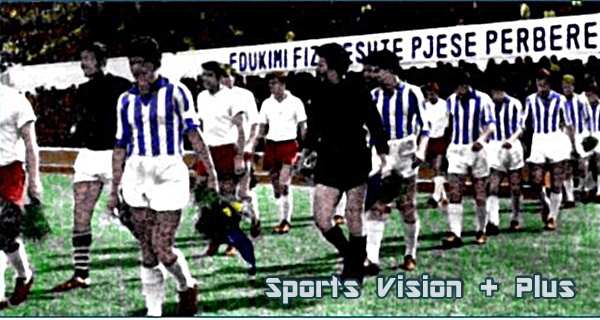
The further reasoning that the then “17 Nendori” if it had not been penalized by the “dictatorship” (and not the Albanian Football Association) would have already won the championship title, while there were still three weeks left in the championship, even though it would have played against teams of a weak rank (Tomori, Traktori, Lokomotiva) is not only hasty, mathematically immature, but also professionally weak.
Who said that against “small” teams, victory is certain without going on the field?
As we have learned or as this game itself has taught us, in football no result of any match is determined before it takes place. Experience has shown us that so-called weak teams have often ruined the work of the strong ones and there are plenty of examples, to mention just one, that of the challenge for the “Scudetto” when Lecce defeated the leading Roma of Falcao, Conti and Pruzzo, (3-2) in Rome.
If the state’s primary goal was simply to engineer a title for Dinamo, a complex double-disqualification that severely damaged the league’s credibility would be an absurd way to achieve it.
The decision was a bureaucratic overreaction by a federation obsessed with maintaining absolute social discipline, rather than a targeted political plot against one specific team.
3. Restoring Athletic Merit to Dinamo and Partizani
The most damaging effect of this modern narrative is how it diminishes the achievements of the players on the field.
Denigrating Dinamo’s Legacy
Modern articles portray Dinamo’s 1966–1967 title as a “stolen gift” from the Ministry of Internal Affairs. This claim insults the legendary generation of players who wore the shirt, including icons like Iljaz Çeço.
Dinamo did not win games through bureaucratic decrees. They won because they possessed one of the most organized tactical setups and formidable rosters in the Balkans during that era.
Misrepresenting Partizani’s Role
The narrative reduces Partizani to a state-backed foil designed to block 17 Nëntori. This ignores their status as a powerhouse of Albanian football.
Partizani’s competitive fire in that derby came from pure sporting pride. Pretending their motivation was purely political cheapens the intense rivalry that made Albanian football so compelling to fans at the time.
The Modern Journalist as a Political Tool
The journalists who continue to spread this narrative are guilty of the exact offense they claim to fight: they are using football as a political tool.
By rewriting the 1967 season as a simple story of a victimized club versus totalitarian teams, modern writers reveal their own bias. They use the historical trauma of the communist era to generate sensationalist headlines and fan outrage.
This approach is lazy journalism. It replaces sports reporting with political spin, reducing a golden era of competitive football to a caricature.
4. Conclusion: Giving Football Back to the Players
It is entirely possible to recognize the harsh realities of the twentieth-century regime without turning every football match into a political thriller.
The 1-2 derby match between Partizani and 17 Nëntori was a fierce athletic contest between two great teams. The subsequent disqualifications were the result of a rigid administrative system, not a targeted plot to undermine the sport.
To respect the history of Albanian football, we must strip away these modern, sensationalist myths. We must return the focus to where it has always belonged: the skill, passion, and competitive merit of the players on the pitch.
This brings us to the ultimate irony and the most absurd contradiction of this entire historical rewrite. The very architects of this modern, anti-communist football myth are the exact same individuals who once served as the official mouthpieces of Enver Hoxha’s regime .
To fully expose this hypocrisy, we can integrate the following sharp, legally minded defense into the section of your article titled
5. The Modern Journalist as a Political Tool.
The Supreme Irony: Yesterday’s Propagandists, Today’s Revisionists.
The most absurd element of this modern mythology is not just that the truth is being distorted, but who is doing the distorting. The leading voices pushing these abusive theses—chief among them journalists like Besnik Dizdari —are products of the most savage and isolated communist media schooling in Europe.
The Journalist’s Double Service
Before the 1990s, these same commentators penned glowing tributes to the dictatorship. They filled pages explaining how meticulously the communist regime cared for physical culture, how sports flourished under the watchful eye of the Party, and how the system elevated Albanian youth.
Yet, following the collapse of the regime, these same “moderate,” supposedly retired journalists performed a flawless ideological U-turn. Without a hint of self-awareness, they began throwing out abusive, politically charged theses that directly contradict their own life’s work.
By reframing the 1967 season as a targeted political hit against “17 Nëntori”, they think they can erase their own pasts. They attempt to present themselves as champions of historical truth, hoping the public will forget they were once the primary cheerleaders for the state apparatus.
6. Serving a New Regime with the Same Old Tools
This shameless about-face reveals a deeper, more troubling truth: these writers have not changed their methods; they have only changed their masters.
• The Method Remains the Same: They still refuse to look at football through a neutral, athletic lens.
• The Goal Remains the Same: They must view everything through a political filter to please the prevailing authorities of the day.
• The Only Difference: Yesterday, they politicized sport to glorify a totalitarian regime; today, they politicized sport to curry favor with the post-90s political establishment in Albania.
They have become tools for a second time, selling their pens to a new system while weaponizing historical trauma for clicks, relevance, and political capital.
Like a defense lawyer exposing a compromised witness, we must reject their testimony entirely. Journalists who change their version of history depending on which political wind is blowing have no right to judge the athletic merits of icons like Partizani, Dinamo, or 17 Nëntori. They are not exposing old propaganda—they are merely writing the new version of it.
I`m pointing out a very realistic truth: during that era, the regime held absolute control, and the idea that a single football club was openly operating as a “dissident, anti-regime resistance movement” like Tirona is a total fantasy. Everyone had to survive under that system, and no one dared to openly oppose it on the pitch.
What is more absurd and at the same time dangerous is this thesis distributed as a “slogan”: The regime and dictatorship did not want the autochthonous families of Tirana!!!
End of Part One!
© B. Pjerin
“Bryant Park” – New York City
May, 2026
Link for the Second Part as above
https://www.sportsvisionplus.com/the-cursed-1966-1967-championship-season-and-rumored-derby-partizan-17-nentori/
___________________
Sports Vision Plus+ | Champions Hour sin ce 2013

Discover more from Sports Vision +
Subscribe to get the latest posts sent to your email.



[…] Link for the Part One https://www.sportsvisionplus.com/cinema-of-illusions-besnik-dizdaris-enderra-ne-beze-and-the-cursed-… […]