Starova’s Mistaken Dive That Sent “17 Nëntori” Through to the 1983 “Republic Cup” Final!
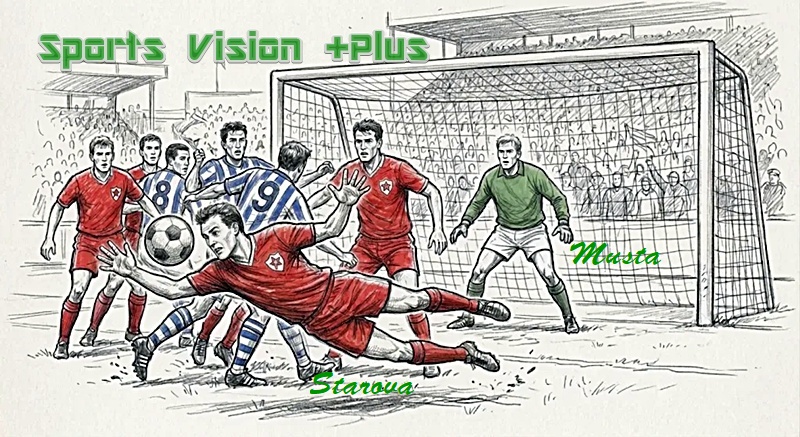
(This article is based on a personal memory)
There are undoubtedly many matches and encounters in the annals of Albanian football remembered for their drama, emotion and surprises, whether in the Championship or in the Cup. One such encounter has remained particularly vivid in my personal memory: the 1983 Republic Cup semi-final between “Partizani” and “17 Nëntori”. Or, more precisely, the closing minutes of this clash, filled with emotion, drama and unexpected twists…
Let us travel back in time to February of that year, on the eve of the second leg.
The first phase and the excitement of the 1982–83 Championship had come to an end. While everyone awaited the start of the second phase, two Republic Cup semi-finals had been scheduled for that month.
Alongside this historic encounter was the other semi-final pairing: “Flamurtari” – “Lokomotiva”.
Albanian football had entered a golden decade, the 1980s, when teams were becoming more established and their squads featured players with increasingly advanced technical and tactical preparation. Almost every team had its own shining star in attack, including clubs from outside the capital: V. Ruci (Flamurtari); D. Bajaziti (Besa); P. Kovaçi (Tomorri); F. Rama and F. Axhani (Besëlidhja); A. Koçi (Naftëtari); M. Kërçici and V. Kërçici (Skënderbeu); Gazheli and Buxheli (Traktori); F. Lleshi and A. Popa (Labinoti); B. Hado and the two Balgjin brothers, who had returned to “Lokomotiva”; S. Braho, L. Seiti and A. Boni (Luftëtari); and F. Fakja (Vllaznia)… just a few names from a much longer list.
The first phase of the Championship had clearly confirmed the quality, competitiveness and growing interest surrounding Albanian football, which was experiencing a noticeable rise.
“Vllaznia” of Shkodër had finished the first phase at the top of the table, earning the title of autumn champions with 18 points, following 6 wins, 5 draws and only 2 defeats, with a goal difference of 22–12. Immediately behind the Shkodër side was Tirana’s “17 Nëntori”, with 17 points from 7 wins, 3 draws and 3 defeats, and a goal difference of 24–16.
“Partizani”, meanwhile, had finished the first phase in fourth place, level on 16 points with “Lokomotiva”, but with a goal difference of +5 compared with the Durrës side’s +9.
Coming into this “Republic Cup” semi-final, “Partizani” had recorded 6 wins, 4 draws and 3 defeats, scoring 14 goals and conceding 9.
In the final week of the first phase, played on 28 November 1982, “Partizani” had drawn 1–1 against “Dinamo”, while “17 Nëntori” had returned from Elbasan after a heavy 3–0 defeat against “Labinoti”.
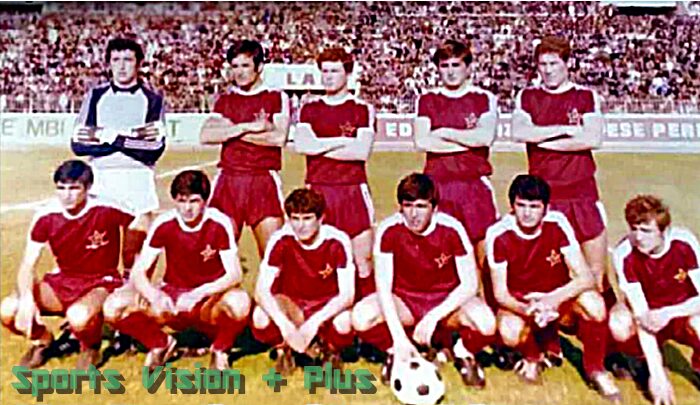
In the “Partizani” line-up, coached by the strategist Bejkush Birçe, the standout names included goalkeepers Musta and Lekbello; defenders Kastriot Hysi, Arian Hametaj, Kristaq Eksarko and Sulejman Starova; midfielders Ilir Lame and Genci Tomorri; and forward Hasan Lika. With the exception of Starova, all the others had been called up to the “Kombëtarja” – the Albanian National Team. We should also remember the younger generation, including Adnan Oçelli, a defender for the “Shpresa” U21 side, the talented Eduard Zhupa, Duro, Beliu and Mance.
“17 Nëntori”, also under the guidance of Enver Shehu, had plenty of players whose quality was in no way inferior to that of their “Partizani” rivals. Alongside Sharra in goal was H. Mersini, the goalkeeper of the “Shpresa” U21 representative side. Then came the legendary captain Millan Baçi, defender Arian Bimo, Bedri Omuri, midfielders Sulejman Mema, Mirel Josa and, of course, the attacking trio of Shkëlqim Muça, Arben Minga and Agustin Kola, all in excellent form.
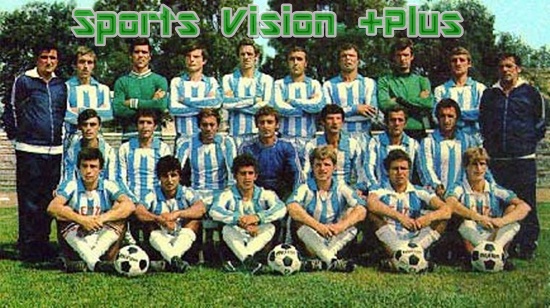
Alongside goalkeeper Mersini, Josa, Hodja, Liti and Muça would also be part of the “Shpresa” U21 team that would go on to reach the final tournament of the European Championship.
The harsh winter days of February 1983 were still upon us. According to the draw, “Partizani” had lost the first leg 0–2 on their own ground. Now, in the return match at “17 Nëntori”’s home ground, they faced a monumental task if they were to overturn the deficit. This was particularly daunting given that they had conceded two goals at home and considering the importance an away goal carried at the time in knockout Cup matches.
On a gloomy, rainy day, with the pitch at the National Stadium “Qemal Stafa” in poor condition and the stands packed to capacity, the two teams began their decisive battle to determine which of them would reach the final.
Naturally, “17 Nëntori” were much closer to achieving that objective. But “Partizani”, a team that always possessed a fighting spirit, iron discipline and a military-style tactical approach, were not going to give up easily. This was despite having conceded two goals on their own ground in the first leg, played just one week earlier.
I remember that, in Albania, during that harsh and prolonged winter, the first problems with the electricity supply began to appear. A power cut that Sunday had forced me to follow this great match through the waves of a radio, sitting on the staircase of the apartment building where I lived, in the corridor just outside the entrance.
The voice of the great commentator Ismet Bellova carried the emotions of the match to a 12-year-old boy. And, without exaggerating, it felt as though I were watching the game with my own eyes.
And there it was: “Partizani” scored twice, also on “17 Nëntori”’s ground, enough to level a tie that had seemed lost and give themselves hope of reaching the final.
Meanwhile, the rain continued to fall, making the pitch even more difficult.
“Partizani” kept attacking, while “17 Nëntori” not only defended but also threatened through quick counterattacks, relying on Minga and Kola.
My dear mother, who now rests in peace, called out to tell me: “The electricity is back!” I ran and switched on the television!
The match was approaching its final minutes, and just when everyone thought there would be an additional 15 minutes of extra time, “17 Nëntori” launched a quick attack.
A low cross and a ball moving towards the “Partizani” penalty area, where a cluster of multicolored shirts had gathered: red shirts defending with order and discipline, and blue-and-white shirts pushing forward.
Defender S. Starova broke away from that crowd of players, launching himself into a dive in an attempt to clear the ball with his head. Yet, considering its height, no more than half a meter above the ground, he could just as easily have avoided the danger by using his feet.
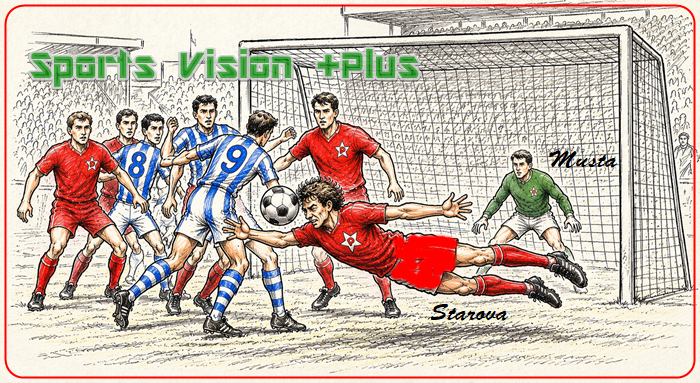
His dive was spectacular, but the execution of his intended action was wrong.
As he attempted to clear the ball with his head, he accidentally touched it with one hand while falling to the ground. This immediately caught the attention of the match referee, who, without hesitation, blew his whistle and awarded a penalty.
A group of players from both sides surrounded the referee. Starova himself tried to justify his action, but the decision was irreversible: a penalty
for “17 Nëntori”!
All the effort, determination, unwavering belief in a comeback and almost complete achievement of their objective by the Reds were on the verge of crumbling in less than 30 seconds.
Captain Baçi, an expert from the penalty spot, stepped up, struck the ball and… goal!
“17 Nëntori” 1–2 “Partizani”, a scoreline that remained unchanged until the final whistle.
Defeat, but qualification for the final!
A goal resulting from a mistaken dive, one that could have been avoided by defender Starova, opened the road to the final for “17 Nëntori”. Their supporters could barely contain their joy.
For me, the closing minutes of that match have remained forever etched in my memory. It was a game that gave me so much excitement and emotion, beginning with one simple question that had filled me with curiosity: could “Partizani” possibly overturn the 0–2 result from the first leg?
They came very close.
And “17 Nëntori” would go on to win that edition, defeating “Flamurtari” 1–0 in the final!
A team was emerging that would, in fact, become one of the protagonists of Albanian football throughout the 1980s, playing a style of football typical of that era: technical, powerful and attack-minded, built around the unforgettable trio of Minga–Muça–Kola.
Meanwhile, “Partizani” would finish as runners-up that season, losing the championship title in the final week (1–1 in Kavajë against “Besa”). The title went to “Vllaznia”, who, despite finishing level on points, had the better goal difference.
© Copyright by Pjerin Bj
Bronx, New York: November 8–9, 2026
____________________________________-
Sports Vision +Plus / Champions Hour
In activity since 2013

Discover more from Sports Vision +
Subscribe to get the latest posts sent to your email.