Two Finals in the North–South Rivalry, Six Goals and a Cup Decided in the Dying Minutes!
Prologue!
In Albanian football, there are encounters that cannot be measured solely by the score on the scoreboard. There are matches in which the opponents are not simply two teams, but two cities, two traditions and two different ways of experiencing football.
Such was the 1987 encounter between Shkodër’s “Vllaznia” and Vlorë’s “Flamurtari”, a final that took on the proportions of a sporting battle between the North and the South. One came from a city where football had deep roots and a sense of pride passed down from generation to generation; the other represented a Vlorë that had turned its team into a symbol of the city and an increasingly respected force in Albanian football.
Two matches, two stadiums and one trophy that seemed to change hands every time the ball crossed the goal line.
In the first encounter, on June 7, 1987, at “Vojo Kushi” in Shkodër, “Vllaznia” built a significant advantage with three unanswered goals. For the Shkodër side, it seemed as though the Cup was heading north. But in football, three goals can be a mountain to climb and, at the same time, a mountain that can crumble in the space of a single afternoon.
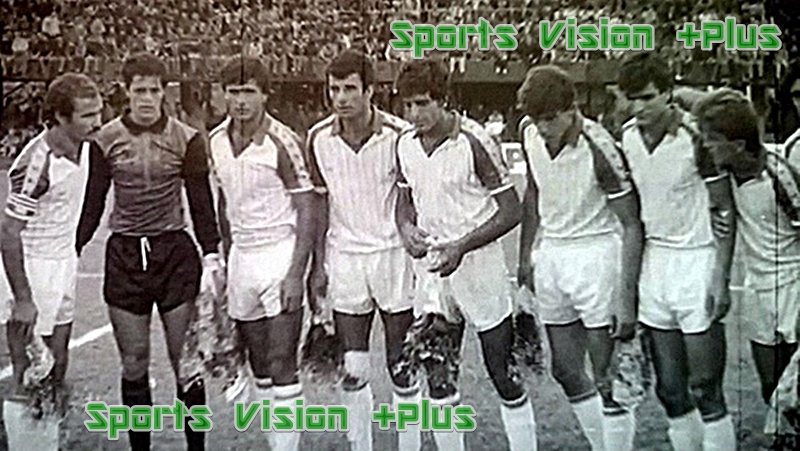
A week later, on June 14, “Flamurtari” welcomed its rival at the “Flamurtari” Stadium in Vlorë. In front of their own supporters, the Vlorë side launched an attack with the determination of a team that had no intention of accepting a predetermined fate. In just over an hour, “Vllaznia’s” advantage had disappeared.
The aggregate score was level at 3–3, and the final seemed to be starting all over again. At that moment, the Cup had become a hot potato that could fall into the hands of either city.
Across the two encounters, both teams had demonstrated their character; one had known how to build an advantage, the other how to overturn it, but in the end, a single goal separated triumph from disappointment.
The Road to the Final and a Duel That Refused to End Without Drama
Before reaching the two matches that would determine the winners of the “Republic Cup”, “Vllaznia” and “Flamurtari” had travelled a road that showed their place in the final was no coincidence. Both teams came from a strong season in which they had been among the leading protagonists of the championship, but their Cup campaign demanded something different: overcoming elimination threats, maintaining composure in decisive matches and winning precisely when mistakes could no longer be put right.
For “Vllaznia”, the road to the final passed through two formidable opponents.
In the quarter-finals, the Shkodër side eliminated “17 Nëntori” with an aggregate score of 2–1: they won the first match 2–0 and, despite losing the return leg 0–1, secured their place in the next round. In the semi-finals, they faced “Partizani”, a major rival and one of the strongest teams in the country. This encounter turned into a nine-goal duel across two matches: “Vllaznia” won the first leg 3–2, while the two teams drew 2–2 in the return match. With a 5–4 aggregate score, the Shkodër side booked its place in the final.
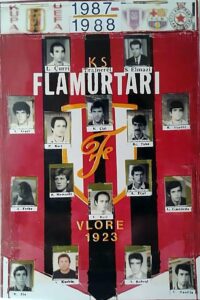 “Flamurtari”, on the other hand, secured its ticket to the final by first overcoming “Apolonia” and then “Luftëtari”. In the quarter-finals, the Vlorë side faced the team from Fier in a closely contested tie: they won the first match 1–0 and drew 1–1 in the second, advancing with a 2–1 aggregate score. But the toughest test came in the semi-finals against “Luftëtari”. The two matches ended 1–1 and 0–0, while “Flamurtari” secured qualification thanks to the away-goals rule. Thus, the two teams that had finished second and third in the championship were preparing to meet for the second most important trophy in Albanian football.
“Vojo Kushi”, Where “Vllaznia” Built Its Advantage
On June 7, 1987, Shkodër became the setting for the opening act of this final. At “Vojo Kushi” Stadium, where work had begun on the reconstruction of an entirely new stadium with European-standard dimensions, and in front of approximately 15,000 supporters, “Vllaznia” had the task of making the most of home advantage and taking the best possible result with them for the trip to Vlorë. On the other side, “Flamurtari” knew that a positive result in Shkodër would give the return match enormous significance.
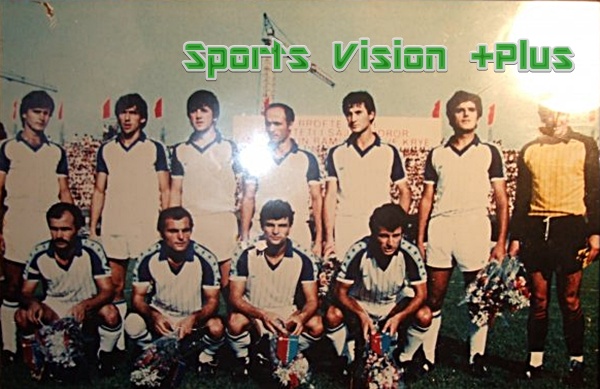
For a large part of the encounter, the nets remained untouched. Neither team had managed to find the key to the opposing goal, and with every passing minute, the importance of each attacking move increased. A final of this nature required not only talent but also patience. In matches at this level, a single goal can change not only the score but also the entire course of the game.
In the 69th minute, Ferit Rragami broke the deadlock and gave “Vllaznia” the lead they had been looking for. His goal was the turning point of the match. The Shkodër side had now moved ahead, while “Flamurtari” had to take greater risks to avoid leaving Shkodër with a heavy deficit.
But the closing stages would prove even more difficult for the Vlorë team. In the 83rd minute, Isak Pashaj scored the second goal, making it 2–0. Just five minutes later, in the 88th minute, Viktor Briza added a third. Within a short spell, “Vllaznia” had turned a match that had been evenly balanced on the scoreboard into a victory by a considerable margin.
The final whistle from referee Namik Jareci sealed the Shkodër side’s 3–0 victory. For “Vllaznia”, it was a major step towards the trophy. For “Flamurtari”, meanwhile, the result was a clear warning that the return match would require an extraordinary comeback. A three-goal deficit in a two-legged final was a formidable obstacle, but not a final verdict.
In Shkodër, “Vllaznia” had done its job. But the Cup had not yet been surrendered.
Vlorë Ignites Hope: “Flamurtari” Turns the Final into a Different Story
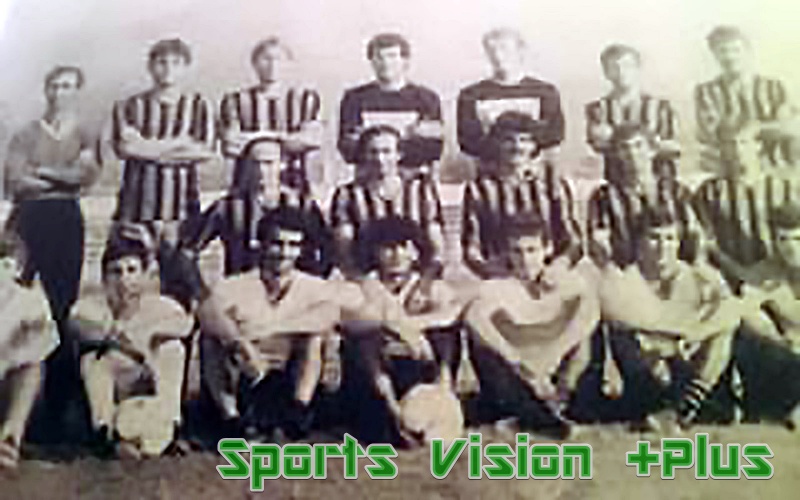
Seven days later, on June 14, 1987, it was Vlorë’s turn. At “Flamurtari” Stadium, approximately 11,000 supporters were waiting to see their team do what seemed almost impossible: overturn the 0–3 defeat from the first leg and keep their hopes of winning the Cup alive.
In football, sometimes the first-leg result becomes a psychological burden for the team that has lost, but it can also turn into an extraordinary source of motivation. “Flamurtari” had to attack, search for goals and prevent time from working against them. There was little room for calculations: the Vlorë side needed a great performance.
And the response came in the first half. In the 16th minute, Vasil Ruci scored the opening goal for “Flamurtari”. It was a start that gave confidence to the team and the stands. The aggregate deficit had now been reduced, and the match was taking the direction the home side wanted.
However, one goal was not enough. “Flamurtari” still had a mountain to climb and had to keep pressing towards goal. In the 53rd minute, Agim Bubeqi scored the second goal. The 2–0 score in Vlorë brought the home side even closer to their objective. At that moment, the final had entered an entirely different phase: “Vllaznia” no longer had the comfort of its three-goal advantage from Shkodër, while “Flamurtari” had begun to believe that a comeback was possible.
And that belief turned into great hope in the 62nd minute. Vasil Ruci again, and once more the ball was in the net for the third time. His second goal of the match made it 3–0 for “Flamurtari”. With this score, the aggregate tally was level: 3–3. The advantage that had seemed secure for the Shkodër side just one week earlier had disappeared. The Cup no longer had a clear potential owner; everything had been reopened.
For “Flamurtari”, this was the peak of an extraordinary effort. The team had scored three times and restored parity in the final. For “Vllaznia”, meanwhile, it was the most difficult moment of the entire campaign. The advantage built at home had melted away, and a response was now needed to prevent the trophy from slipping out of their hands.
Rragami, the Goal That Changed the Direction of the Cup Once Again
But the 1987 final had another twist in store. Just when “Flamurtari” seemed one step away from completing the comeback, “Vllaznia” found the strength to respond. In the 78th minute, Ferit Rragami scored for the Shkodër side, making it 3–1 in favour of the home team.
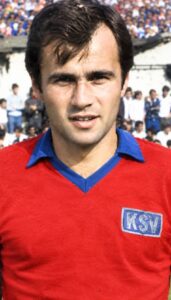 It was a goal whose significance was far greater than the numbers on the scoreboard suggested. At that moment, the aggregate score moved to 4–3 in favour of “Vllaznia”. After “Flamurtari’s” three goals had levelled everything, Rragami’s strike restored the advantage to the Shkodër side. The man who had opened the scoring in the first match also became the scorer of the goal that gave “Vllaznia” the decisive advantage across the two legs.
For “Flamurtari”, conceding that goal was a heavy blow. The Vlorë side had produced a remarkable comeback, scored three times and managed to level the aggregate score, but now they needed to find another goal. Time was running out, and the task was becoming increasingly difficult.
On the other hand, “Vllaznia” had managed to regain control of the final’s destiny. It was no longer a matter of protecting a substantial lead, but of defending a narrow advantage on aggregate. The remaining minutes carried particular weight: every “Flamurtari” attack could bring another change, while every passing minute brought the Shkodër side closer to the trophy.
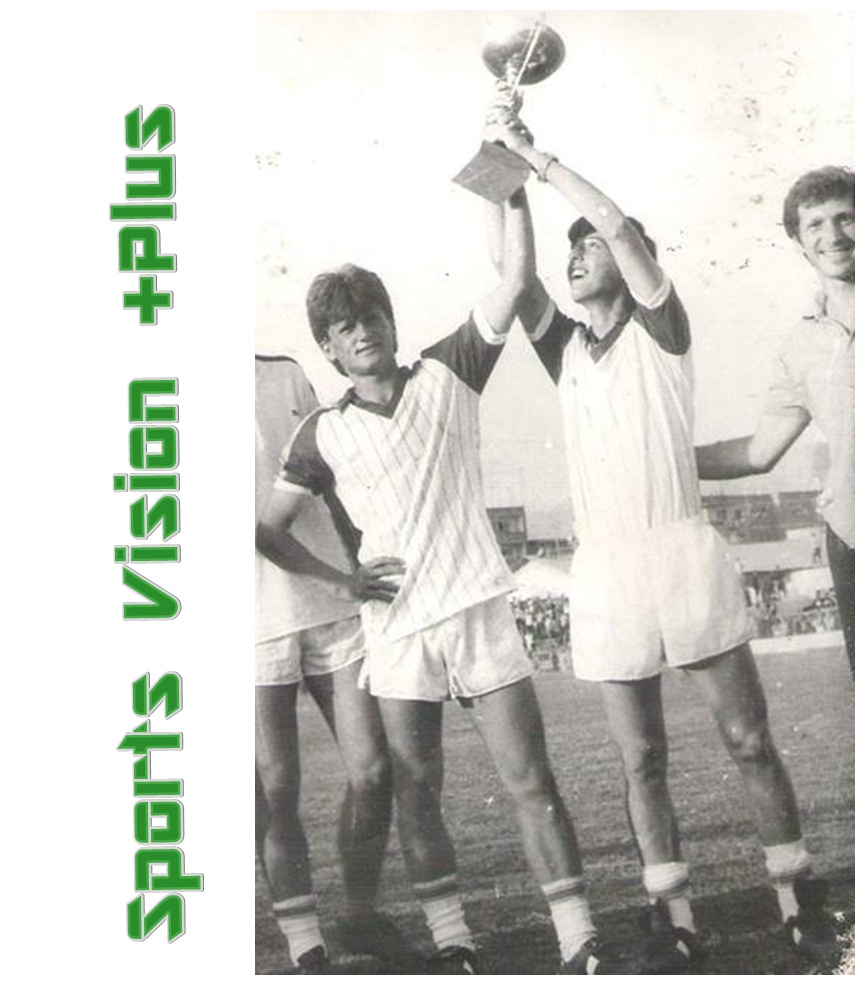
Referee Plarent Kotherja brought the match to an end with a 3–1 victory for “Flamurtari”. The Vlorë side had won the return match, but not the final. After the two encounters, the aggregate score stood at 4–3 for “Vllaznia”. The Republic Cup for the 1986–1987 season travelled to Shkodër.
That was the defining feature of this final: “Vllaznia” won the first match by a three-goal margin, “Flamurtari” won the second by a two-goal margin, but in the end, a single goal separated the two teams. In Shkodër, the decisive advantage had been built in the closing stages of the match; in Vlorë, the triumph belonged to the persistence of a team that refused to surrender. And at the heart of these two stories stood Ferit Rragami, a protagonist in both matches.
A Final That Left Its Mark Beyond the Result
“Vllaznia’s” triumph in 1987 also carried significance for the club’s history. It was the fifth Republic Cup for the Shkodër side, following those won in 1965, 1972, 1979 and 1981. Moreover, this success would remain the last Cup trophy “Vllaznia” won during the communist era; its next triumph in this competition would come only in 2008.
For “Flamurtari”, losing the final was a major disappointment, especially after what the team had managed to achieve in the return match. Nevertheless, its performance in Vlorë demonstrated the character of a team that was already among the leading sides in Albanian football. The Vlorë side did not win the 1987 Cup, but it produced one of the most remarkable comebacks remembered in two-legged finals.
In the end, history was not written only by the team that lifted the trophy. It was also written by the team that took the final all the way to an aggregate draw, by the supporters who filled the two stadiums and by two cities that experienced this duel with immense pride. Shkodër celebrated, Vlorë departed with the disappointment of a missed opportunity, but Albanian football gained a final that deserves to be remembered.
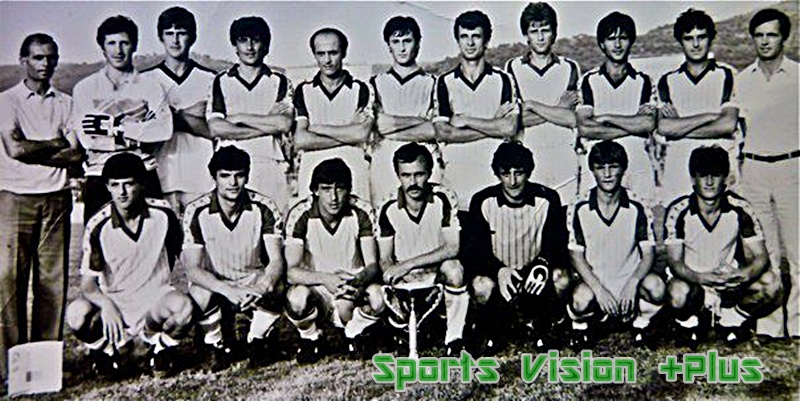
The winners of the Republic Cup for the 1986–1987 season were:
“Vllaznia”:
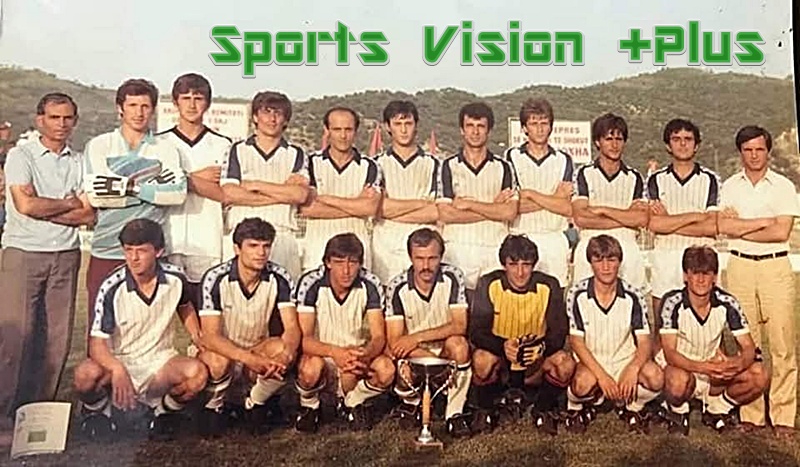
Agim Maliqati, Hysen Zmijani, Hysen Dedja, Ferit Rragami, Ritvan Semaj, Isak Pashaj, Ardian Laçja, Vitor Briza, Roland Luçi, Lulzim Bërsheni, Ardian Bushati, Luan Vukatana, Nikolin Thana, Barbullushi, Fatbardh Jera, Gilman Lika, Kujtim Shaba, Faslli Fakja and Ilir Kepa. Coach: Astrit Hafizi
Epilogue!
“Vllaznia” in 1987: Tradition, Trophies and a Generation with Character
To understand the significance of this triumph, we must take a closer look at the “Vllaznia” that entered that final. Founded in 1919, the Shkodër club was one of the oldest institutions in Albanian football. By 1987, it had won six national championship titles: in 1945, 1946, 1972, 1974, 1978 and 1983. Its trophy cabinet also contained four Albanian Cups, won in 1965, 1972, 1979 and 1981. In other words, before the final against “Flamurtari”, “Vllaznia” was not a team seeking to make history, but a name that had been building its history for decades. The 1987 Cup would become its fifth trophy in this competition.
Among that generation of Shkodër players were names that had left their mark on the football of the city and the country: Ferit Rragami, Hysen Zmijani, Hysen Dedja, Isak Pashaj, Viktor Briza, Luan Vukatana, Lulzim Bërsheni, Roland Luçi, Nikolin Thana, Bardh Jera, Faslli Fakja and others. Astrit Hafizi was at the helm of the team, and this victory marked an important achievement in his coaching career. This was a team with experience, players who understood the weight of the shirt and a winning tradition that gave them every reason to aim for every trophy.
Nevertheless, the 1986–1987 season had not found “Vllaznia” at the top of the championship table. The Shkodër side finished the competition in third place, with 32 points, behind champions “Partizani” and, indeed, behind “Flamurtari”. Thus, the Cup final was also an opportunity to end the season with a trophy and demonstrate that the team remained one of the leading forces in Albanian football.
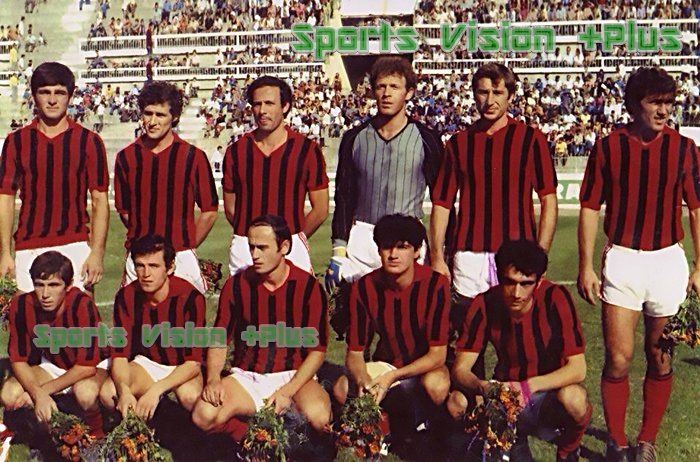
“Flamurtari” in 1987: The Ambition of the South and a Team on the Rise
On the other side stood “Flamurtari”, the team representing Vlorë and a city where football was more than just a sporting activity.
In the 1980s, the Vlorë team was experiencing an important period of growth. It had won the Republic Cup in 1985 and was consolidating a group of players who would make the name of “Flamurtari” respected both inside and outside Albania. By 1987, the club had still not won the national championship title; that success would come later, in the 1990–1991 season. But its position in the league showed that it had already become a serious contender.
The Vlorë squad of that period included names such as Vasil Ruci, Agim Bubeqi, Sokol Kushta, Alfred Zijai, Eqerem Memushi, Petro Ruci, Fotaq Ferko, Iljadhi, Taho, Gjondeda and others.
It was a group of footballers with character, physical strength and the ability to produce attacking football. On the bench, the team had come under the guidance of coaches who contributed to the development of this generation, while in the years that followed, it would continue to strengthen its position among the elite of Albanian football.
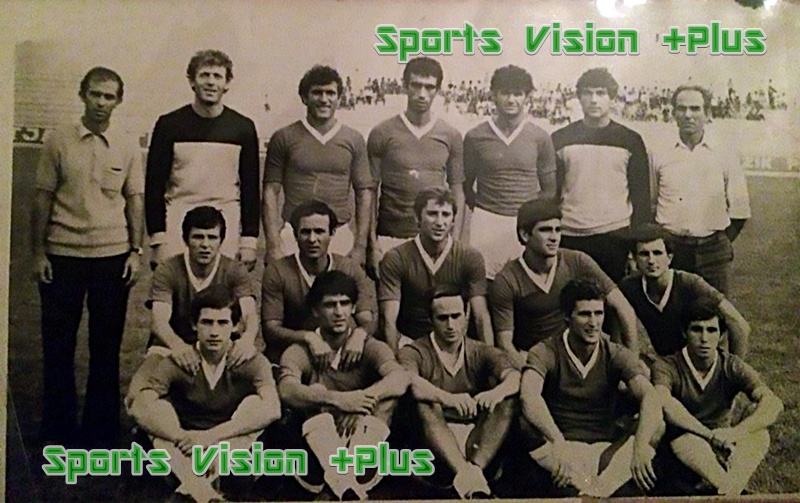
In the 1986–1987 championship, “Flamurtari” had enjoyed an even better campaign than its Shkodër rival. The Vlorë side finished the season in second place, with 33 points, just behind “Partizani”, leaving “Vllaznia” and other important names in Albanian football behind. This league position gave the final an even more interesting dimension: it was not merely a clash between two cities with strong traditions, but also a duel between the second- and third-placed teams in the championship. “Flamurtari” arrived with the ambition of crowning its season with another trophy; “Vllaznia” sought to preserve its place in the history of the Cup.
Thus, two teams with history, two cities with pride and two different paths to the final came together in an encounter that had everything: a substantial lead, a comeback, an aggregate score brought level and a decisive goal that changed the fate of the trophy. In the end, the Cup travelled to Shkodër, but its drama remained part of Albanian football’s memory as one of the most exciting finals in the sporting rivalry between North and South.
Archival Tables
Republic Cup Football Finals (1986–1987)
First Match
Shkodër, “Vojo Kushi” Stadium
Date: June 7, 1987
“Vllaznia” – “Flamurtari” 3–0
Goalscorers:
Ferit Rragami – 69′
Isak Pashaj – 83′
Viktor Briza – 88′
Line-ups:
• “Vllaznia”: Starting line-up – not yet confirmed by the available documentation.
• “Flamurtari”: Starting line-up – not yet confirmed by the available documentation.
Referee: Namik Jareci
Attendance: 15,000
Second Match
Vlorë, “Flamurtari” Stadium
Date: June 14, 1987
“Flamurtari” – “Vllaznia” 3–1
Goalscorers:
• Vasil Ruci – 16′
• Agim Bubeqi – 53′
• Vasil Ruci – 62′ (some sources give the 63rd minute)
• Ferit Rragami – 78′ (“Vllaznia”)
Line-ups:
• “Flamurtari”: Starting line-up – not yet confirmed by the available documentation.
• “Vllaznia”: Starting line-up – not yet confirmed by the available documentation.
Referee: Plarent Kotherja
Attendance: 11,000
Aggregate score: “Vllaznia” – “Flamurtari” 4–3.
© Copyright Pjerin Bj
Bronx, New York: November 6, 2026
________________________________________
Sports Vision +Plus in activity since 2013

Discover more from Sports Vision +
Subscribe to get the latest posts sent to your email.