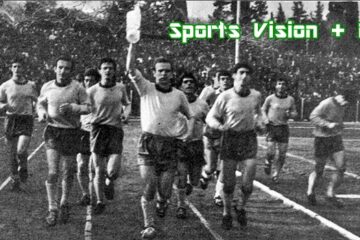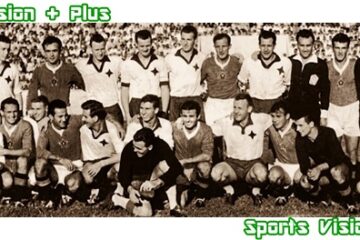
“Dinamo”– “Carl Zeiss Jena” 1981: A Magical Night in Tirana and the 90 Minutes That Turned History Upside Down!
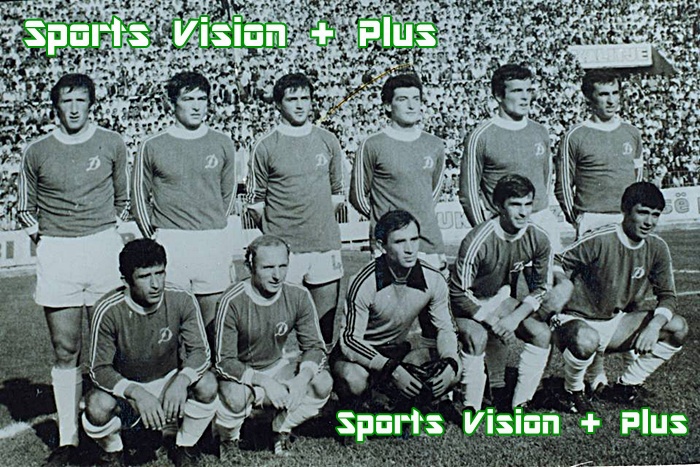
PROLOGUE!
When Dinamo Gave Europe a Night to Remember
In the summer of 1981, “Dinamo” was not simply a team preparing for another European adventure. It was one of the biggest names in Albanian football.
By then, the club had won the Albanian national championship 13 times, while only one year earlier, in the 1979–80 season, it had once again claimed the Albanian crown.
But in the 1980–81 season, the title had slipped away only at the end of an extremely tight race. “Partizan” were crowned champions with 37 points, while “Dinamo” finished second with 36, recording 14 wins, 8 draws and only 4 defeats, with 32 goals scored and 17 conceded.
Therefore, the “Dinamo” that entered the 1981 UEFA Cup was not a team searching for its identity. It was a team built around a generation already well known in Albanian football. Ilir Luarasi stood in goal; behind him were Kujtim Çoçoli, Muhedin Targaj, Agron Dautaj, Aleko Bregu, Halit Gega and Andrea Marko; while up front, above all, stood the famous trio that would remain in the memory of the fans for years: Vasillaq Zëri – Ilir Përnaska – Shyqyri Ballgjini, even though the famous trio was past its prime!
The names in this line-up were not merely part of a list. They represented a “Dinamo” that had won titles, produced national-team players and created an identity of its own in Albanian football.
However, the new 1981–82 season had not started so optimistically for “Dinamo”. In the first week they had drawn 2–2 in Tirana against
“31 Korriku”, newcomers to the First Division, on 6 September 1981, while in the second week “Dinamo” lost in Vlora against
“Flamurtari” 1–0 on 10 September 1981, only six days before the UEFA Cup challenge, leaving them eighth in the championship table after two rounds with only 1 point!
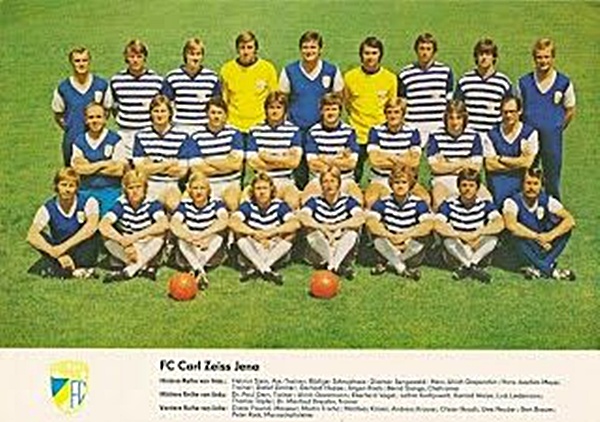
And now standing opposite them was “Carl Zeiss Jena”, one of the strongest teams in East Germany. Only a few months earlier, Jena had played the European Cup Winners’ Cup final against “Dinamo” Tbilisi.
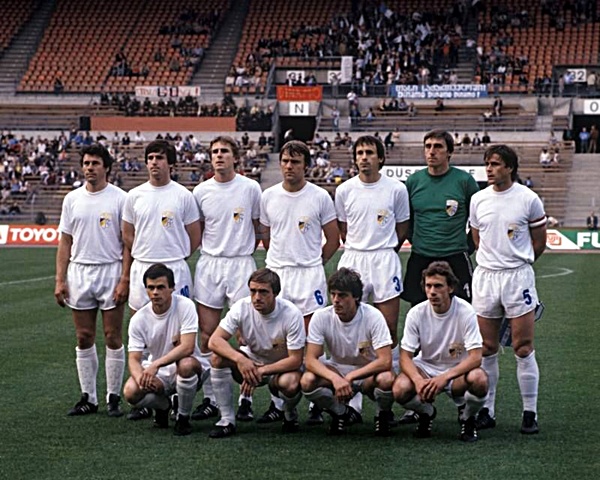
PHOTO: FC Carl Zeiss Jena, Cup Winners’ Cup final, May 1981
Among their ranks were names such as Hans-Ulrich Grapenthin, Rüdiger Schnuphase, Konrad Weise, Lothar Kurbjuweit, Andreas Bielau, Jürgen Raab and Eberhard Vogel.
So, “Dinamo” Tirana was not facing a team that had just discovered Europe. It was facing a side that only a few months earlier had been 90 minutes away from a European trophy.
And on 16 September 1981, at “Qemal Stafa”, something happened that few had expected.
In front of around 30,000 fans, “Dinamo” did not enter the field simply to survive. It played with discipline, confidence and a defence that did not allow Jena to find the road to goal. For 60 minutes the scoreboard remained 0–0. Then came the 61st minute.
Vasillaq Zëri.
A goal.
Dinamo 1–0 Carl Zeiss Jena.
At that moment, one of East Germany’s best-known teams found itself facing a reality it had not expected: in Tirana, Albanian Dinamo had taken the lead.
But European football had another side.
Two weeks later, on 30 September, Dinamo travelled to the Ernst-Abbe-Sportfeld in Jena. There, in a stadium with 15,000 spectators, history changed completely. Jürgen Raab, Rüdiger Schnuphase, Andreas Bielau and Martin Trocha scored four times and Jena turned everything around:
4–0.
Thus, within 180 minutes, “Dinamo” experienced two faces of Europe: the miracle of Tirana and the reality of Jena.
But that 1–0 victory was not an insignificant episode.
It was a night when “Dinamo” Tirana, Albanian champions only one year earlier and runners-up in the previous season, faced a team that had just played a European final — and defeated it.
And the story was about to become even more interesting.
Because after “Dinamo”, Carl Zeiss Jena would face Real Madrid.
But before Real came “Dinamo”.
And for one night, in Tirana, it was Dinamo that had Europe standing opposite it — and did not retreat.
1.
A Dinamo Built for Europe!
When Dinamo took the field against “Carl Zeiss Jena”, behind it stood an entire season and a generation that understood the weight of the shirt. It was not the first time that “Dinamo” represented Albania in European competitions, but this adventure had one particular distinction: for the first time, the team was entering the UEFA Cup, a competition in which the level of the opponents and the pace of European football represented another test.
Ilir Luarasi was in goal, while the defensive line included names such as Kujtim Çoçoli, Agron Dautaj and Muhedin Targaj. In midfield moved Halit Gega, Aleko Bregu, Artur Çobani and Andrea Marko, while up front stood the players the fans knew well: Vasillaq Zëri, Ilir Përnaska and Shyqyri Ballgjini. This was a team with experience, but also a generation still hungry to show that Albanian football could play with dignity beyond its borders.
Opposite them was “Carl Zeiss Jena”, the East German side that only four months earlier had played the Cup Winners’ Cup final in Düsseldorf against “Dinamo Tbilisi”.
In that final on 13 May 1981, “Carl Zeiss Jena” had taken the lead through Gerhard Hoppe, but “Dinamo Tbilisi” turned the match around and won 2–1. Therefore, when the East Germans arrived in Tirana, they carried with them a European experience that would have seemed distant to many Albanian teams.
“Dinamo” had to find a way to turn that difference into motivation.
And it did.
2.
16 September 1981 — “Qemal Stafa” Rises to Its Feet
“Dinamo” – “Carl Zeiss Jena” 1–0
On 16 September 1981, the national stadium “Qemal Stafa” had become the stage for one of the most remarkable European nights in Albanian football.
Around 30,000 spectators were in the stands.
Opposite them stood an Albanian team and a finalist from the recent history of European football.
The referee was Hungarian László Györi. “Dinamo” started with Ilir Luarasi, Agostin Marko, Agron Dautaj, Muhedin Targaj, Halit Gega, Andrea Marko, Uran Xhafa, Kujtim Çoçoli, Vasillaq Zëri, Shyqyri Ballgjini and Aleko Bregu. Durim Kuqi and Artur Çobani were introduced in the second half.
“Carl Zeiss Jena” started with Hans-Ulrich Grapenthin in goal and Rüdiger Schnuphase, Gerhard Hoppe, Konrad Weise, Lothar Kurbjuweit, Andreas Krause, Ulrich Oevermann, Thomas Töpfer, Andreas Bielau, Jürgen Raab and Eberhard Vogel in front of him. The coach was Hans-Joachim “Hans” Meyer.
The first half ended 0–0.
But the score did not tell the whole story.
“Dinamo” was not playing simply to survive. It was keeping a team with major European experience in front of it and waiting for its moment.
And that moment came in the 61st minute.
A “Dinamo” attack moved toward the Jena penalty area. The ball reached Vasillaq Zëri and the Dinamo striker made no mistake.
1–0.
“Qemal Stafa” exploded.
For a moment, everything stood still: “Dinamo” had taken the lead against “Carl Zeiss Jena”.
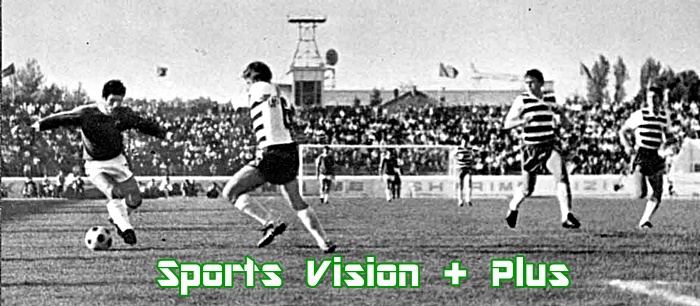
And what made it even more remarkable was that the goal was not simply a statistical episode. It put Dinamo ahead of a team that only a few months earlier had played a European final.
The final minutes became a test of nerves.
“Carl Zeiss Jena” searched for the equalizer.
“Dinamo” held its structure.
Luarasi and the Albanian defence did not allow the lead to disappear.
When the referee signaled the end with three blasts of the whistle, the scoreboard showed:
“Dinamo” 1–0 “Carl Zeiss Jena”.
A goal from Zëri.
An Albanian victory.
And for the first time in the tie, Jena was the team that had to come from behind.
3.
Two Weeks Later — Europe Changes Its Face
“Carl Zeiss Jena” – “Dinamo” 4–0
But European competitions had a merciless rule: what happened in Tirana had to be repeated in another stadium, in another atmosphere.
On 30 September 1981, “Dinamo” travelled to Jena.
At the “Ernst-Abbe-Sportfeld”, around 15,000 spectators waited for the home team. The referee was Romanian Gheorghe Dragomir.
Dinamo had a 1–0 advantage.
But it also had an opponent that now knew exactly what it had to do.
In the 11th minute, Jürgen Raab scored.
1–0.
The aggregate score was level.
“Dinamo” did not collapse immediately. But the match had now entered another territory. Jena pushed higher and began creating more danger.
The first half ended 1–0.
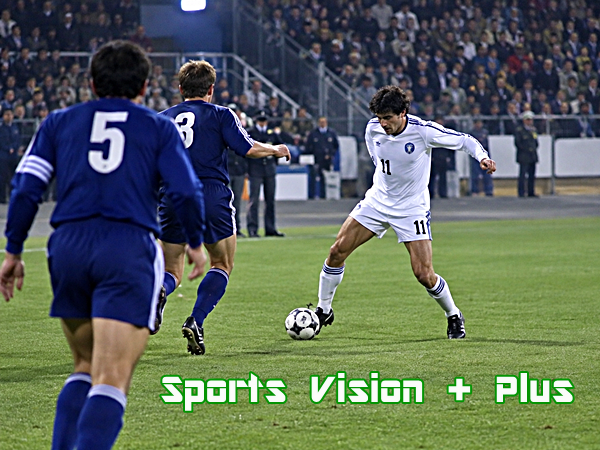
“Dinamo” only needed to resist and find a moment to strike.
But that moment never came.
In the 60th minute, Rüdiger Schnuphase scored from the penalty spot.
2–0.
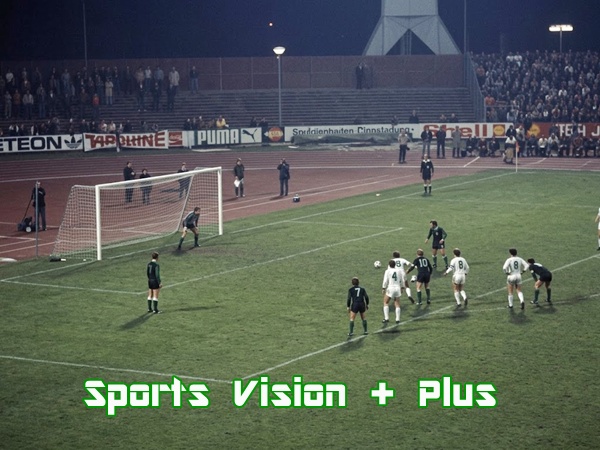
And at that moment, the weight of the match changed.
Jena was now ahead on aggregate.
Three minutes later came the third blow. Andreas Bielau scored and “Carl Zeiss Jena” moved to 3–0.
(In the club archive, this goal is recorded in the 63rd minute, while a contemporary report in “Die Neue Fußballwoche” places it in the 67th minute).
“Dinamo” tried to respond, but the match had now become a battle for survival.
In the final minutes came the fourth goal.
Martin Trocha.
4–0.
And with that goal, Dinamo’s European adventure also came to an end.
“Carl Zeiss Jena” had turned everything around.
4.
Two Matches, Two Faces
In Tirana, “Dinamo” had played with courage.
In Jena, it had tried to survive against a team that had found its rhythm.
That is what makes this tie interesting beyond the result. Because this was not the story of an Albanian team simply losing twice.
Quite the opposite.
It was the story of a team that defeated Jena in Tirana, forced them to fight for the comeback in the second leg and, for 90 minutes, made a recent
European finalist feel the pressure of an Albanian stadium.
Overall, the two matches ended:
“Dinamo” 1–0 “Carl Zeiss Jena”
“Carl Zeiss Jena” 4–0 “Dinamo”
Aggregate result:
“Carl Zeiss Jena” 4–1 “Dinamo”.
Dinamo was out.
But Jena’s European story had just entered another chapter.
5.
After “Dinamo” — The Road to Madrid
If “Dinamo’s” adventure ended in Jena, Europe continued for the East Germans.
In the next round of the UEFA Cup, the draw brought them face-to-face with Real Madrid.
On 21 October 1981, in Madrid, “Real Madrid” won 3–2.
Two weeks later, on 4 November, in Jena, “Carl Zeiss Jena” held Real to a 0–0 draw.
Thus, the story takes a turn worth remembering.
In September, “Carl Zeiss Jena” came to Tirana as Cup Winners’ Cup finalists.
In Tirana, they lost 1–0.
Two weeks later, they eliminated “Dinamo” 4–0.
And only a few weeks after that, the same East German side was playing against Real Madrid in the UEFA Cup.
For Dinamo, this made the challenge even more significant in retrospect: they had faced a team that was not simply a first-round opponent, but a side that continued to measure itself against major names in European football.
EPILOGUE
One goal in Tirana, four in Jena, and a night left hanging in the air!
There are matches that are forgotten because their result did not change history.
And there are matches that remain precisely because, for one night, history seemed as though it might take another direction.
“Dinamo”–“Carl Zeiss Jena” was one of them.
On 16 September 1981, at “Qemal Stafa”, Dinamo won 1–0. Vasillaq Zëri scored the goal, Luarasi and the defence kept a clean sheet, and around 30,000 fans watched an Albanian team defeat a European finalist.
On 30 September, at “Ernst-Abbe-Sportfeld”, everything changed. Jena won 4–0 and advanced to the next round.
But in the archives of Albanian football, that night of 16 September remained.
A night when the names of Dinamo — Luarasi, Çoçoli, Targaj, Marko, Bregu, Gega, Zëri, Përnaska, Ballgjini — stood opposite a team that only a few months earlier had played a European final.
And they did not retreat.
Perhaps that is the fairest way to remember that encounter.
Not as a 4–1 aggregate elimination.
But as a story of two matches and two realities: an Albanian victory in Tirana and a German comeback in Jena.
One night at “Qemal Stafa”.
Another at the “Ernst-Abbe-Sportfeld”.
One goal from Vasillaq Zëri.
Four goals from Jena.
And between them, a small but unforgettable story from Albanian football in Europe.
“Dinamo” lost the tie. But for one night, it made Europe turn its eyes toward Tirana.
ARCHIVAL MATCH RECORD
“Dinamo” – “Carl Zeiss Jena” 1–0
UEFA Cup, First Round, First Leg
Venue: National Stadium “Qemal Stafa”, Tirana
Date: 16 September 1981
Kick-off: 16:30
Attendance: 30,000
Referee: László Györi (Hungary)
Half-time: 0–0
Scorer: Vasillaq Zëri, 61’
Line-up – “Dinamo”: Ilir Luarasi; Kujtim Çoçoli; Agron Dautaj; Muhedin Targaj; Agustin Kola; Halit Gega; Aleko Bregu; Andrea Marko; Uran Xhafa; Vasillaq Zëri; Shyqyri Ballgjini.
Substitutions – “Dinamo”:
Artur Çobani for Uran Xhafa, 57’;
Durim Kuqi for Agostin Kola, 87’.
Line-up – “Carl Zeiss Jena”: Hans-Ulrich Grapenthin; Rüdiger Schnuphase; Gerhard Hoppe; Konrad Weise; Lothar Kurbjuweit; Andreas Krause; Ulrich Oevermann; Thomas Töpfer; Andreas Bielau; Jürgen Raab; Eberhard Vogel.
Substitutions – “Carl Zeiss Jena”:
Wolfgang Schilling for Konrad Weise, 50’;
Martin Trocha for Eberhard Vogel, 66’.
Dinamo coach: Samir Dauti.
Carl Zeiss Jena coach: Hans Meyer.
NOTE: The Jena club archive gives 30,000 spectators and Zëri’s 61st-minute goal; modern databases differ on attendance, with Transfermarkt listing 19,000.
Second Leg
“Carl Zeiss Jena” – “Dinamo” 4–0
UEFA Cup, First Round, Second Leg
Venue: “Ernst-Abbe-Sportfeld”, Jena
Date: 30 September 1981
Kick-off: 20:00
Attendance: 15,000
Referee: Gheorghe Dragomir (Romania)
Half-time: 1–0
Scorers: Jürgen Raab, 11’; Rüdiger Schnuphase, 60’ penalty; Andreas Bielau, 63’; Martin Trocha, 83’.
Line-up – “Carl Zeiss Jena”: Hans-Ulrich Grapenthin; Rüdiger Schnuphase; Konrad Weise; Wolfgang Schilling; Gerhardt Hoppe; Andreas Krause; Lothar Kurbjuweit; Ulrich Oevermann; Andreas Bielau; Jürgen Raab; Martin Trocha.
Substitutions – “Carl Zeiss Jena”:
Stefan Meixner for Ulrich Oevermann, 75’;
Eberhard Vogel for Andreas Bielau, 70’.
Line-up – “Dinamo”: Ilir Luarasi; Kujtim Çoçoli; Agron Dautaj; Muhedin Targaj; Agostin Kola; Halit Gega; Aleko Bregu; Andrea Marko; Uran Xhafa; Vasillaq Zëri; Ilir Përnaska.
Substitutions – “Dinamo”:
Artur Çobani for Aleko Bregu, 22’;
Kuqi for Andrea Marko, 70’.
Carl Zeiss Jena coach: Hans Meyer.
Dinamo coach: Samir Dauti.
Aggregate result: “Carl Zeiss Jena” 4–1 “Dinamo”.
NOTE: The Jena archive records the four goals at 11’, 60’, 63’ and 83’, with 15,000 spectators and Gheorghe Dragomir as referee.
© Copyright by Pjerin Bj
Bronx, New York: September 27, 2026
(TIME: 3:30 AM)
________________
Sports Vision +Plus in activity since 2013

Discover more from Sports Vision +
Subscribe to get the latest posts sent to your email.