1976–1977 National Championship: Institutional Grit Carries “Dinamo” to a Historic League Crown!
Prologue!
Football, in its truest and most romantic form, is an unforgiving theater of endurance. It is a sport that breaks the faint-hearted, exposes the hesitant, and demands an almost sacred level of psychological sacrifice from those who dare to chase its ultimate prize. The 1976–1977 Albanian National Championship was not just a football season; it was a grueling, multi-layered war of attrition that tested the absolute boundaries of domestic grit.
By tearing up the traditional script and introducing a ruthless, late-season play-off split, the federation turned the footballing landscape into a coliseum. Suddenly, there was no room for error, no safety net for the faltering, and no hiding from the elite. Group “A” became a tactical crucible where direct rivals were forced to look each other in the eye week after week, trading heavy blows under the pressure of a nation’s gaze.
It was a campaign defined by the intoxicating scent of an impossible fairytale—the surging, newly promoted underdogs of Skënderbeu Korçë marching out of the lower divisions to terrify the traditional aristocracy of the sport. Their campaign was a beautifully chaotic storm of adrenaline, unexpected away conquests, and a raw passion that set the grandstands on fire. Yet, as the spring weeks bled into a long, exhausting marathon, the romanticism of the underdog met the ice-cold reality of institutional experience.
When the dust finally settled in the arena, it was Dinamo standing solitary at the summit. They did not win with mere flash or fleeting momentum; they won because they possessed the structural muscle, the battle-hardened scars, and the serene patience of a true champion. They weathered the storm, calculated the long-distance demands of a brutal new format, and conquered the tactical split to write their names in letters of pure gold.
This is the story of a season where the beautiful game was stripped down to its bare, competitive bones—a story of heartbreak, survival, and the ultimate coronation of an empire.
Albanian Clubs in Europe:
The Cold Silence of Europe: Albania’s 1976–1977 Continental Absence
The 1976–1977 European football season remains a hauntingly quiet chapter in Albanian sports history. While the elite clubs of Europe battled under the stadium floodlights for continental glory, the stadiums of Albania remained entirely dark on Tuesday and Wednesday nights. For the fourth consecutive year, the domestic game stood in absolute isolation from mainstream UEFA competition.
Based purely on athletic merit on the pitch, the nation’s premier clubs were firing on all cylinders:
Dinamo had just claimed the domestic league crown.
17 Nëntori Tiranë sat proudly as the reigning domestic cup holders.
Yet, when the official UEFA draw balls rolled in Geneva for the European Cup, the Cup Winners’ Cup, and the UEFA Cup, Albania’s names were entirely missing from the velvet bags.
This absolute blackout was part of a much larger, agonizing six-year gap that starved a golden generation of local players from testing their skills against global superstars. Between 1973 and 1978, the domestic footballing landscape was forced into a state of deep, introverted isolation.
The only minor relief from this monotony arrived in the form of the Balkans Cup—a small, regional tournament restricted to neighboring Balkan Peninsula nations.
But the grand stage of Europe remained a forbidden realm. For the players and fans of the era, the 1976–1977 season would forever be remembered as a year of stolen opportunities, leaving football purists to wonder just how far those legendary domestic squads could have marched had they been allowed to step onto the European grass.
Representing Albania during a UEFA competition ban, Dinamo displayed strong tactical discipline in the 1976 Balkans Cup. On April 14, 1976, Dinamo secured a 2–0 home victory against Ethnikos Piraeus in the Balkans Cup at “Qemal Stafa” Stadium, with goals from Ilir Përnaska and Vasillaq Zëri.
The match featured a standout performance from goalkeeper Ahmet Ahmedani, who maintained a clean sheet with crucial saves, while strong defensive and midfield play from Faruk Sejdini and Iljaz Çeço cemented the win.
The second match took place on May 26, 1976, at the Karaiskaki Stadium (specifically played at the Dimotiko Gipedo Moschatou ground) in Piraeus, Greece. In a dramatic, wide-open tactical encounter, Ethnikos Piraeus managed to get their revenge by outlasting the Albanians in a wild 4–3 victory
Unlike the disciplined, structural gridlock of the first match in Tirana, both backlines completely broke down under pressure. Ethnikos pushed forward aggressively with their home-field advantage, while Dinamo relied on rapid attacking transitions to constantly threaten the Greek net.
Once again, Albania’s dynamic duo of Ilir Përnaska and Vasillaq Zëri spearheaded the attack, causing massive headaches for the Greek defenders. However, despite Dinamo’s clinical potency upfront, a few rare defensive lapses under heavy pressure ultimately allowed Ethnikos to secure the narrow 4–3 win.
Despite the chaotic away loss, Dinamo Tiranë finished above Ethnikos Piraeus in Group B thanks to their superior overall goal difference, demonstrating immense sporting pride on the regional stage.
Ilir Përnaska was the standout performer for Dinamo Tiranë in the 1976 Balkans Cup, scoring in both matches against Dinamo Zagreb, which ended in 1-2 and 2-1 defeats Zagreb’s goals across both fixtures were secured by Zlatko Kranjčar and Mario Bonić, while Tiranë’s efforts were supported by the defensive work of Ahmet Ahmedani and midfielder Astrit Hafizi.
“Kombetarja” – National Albanian Team
The Lost Generation: Albania’s Silent Era in World Cup Qualification
The mid-1970s will forever be remembered as the great phantom era of Albanian international football. While the continent’s finest nations locked horns in grueling qualifying campaigns for the 1978 FIFA World Cup in Argentina, the Albanian National Team—the beloved “Red and Blacks”—stood in absolute, stone-cold silence.
For the players and purists of the era, the 1976–1977 calendar represents a heartbreaking peak of a multi-year competitive blackout.
This was not an isolated incident, but rather part of a sweeping, dark timeline that entirely derailed a golden generation of domestic talent. The senior national team completely bypassed the qualification cycles for World Cup 1970, UEFA Euro 1976, World Cup 1978, and UEFA Euro 1980. Consequently, between 1973 and 1980, the national team did not kick a single ball in an official FIFA or UEFA competitive fixture.
The sporting tragedy of this isolation lies in the sheer quality of the talent that was locked away. Phenomenal masters of the ball like Ilir Përnaska, the dazzling Vasillaq Zëri, and the impenetrable goalkeeper Ahmet Ahmedani were at the absolute peak of their physical powers. They possessed the tactical sophistication to challenge any backline in Europe, yet they were systematically denied the global stage.
Ultimately, the 1976–1977 qualification cycle remains a poignant reminder of what might have been. It stands as a time when Albania boasted some of the most elegant, technically gifted players in its history, only for their international legacy to be written in the quiet margins of unplayed matches.
National Championship 1976-1977 begin!
Partecipating Teams: 12
(According to last season’s final standings)
1-Dinamo
2-17 Nentori
3-Vllaznia
4-Besa
5-Partizani
6-Flamurtari
7-Shkendija
8-Labinoti
9-Lokomotiva
10-Luftetari
11-Traktori
12-Skenderbeu
Reigning Champions: Dinamo
Republic Cup Holders: 17 Nëntori
Promoted from the Second Division: Skënderbeu
Relegated in Second Category: Naftetari
The Tactical Split and the Rise of the Underdog:
The 1976–1977 Albanian Football Saga
The 1976–1977 Albanian National Championship entered footballing folklore as a highly revolutionary campaign, completely breaking away from tradition by introducing a brand-new tournament format. After a standard two-phase, home-and-away marathon, the 12 top-flight teams were split down the middle into two distinct play-off sections.
The top six clubs advanced to the high-stakes Group “A” to battle exclusively for the ultimate championship crown, while the bottom six were relegated to Group “B,” locked in a desperate dogfight for First Division survival.
What unfolded across these three phases was an epic theatrical display of surging underdogs, tactical chess, and a title race that ultimately validated domestic experience over romantic fairytale runs.

Phase 1 & 2: The Explosive Starts and the Korça Fairytale
The season erupted with an absolute sprint from 17 Nëntori Tiranë. The capital club laid down an early marker of intent, securing a ferocious string of consecutive victories by dismantling Flamurtari Vlorë 2–1, edging past Labinoti Elbasan 1–0, and defeating Shkëndija Tiranë 2–1. Yet, just as their momentum seemed unstoppable, their engine stalled. A shocking 1–2 slip at home against Traktori Lushnja, followed by a frustrating 0–0 stalemate with Besa Kavajë, completely broke their stride and forced them to drop crucial ground to the emerging frontrunners.
The true revelation of the opening phases was Skënderbeu Korçë. Having just earned promotion from the Second Division, the Korçari were initially expected to merely fight for survival. They opened the campaign with a highly cautious string of four consecutive draws, but once this period of hesitation concluded, they went on a historic rampage.
Skënderbeu announced their title ambitions by executing brilliant away masterclasses: a wild 4–3 goal-fest victory over Labinoti in Elbasan, a clinical 2–0 shutout against Lokomotiva in Durrës, and a matching 2–0 triumph over Flamurtari in Vlorë. This blistering run propelled the newly promoted underdogs straight to the absolute summit of the league.
The Skënderbeu Korçë Away Rampage:
Elbasan: Labinoti Elbasan 3–4 Skënderbeu Korçë
Durrës: Lokomotiva Durrës 0–2 Skënderbeu Korçë
Vlorë: Flamurtari Vlorë 0–2 Skënderbeu Korçë
Outcome: Surge to sole 1st Place
However, the flight of the Korçari was abruptly brought back to earth. A resilient Shkëndija side stunned them 1–0 in Tirana, and shortly after, Vllaznia Shkodër traveled to Korçë to inflict a painful 2–1 second consecutive defeat.
This power vacuum allowed Dinamo to seize the throne with 16 points, closely stalked by the duo of Skënderbeu and Vllaznia on 14 points. Skënderbeu quickly shook off the bitter taste of those consecutive losses, responding like true contenders by securing a massive 1–0 home victory over their direct title rivals, Dinamo.
As Vllaznia stumbled in a 2–1 away defeat against Flamurtari, Partizani Tirana quietly studied the chaotic landscape and made their move, defeating Labinoti 1–0 to pull level with Dinamo at the top on 18 points each.

Dinamo vs Vllaznia. Aereal duel between Aleko Brego (Dinamo) and the goalkeeper Sukaj (Vllaznia)
The Mid-Season Consolidation (Top Tier):
—————————————————-
1. Dinamo – 18 pts
2. Partizani – 18 pts
A completely revitalized Skënderbeu found their highest gear yet. They added serious velocity to the title race by defeating Partizani 1–0 in Korçë and traveling to Gjirokastër to ground out an identical 1–0 victory over Luftëtari. Meanwhile, Dinamo’s internal engine began to misfire.
They dropped a bitter capital derby 0–1 to 17 Nëntori and were held to a fierce 1–1 draw by Vllaznia in Shkodra. Collecting a meager single point out of a possible four, Dinamo surrendered their solo lead, allowing a relentless Skënderbeu to catch them deadlocked at the top with 27 points.
By the final whistle of the opening two phases, the title race was completely balanced on a knife-edge as the top six prepared to isolate into the Group “A” play-offs:
Final Standings Heading into the Play-off Split:
1. Dinamo Tiranë – 28 pts (Group “A” Play-off)
2. Skënderbeu – 28 pts (Group “A” Play-off)
3. Vllaznia – 27 pts (Group “A” Play-off)
4. Partizani – 26 pts (Group “A” Play-off)
5. 17 Nëntori – 23 pts (Group “A” Play-off)
6. Lokomotiva – 23 pts (Group “A” Play-off)
Phase 3 (Play-offs):
The Exhausting Marathon and a Champion’s Resistance
The final play-off phase turned into a grueling test of athletic endurance and psychological depth. With the championship condensed into a high-octane mini-league among the top six, experience ultimately became the deciding factor.
The first signs of physical and mental fatigue appeared in the camp of the fairytale dark horses, Skënderbeu. The Korçari suffered a devastating 1–2 slip away against Lokomotiva in Durrës. Dinamo Tiranë capitalized with ruthless efficiency, defeating Vllaznia 1–0 to break the deadlock and step into a sole two-point lead at the top of the table.
Skënderbeu’s mid-phase crisis quickly turned acute. In the penultimate week of the season, they suffered a heartbreaking 1–2 defeat against a clinical 17 Nëntori. Dinamo did not blink; they protected their lead flawlessly, widening the gap to a comfortable four points. With a week left to play, Dinamo mathematically secured the National Championship with a round to spare.
The Title-Deciding Play-off Shift:
——————————————–
• Skënderbeu Crisis:
Lost 1–2 vs. Lokomotiva & 1–2 vs. 17 Nëntori
• Dinamo Capitalization:
Defeated Vllaznia 1–0 ➔ Built a 4-point lead
• Outcome:
Dinamo Tiranë crowned Champions 1 week in advance
This championship victory belonged to a mature Dinamo squad that perfectly calculated the long-distance demands of the new format. Guided by institutional experience, their roster perfectly blended veteran grit with an exciting new generation of talent, featuring icons like Rama, Muhedin Targaj, Ibershimi, Gani Mergjyshi, Aleko Cocoli, the lethal Ilir Përnaska, Vasillaq Zëri, Shyqyri Ballgjini, Ibrahim Ishka, and Marko.
Despite missing out on the ultimate crown, the runners-up medal for Skënderbeu Korçë was universally celebrated as a historic, magnificent achievement for a newly promoted side.
________________________________________
The Group “B” Relegation Drama:
A 90-Minute Final Day Showdown
While the elite fought for gold in Group “A,” an absolute war of attrition unfolded in Group “B” to avoid relegation to the second tier.
The dramatic survival battle between Shkëndija Tiranë and Besa Kavajë raged all spring, culminating in a Hollywood script: a winner-takes-all showdown on the final day of the season with the two direct protagonists facing each other on the pitch.
Entering the final 90 minutes, Shkëndija held a fragile, single-point advantage in the standings. Recognizing the immense value of their cushion, Shkëndija deployed a flawless, deeply disciplined defensive block. They successfully frustrated Besa’s attackers for the entire match, grinding out a precious 0–0 scoreless draw. That single point was worth its weight in gold, guaranteeing Shkëndija’s survival in the top flight.
For Besa Kavajë, the final whistle brought absolute sporting tragedy. Having been a continuous, proud staple of the First Division since 1957, their historic top-flight run came to an end with relegation to the Second Division. Their place in the elite for the following season was claimed by Tomorri Berat, who secured promotion to return to the top tier after a five-year absence.

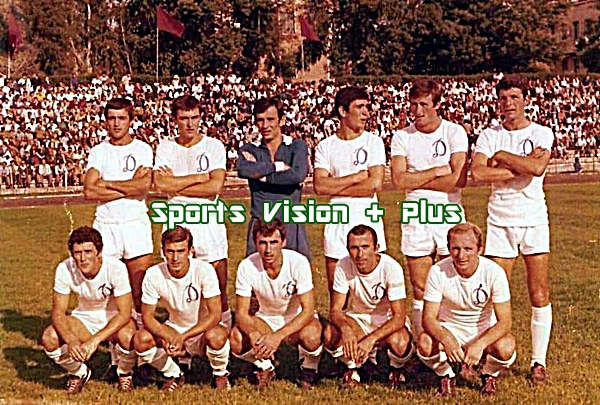
DINAMO – KAMPION 1976-1977
Jani Rama, Ilir Luarasi, Ahmet Ahmedani
Muhedin Targaj, Aleko Bregu, Xhorxhi Puka, Torez Ciraku, Iljaz Ceco, Haxhi
Mergjyshi, Faruk Sejdini, Kujtim Cocoli, Rifat Ibershimi, Gani Xhafa,
Gj. Gjini, Ibrahim Kodra, Riza Hicka, Shaban Zenuni,
Andrea Marko, Vasillaq Zeri, Ilir Pernaska, Shyqyri Ballgjini
Trainer: Durim Shehu
The Republic Cup: 17 Nëntori’s Sweet Revenge
The dramatic domestic football calendar was rounded out by a highly intense, two-legged Republic Cup Final that offered a thrilling postscript to the league season. The final brought face-to-face the newly crowned league champions, Dinamo Tiranë, and a wounded 17 Nëntori, desperate for silverware.
The two matches mirrored each other with absolute, eerie precision:
First Leg: 17 Nëntori claimed a hard-fought 2–1 victory.
Second Leg: Dinamo responded on their home turf with an identical 2–1 win.
With the aggregate score deadlocked at 3–3 and neither side able to find a definitive breakthrough in extra time, the cup was forced into a dramatic penalty shootout.
17 Nëntori held their nerve flawlessly from the spot, defeating the league champions to lift the Republic Cup and ensure that the major domestic honors of the unforgettable 1976–1977 season were shared between the capital titans.
© By Pjerin Bj
Bryant Park & Bronx, New York
July 2026
___________________
Sports Vision +Plus | Champions Hour

Discover more from Sports Vision +
Subscribe to get the latest posts sent to your email.