Olympic Memorable Stories #1 | The Pure Athletic Battles of Summer & Winter Games!
#1
Olympic Chronicles: Forgotten Legends and Timeless Feats!
Prologue:
The Eternal Flame and the Sanctuary of the Arena
The Olympic Games, in their truest and most sacred form, exist as the ultimate theater of human endurance. It is a world where time is measured in fractions of a second, where gravity is temporarily defied, and where the human spirit is pushed to the absolute edge of its physical boundaries. For over a century, the pulsing coliseums of the Summer Games and the frozen, razor-sharp landscapes of the Winter Games have served as a sanctuary.
Within these lines, the background noise of the outside world fades into absolute silence. There are no political borders, no institutional divisions, and no external distractions—there is only the pure, unadulterated athletic battle on the track, the snow, and in the pool.
Every four years, the lighting of the Olympic flame summons a rare breed of titans to the arena. Some march into the stadium draped in the armor of inevitable victory, while others arrive as quiet, unheralded dreamers destined to shatter the established order.
Yet, the true magic of the Olympiad does not merely reside in the cold weight of the medals distributed at the podium. The soul of the Games lives in the unwritten sagas: the agonizing sacrifices made in the shadows of empty training halls, the breathtaking displays of sportsmanship that transcend national rivalries, and the moments of sheer, defiant grit when an athlete refuses to succumb to injury or defeat.
These are the chronicles of human excellence. They are stories of triumph that set the grandstands on fire, and heartbreaks that leave an entire stadium holding its collective breath. By stripping away the external clutter and focusing entirely on the raw poetry of the sport, we uncover the timeless legends that have defined generations. This is a journey through the most captivating pages of sporting folklore—a tribute to the grit, the glory, and the immortal spirit of the arena.
Welcome to Olympic Memorable Stories.
Episode 1:
The Rider Who Borrowed her Horse’s Legs — The Lis Hartel Saga
Historical Data Box
Athlete: Lis Hartel (Denmark)
Sport: Equestrian (Dressage)
Olympic Record: 2-Time Silver Medalist (Helsinki 1952, Stockholm 1956)
The Milestone: One of the first four women to ever compete in Olympic equestrian history.

The equestrian discipline of dressage is a silent ballet of symmetric movement, a unique Olympic arena where horse and rider must communicate through invisible pressures of hand and leg, appearing to the world as a single, synchronized entity. For the first four decades of its Olympic inclusion—from the 1912 Stockholm Games until the dawn of the 1950s—this arena was an fiercely restricted enclave, open exclusively to commissioned military officers. Non-commissioned personnel, civilians, and women were entirely barred from competing.
When the gates were finally thrown open to everyone at the 1952 Helsinki Games, history did not just witness a change in regulations; it witnessed the arrival of a pioneer who redefined the very meaning of athletic defiance: Denmark’s Lis Hartel.
The Milestone of Inclusion (Helsinki 1952)
Pre-1952 Rule: Open only to Commissioned Military Officers
1952 Expansion: Opened to civilians, enlisted men, and women
The Pioneers: Four women enter the Olympic Dressage arena
The Shadow of Paralysis
Lis Hartel’s journey to the Olympic podium was forged through an unimaginable physical crucible. In 1944, at just 23 years old and during the height of her pregnancy, the leading Danish rider contracted polio. The disease struck with brutal severity, leaving her almost entirely paralyzed. For most, such a diagnosis would signal the end of any athletic life. For Hartel, it was simply the baseline for a monumental rehabilitation battle.
Driven by an unyielding desire to continue her equestrian career, she began her recovery while still pregnant. The process was agonizingly slow. She first fought to regain the ability to lift her arms, followed by a grueling effort to reactivate her thigh muscles. Her daughter was born healthy, providing a spark to an already fierce comeback.
Hartel literally learned to move again from the ground up—progressing from crawling on her knees to walking haltingly with the assistance of crutches. When skeptics doubted her capability to handle a powerful mount without functioning leg control, her response was poetic and absolute: “Why can’t my horse be my legs?”
The Return to the Arena
By 1947, a mere three years after being struck by paralysis and still unable to use her legs properly, Hartel shocked the equestrian world by entering the Scandinavian Riding Championships, riding with immense grace to claim a brilliant second-place finish. She maintained her elite form over the subsequent years, forcing Olympic selectors to name her as one of Denmark’s dressage competitors when the 1952 Helsinki Games arrived.
As one of only four women pioneering the newly integrated event, Hartel produced a technical masterpiece. Despite requiring physical assistance to both mount and dismount her horse, her invisible execution in the saddle amazed the international judging panel, earning her the Olympic Silver Medal.
The Helsinki 1952 Podium Triumph
🥇 Gold Medalist: Henri St. Cyr (Sweden)
🥈 Silver Medalist: Lis Hartel (Denmark)
The subsequent medal ceremony remains one of the most profoundly emotional and enduring images in Olympic folklore. As the results were officially announced, the Gold Medalist, Sweden’s Henri St. Cyr, stepped down from the top tier of the victory platform. In an extraordinary display of pure sportsmanship, the Swedish officer walked over to Hartel, took her arm, and personally assisted her onto the second-place podium slot as the crowd erupted in a thunderous ovation.
The Double-Silver Dynasty
Hartel proved that her Helsinki triumph was no fluke four years later at the 1956 Olympic Games. Due to Australia’s strict quarantine regulations, the equestrian events of the Melbourne Olympiad were extracted and held separately in Stockholm, Sweden.
The 1956 Equestrian Alternative (Stockholm)
Context: Australian quarantine laws restrict animal transport
The Resolution: Equestrian events held separately in Sweden
The Outcome: Lis Hartel secures back-to-back Olympic Silver
Navigating the high-stakes pressure of a second Olympic cycle, Hartel replicated her elite precision to capture her second consecutive Olympic Silver Medal in individual dressage. In a beautiful piece of historical symmetry, it was once again Sweden’s Henri St. Cyr who claimed the gold, and once again, the Swedish champion stepped down from his pedestal to assist the Danish pioneer onto the podium.
Through her unyielding grit, Lis Hartel transcended the boundaries of her sport, personifying a famous Danish proverb that perfectly summarized her approach to life and sport: “Life is not holding a good hand; life is playing a poor hand well.”
© By Pjerin Bj
Bronx: July 25, 2026
Episode 2:
The Fallen Baton — The 1936 Women’s Sprint Drama
Historical Data Box
Event: Women’s 4 x 100-Meter Relay
Olympics: Berlin, 1936
Date of Final: August 9, 1936
The Favorites: The German Relay Team (Emmy Albus, Käthe Krauss, Marie Dollinger,Ilse Dörffeldt
The Challenger: The United States Relay Team (Anchored by Helen Stephens)
The Stakes: The ultimate race for global speed supremacy on the final day of the track and field program.
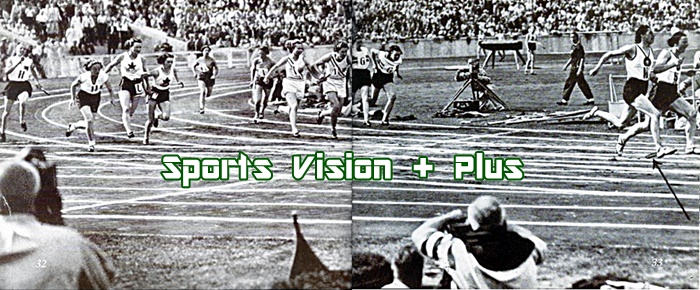
August 9, 1936, marked the highly anticipated final day of the track and field program at the Berlin Olympic Games. An electric, capacity crowd of 80,000 spectators packed into the stands, expecting to witness what the home country considered an absolute certainty: a gold medal coronation for the magnificent German women’s 4 x 100-meter relay team.
The local sprinters had earlier dominated the field events, claiming gold in both the discus and javelin. Now, the stage was perfectly set for them to secure their first-ever running gold medal of the Games. They were loaded with immense speed, having already broken the world record during the semi-final heats the day before. Their execution had been so dominant that none of the other five finalists had even finished within seven meters of them.
The only mathematical threat to the favorites was a resilient United States foursome, anchored by the legendary individual 100-meter gold medalist, Helen Stephens. However, on paper, the American semi-final time was a full seven-tenths of a second slower than the newly established world record—a deficit equivalent to nearly seven meters on the track.
The Semi-Final On-Paper Deficit
German Relay Time: World Record Pace (Favorites)
United States Time: +0.7 Seconds Slower (~7 Meters Behind)
The Execution Plan: Build an uncatchable lead before the anchor leg
The Tactical Blueprint
The German race strategy heading into the final was beautifully simple. The coaching staff aimed to leverage their superior raw speed across the first three legs to build an overwhelming, uncatchable lead. The mathematical goal was to give their anchor runner, Ilse Dörffeldt, the baton with a comfortable ten-meter cushion.
By calculating the limits of human performance, the favorites knew that even if America’s Helen Stephens ran the fastest closing leg of her life, a ten-meter head start would allow Dörffeldt to cross the finish line with at least three meters to spare.
For three-quarters of the final, the race unfolded precisely according to the blueprint. Emmy Albus exploded out of the blocks on the leadoff leg, hand-delivering a three-meter lead to Käthe Krauss. Krauss executed a flawless transition, maintaining the tempo and extending the gap to an additional three meters.
When the third runner, Marie Dollinger, took the baton, she torched the curve, pulling away to add another four meters of distance. As Ilse Dörffeldt stood waiting at the final pass-off zone, Germany was a massive ten meters in front—seemingly too much ground for even the great Helen Stephens to make up.
Tragedy at the Final Exchange
Then, in a fraction of a second, absolute disaster struck the stadium. As Dollinger closed the distance and reached out to deliver the baton, the exchange failed. It is highly doubtful if anyone in the roaring crowd saw the exact moment of the mechanical error, but the first clue to the catastrophe came from Dörffeldt’s body language.
As if struck by a physical blow, the anchor runner suddenly grabbed her head with both hands, her face contorting in pure anguish on the track. The baton had slipped from their grasps, tumbling onto the running surface.
The Final Leg Catastrophe
Marie Dollinger ➔ Attempts handover with a 10-meter lead
Ilse Dörffeldt ➔ Misses the exchange; baton tumbles to the turf
The Result ➔ An almost certain gold medal vanishes in a split second
With the home favorites completely frozen in shock, America’s Helen Stephens capitalized on the blunder, storming down the final straightaway to capture the Olympic Gold Medal for the United States.
In a beautiful display of sportsmanship, the three other German relay members immediately raced down the track to console a weeping Dörffeldt, while the jubilant American squad celebrated their unexpected triumph at the finish line.
Echoes Through Time
The emotional weight of that fallen baton lingered with the athletes for decades. More than half a century later, leadoff runner Emmy Albus recalled the overwhelming shock that enveloped the squad until the following morning. Yet, despite the intense sporting heartbreak, the competitors remembered a surprising wave of comforting support from the local fans and organizers, who sent the devastated relay team flowers the very next day.
On the other side of the track, Helen Stephens, who passed away in 1994, maintained a fierce competitor’s stance throughout her entire life. Whenever the legendary German tragedy was discussed, the American anchor firmly discounted the idea that the gold was a mere gift, confidently maintaining: “I would have won the race even if they hadn’t dropped the baton.”
© By Pjerin Bj
Bronx: July 25, 2026
TO BE CONTINUED……
__________________________
Sports Vision +Plus | Hour of the Champion since 2013

Discover more from Sports Vision +
Subscribe to get the latest posts sent to your email.