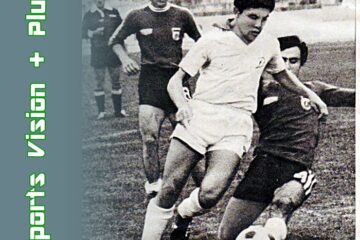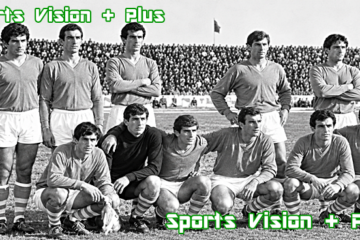
The Footballer Who Played Beyond His Time!
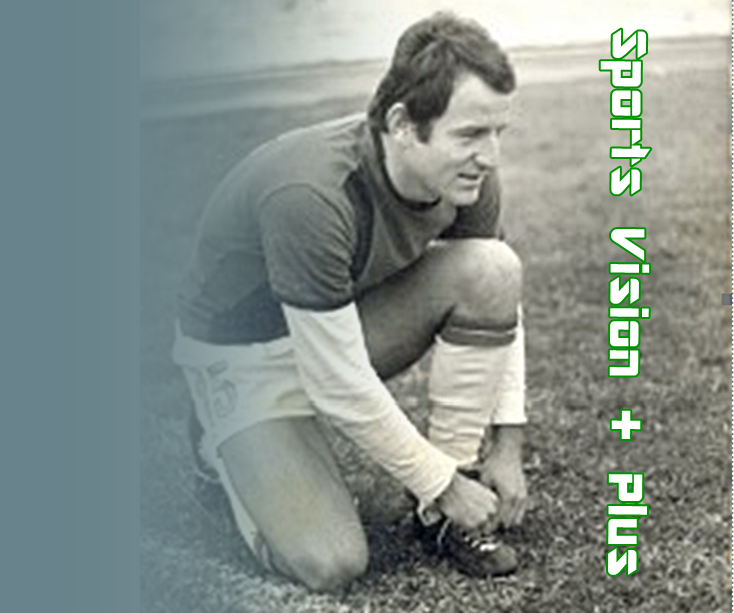
Prologue
Some careers are measured by the number of matches, trophies or shirts worn. Others leave their mark through the way a player changes the very idea of the game.
Milto Gurma belongs to this category.
Before football became the center of his life, he had come from another sporting world. The sea of Saranda, swimming, rowing and athletics had given him the body and breathing of an athlete. Football came later and, within a few years, transformed that young boy into one of the most interesting figures of the generation of the 1970s.
But Gurma’s story is not only the story of a talent.
It is also the story of a footballer who came up against the limits of his time, who moved from “Shkëndija” to “Luftëtari,” wore the red-and-black shirt and found himself at the center of a long transfer saga that did not always take the path he wanted.
In the end, what remained was the game.
And the way he played it.
1 – From Water to the Ball
Saranda in 1951 gave Gurma his first sporting environment. Growing up in a family of five children, he was raised close to the sea and began taking part in water sports. His talent was so evident that, before he had even turned 14, he was already producing results that made him a candidate for high-level competition in rowing and swimming.
But fate had another plan.
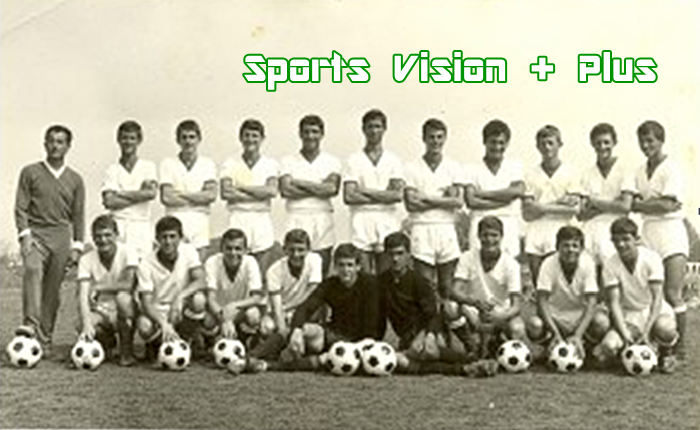
In 1968, Tirana became the great turning point. During the selections organized for the School of Sports Mastery, coach Zyber Konçi saw something in him that went beyond that of a talented athlete. Gurma was included in the school’s first group of footballers, and that was how the story of “Shkëndija” began.
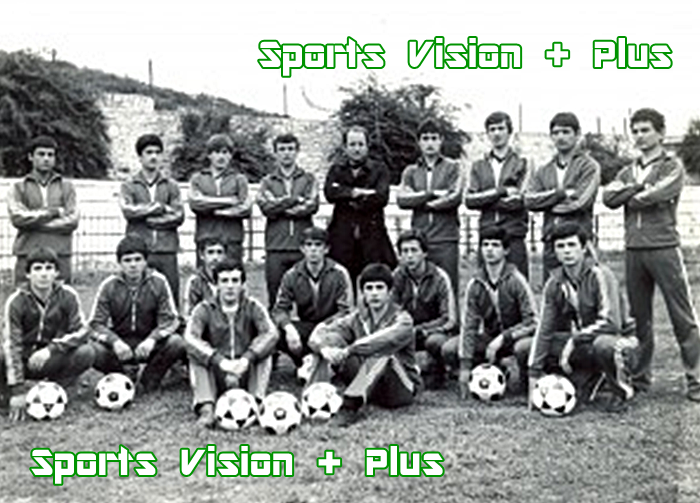
Konçi would have an extraordinary influence on his development.
Physical preparation was only the foundation. On top of it came technique, tactical discipline and a distinctive way of interpreting his position on the field. Gurma’s physical ability, also evident in running tests, would be combined with an unusual elegance in movement.
A Generation That Came Knocking
“Shkëndija” was not simply a school team. Within a short time, it became one of the distinctive stories of Albanian football in those years.
Champions in youth tournaments, then winners of the Second Division and immediately promoted to the top flight, the team entered the 1971-72 season with an energy that attracted the attention of the entire Albanian football scene.
Gurma was there.
In one of the matches that would remain in his memory, “Shkëndija” defeated “Partizani” 2-1 at “Qemal Stafa,” while he was given the task of neutralizing Panajot Pano. He was only 20 years old.
In Elbasan came his first goal in the top flight, in a 2-1 victory over “Labinoti.” A small episode on the surface, but a significant one for a footballer who was steadily gaining confidence.
2 – A Player Without a Single Position
Gurma was not the kind of footballer who could be confined to one label.
He began as a stopper, but over the years he also appeared as a center-back, sweeper and, at certain moments, further forward in midfield. This versatility was not simply the result of the team’s needs. It was part of his character as a player.
In a football where the defender was usually thought of first as someone whose job was to destroy the opponent’s attack, Gurma wanted something different: to start the move.
The ball was not merely something to be cleared away from danger. It was a tool for creating.
This brought him closer to the model of the modern defender that was emerging in European football. His ability with both feet, his control, passing and capacity to read space gave another dimension to his game.
“Shkëndija” Beyond the Borders.
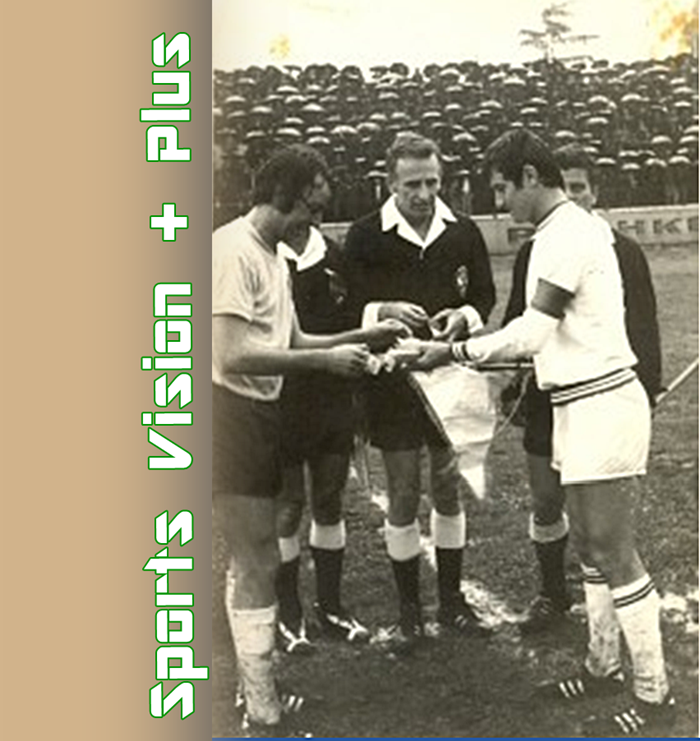
In 1972, “Shkëndija” was selected to represent Albania in the Balkan Cup. Their opponents were “Kavalla” and “Vardari.”
In Tirana came a 2-1 victory over the Greeks, with goals from Sulo and Fagu. Away from home, “Shkëndija” lost 2-0. Against “Vardari,” they drew 1-1 in one match and lost 2-1 in the other, with both goals scored by Zeri. Gurma wore the captain’s armband of a team that was trying to prove that a side formed within a school could compete beyond the domestic championship as well.
During the same period, his name had also entered the orbit of the national team.
Myslym Alla gave him his confidence and Gurma appeared in the lineup in important international matches. In Bucharest, on October 29, 1972, he started against Romania. In April 1973, he was again in the lineup against East Germany in Magdeburg. Later came further appearances, including the friendly against Algeria in 1976.
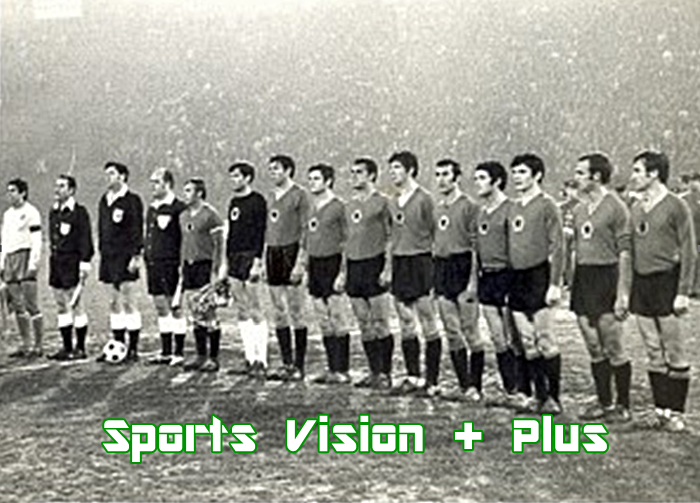
For a young man who had come through “Shkëndija,” it was an extraordinary rise.
3 – A Transfer That Never Happened
But away from the lines of the football field, Gurma’s path became far more complicated.
After completing his studies at the Institute of Physical Culture, he was the subject of interest from “Partizani” and “Dinamo.” The source material describes institutional interventions, delays involving documents and various efforts to determine the club where he would continue his career.
Instead of an ordinary transfer, Gurma found himself in a situation where documentation and sporting decisions became intertwined with the administrative structures of the time.
The attempt to take him to “Partizani” failed. Another effort involved transferring him through Saranda, while eventually the documents ended up in his hometown.
Thus, in 1974, the destination became Gjirokastër.
Five Years with “Luftëtari”
At “Luftëtari,” Gurma found another important chapter.
Five seasons, from 1974 to 1979, placed him in a team where coach Bahri Ishka used him in different roles. In Gjirokastër, he developed another connection with the city, the club and the supporters. His work in education gave him stability in everyday life, while the field remained the place where he continued to express himself.
One of the most distinctive episodes came after an injury.
In a match against “Tomori,” when the team won a penalty and no one was willing to take responsibility, Gurma stepped forward. Still not fully recovered, he took the kick himself and scored.
It was one of those moments that tells you more about a footballer than any statistic ever could.
4 – Europe That Remained One Step Away
In 1979, another major opportunity appeared before him.
“Partizani” were preparing for their encounter with “Celtic” in the European Cup, and Gurma joined the squad. Zyber Konçi, by then in charge of the federation, requested the necessary documentation to make his registration possible. But time passed and the procedures were not resolved. When the team departed for Tirana, Gurma left the squad and returned to “Luftëtari.”
The European opportunity had passed him by. Without being realized.
5 – When the Class of the Player Rose Above the Category
Toward the end of his career, Gurma also played in the lower divisions. His final match, in May 1986, was “Prrenjasi”-“Butrinti.”
But even at that stage, his level did not go unnoticed.
Following his performance in the “Butrinti”-“Besëlidhja” final, he received an invitation to join the national team camp.
In a friendly match in Saranda against “Partizani,” Gurma scored three goals. The renowned coach Bejkush Birçe had always had a great appreciation for Gurma and wanted to bring him into the ranks of “Partizani.”
It was an ending that suited his story: a player who, even when he was moving away from the big stage, still found a way to attract attention.
Epilogue!
Milto Gurma left behind more than just a list of clubs.
He left a way of playing the game.
He was the product of a generation shaped by discipline, but also a footballer who wanted the freedom to think. At a time when a defender was often expected simply to stop the move, he saw the ball as the beginning of a new attack.
That was why his style remained distinctive.
His elegance, positioning, control and ability to move the game forward made him a recognizable figure in Albanian football of the 1970s. The source describes this as a distinctive interpretation of the sweeper’s role, connected with a more technical and creative form of football.
In the history of Albanian football, there are many names remembered for trophies.
Milto Gurma is remembered for something else:
for the way he played football.
And sometimes, that is precisely what lasts the longest.
© Copyright by Pjerin Bj
Bronx, New York : September 18, 2026
___________
Sports Vision + Plus | Champions Hour in activity since 2013

Discover more from Sports Vision +
Subscribe to get the latest posts sent to your email.