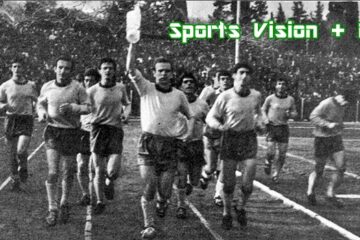
“Vllaznia” 1971–1972! Bizi-Rragami-Zhega! | When Shkodra Returned to the Summit of Albanian Football
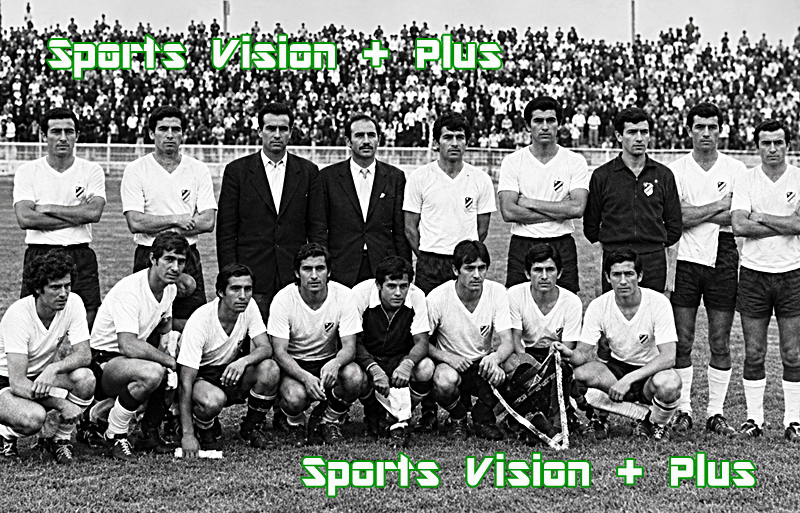
Prologue!
A season that began far from Shkodra and ended with all of Albania looking north.
In the autumn of 1971, Albanian football was entering another chapter.
The National Championship began with 14 teams and 26 matchdays ahead. At the top stood defending champions “Partizani”, while “Dinamo” and “17 Nëntori” were two of the strongest names in the football of the era. Behind them came a group of teams that had no intention of playing merely the role of spectators.
Among them was “Vllaznia”.
Shkodra was not simply looking for a place in the standings. In the northern city there was a belief that the team possessed enough class, experience and personality to enter the title race.
But the championship was long.
26 matchdays.
182 matches in total.
And only one team would finish with the crown.
That team would be “Vllaznia”.
But to understand the 1972 title, we have to go back further: to Albanian football of that era, to the National Team – Kombetarja, to international competition and to a season in which Shkodra would win more than just the championship.
It would also win the Albanian Cup.
A double that made 1971–72 one of the most important seasons in the club’s history.
1 – The National Team — Albania between Turkey, Germany and the difficult road to Europe

Karlsruhe: June 12, 1971
According to the draw for the 1972 European Championship qualifiers, Albania was placed in Group 8, together with Poland, Turkey and West Germany. The four teams would face each other home and away, in one of the groups where the difference between Albanian football and the European elite was particularly evident.
The campaign began on October 14, 1970, in Chorzów, against Poland. Albania lost 3–0, but Loro Boriçi’s line-up already included several of the names who would form the backbone of Albanian football in the years that followed: Koço Dinella, Ramazan Rragami, Iljaz Çeço, Sabah Bizi, Panajot Pano and Medin Zhega.
Albania: Koço Dinella; Fatmir Frashëri, Gëzim Kasmi, Bujar Cani, Perikli Dhales, Lin Shllaku, Iljaz Çeço, Ramazan Rragami, Sabah Bizi, Panajot Pano, Medin Zhega.
Coach: Loro Boriçi.
Poland won 3–0, with goals from Robert Gadocha, Włodzimierz Lubański and Zygfryd Szołtysik.
Two months later, in Istanbul, came Turkey–Albania 2–1. Turkey scored first, but Astrit Ziu equalized in the 22nd minute. Albania could not hold on to the result, and Cemil Turan scored Turkey’s second goal shortly before half-time.
Albania: Koço Dinella (49′ Jani Rama); Perikli Dhales, Safet Berisha, Astrit Ziu, Bujar Cani, Teodor Vaso, Iljaz Çeço, Ramazan Rragami, Sabah Bizi, Panajot Pano, Medin Zhega.
Coach: Loro Boriçi.
At that point, after two matches, Albania had two defeats. But ahead was an evening that would show just how much this team could resist against one of Europe’s major powers.
February 17, 1971 — West Germany at “Qemal Stafa”
West Germany arrived in Tirana with a generation that included Sepp Maier, Franz Beckenbauer, Günter Netzer, Wolfgang Overath and Gerd Müller.
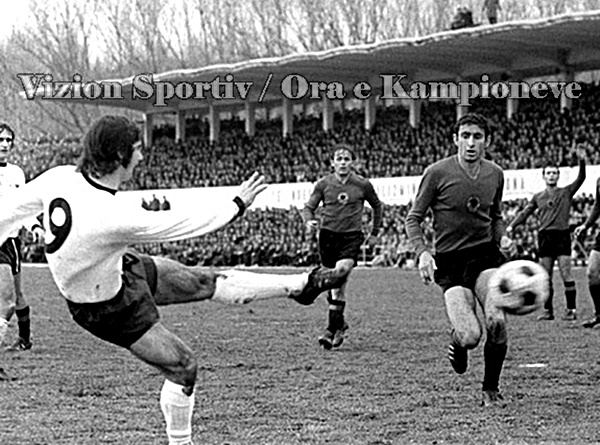
The Germans won 1–0, with Müller scoring in the 38th minute.
But the result tells only part of the story. Albania was not facing an ordinary opponent. It was facing a team that only a few months later would continue its journey toward the European title.
Albania: Koço Dinella; Mihal Gjika, Perikli Dhales, Gëzim Kasmi, Bujar Cani, Teodor Vaso, Iljaz Çeço, Ramazan Rragami, Panajot Pano, Sabah Bizi, Astrit Ziu. Coach: Loro Boriçi.
A defeat, but by only one goal against one of the strongest teams on the continent.
And Albania still had something to say.
May 12, 1971 — The first point, against Poland
Poland returned to “Qemal Stafa”.
This time Albania did not have to wait long to show that it could play its game. The Poles scored first through Jan Banas, but Medin Zhega equalized in the 31st minute.
Albania 1–1 Poland.
It was the first point of the campaign and a significant result for a national team facing opponents far more established on the international stage.
Albania: Koço Dinella; Mihal Gjika, Perikli Dhales, Gëzim Kasmi, Bujar Cani, Teodor Vaso (45′ Safet Berisha), Iljaz Çeço, Ramazan Rragami, Sabah Bizi, Panajot Pano, Medin Zhega.
Coach: Loro Boriçi.
A draw with Poland, a point earned after Albania’s response and another indication that this team could remain competitive even against high-level opposition.
June 12, 1971 — Karlsruhe
One month later, Albania travelled to West Germany.
 Beckenbauer and Albanian star “Bizi
In Karlsruhe, the hosts won 2–0. Günter Netzer scored in the first half and Jürgen Grabowski doubled the advantage before the interval.
Albania: Bashkim Muhedini; Mihal Gjika, Safet Berisha (58′ Teodor Vaso), Astrit Ziu, Bujar Cani, Faruk Sejdini, Vladimir Balluku, Ramazan Rragami, Sabah Bizi, Panajot Pano, Medin Zhega.
Coach: Loro Boriçi.
This time there were no points.
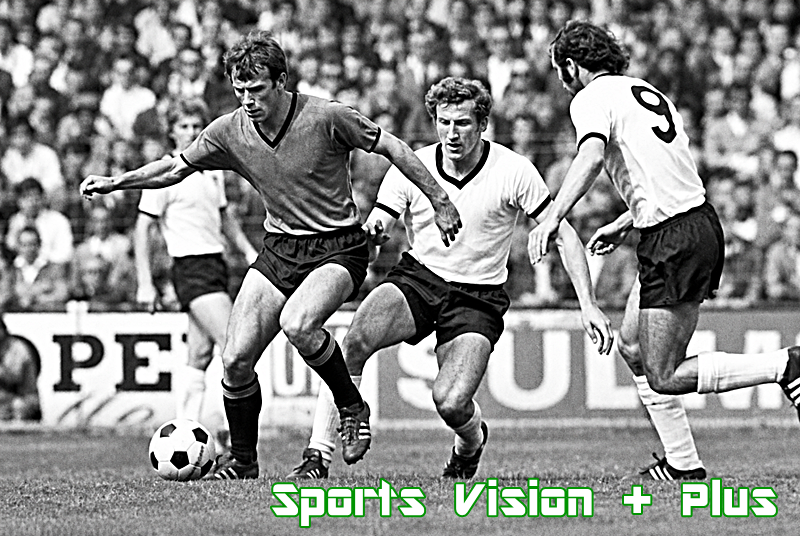 Albanian star Din Zhega (Vllaznia)
But against a West Germany side moving toward the top of the group, Albania finished its German campaign with a 2–0 defeat and still had one match remaining.
A match that would also become its only victory in the group.
November 14, 1971 — Albania explodes at “Qemal Stafa”
Turkey came to Tirana for the final match.
And this time Albania would not settle for resistance.
It would win.
Ilir Përnaska opened the scoring in the 22nd minute. In the 53rd, the striker scored again. Then came Panajot Pano in the 64th minute.
Albania 3–0 Turkey.
 Ilir Pernaska the Albanian Bombardier.
A clear and deserved victory that required no further explanation. For Albanian football at a time when it stood several steps below Europe’s major powers, a 3–0 victory over Turkey was an achievement that had to be appreciated for exactly what it was: a major sporting victory for Albania.
Albania: Bashkim Muhedini; Mihal Gjika, Safet Berisha, Astrit Ziu, Bujar Cani, Faruk Sejdini, Ilir Përnaska, Iljaz Çeço, Sabah Bizi, Panajot Pano, Maksut Leshteni (81′ Enver Ibershimi).
Coach: Loro Boriçi.
That brought the campaign to an end.
West Germany finished first with 10 points, Poland with 6, Turkey with 5 and Albania with 3. Albania’s record: 1 win, 1 draw, 4 defeats, 5 goals scored and 9 conceded.
But the table does not tell everything.
It does not show the 0–1 against West Germany in Tirana. It does not show the 1–1 against Poland. And certainly it does not show, in the right colors, the 3–0 against Turkey, the victory that closed a difficult campaign with one of the most memorable evenings for the Albanian national team of that period.
And among those matches were the names that would become even more important a little later.
Ramazan Rragami. Medin Zhega. Sabah Bizi. Iljaz Çeço. Panajot Pano.
Some of them would once again be at the center of the story when the 1971–72 season began.
Players who appeared during the qualifiers
The list below includes the players who appeared in the six matches of this campaign, according to the documented line-ups; it does not claim to include every player who may have been called up but did not play.
Goalkeepers: Koço Dinella, Jani Rama, Bashkim Muhedini
Defenders: Fatmir Frashëri, Gëzim Kasmi, Bujar Cani, Perikli Dhales, Lin Shllaku, Safet Berisha, Mihal Gjika, Astrit Ziu
Midfielders: Teodor Vaso, Iljaz Çeço, Ramazan Rragami, Faruk Sejdini, Vladimir Balluku
Forwards: Sabah Bizi, Panajot Pano, Medin Zhega, Ilir Përnaska, Maksut Leshteni, Enver Ibershimi
Total: 22 players appeared.
Albanian Clubs Abroad
While the Albanian national team was conducting its 1972 European Championship qualifying campaign, club football also had its representatives on the international stage.
How many Albanian clubs played in Europe during the 1971–72 season? Three!
“Partizani”, “Dinamo” and “Vllaznia”.
Each competed in a different tournament and each had a different story.
“Partizani”, champions of Albania in the 1970–71 season, entered the European Champions’ Cup, where the draw paired them with Bulgarian champions “CSKA Sofia”.
The first match was played on September 15, 1971, in Sofia and ended 3–0 for the hosts. Tsvetan Atanasov scored in the 17th minute, Asparuh Nikodimov from the penalty spot in the 36th and Dimitar Marashliev in the 53rd.
“Partizani” lined up with Bashkim Muhedini; Sotir Seferaj, Safet Berisha, Astrit Ziu, Bujar Cani, Lin Shllaku, Gjergji Thaka, Panajot Pano, Tomor Shehu, Sabah Bizi and Mikel Janku. Çoko and Mithat Shehu were introduced in the second half.
Two weeks later, on September 29, “Partizani” hosted “CSKA Sofia” in Tirana. This time the match was much tighter. The first half ended 0–0, but in the 57th minute Atanasov scored again to give the
Bulgarians a 1–0 victory.
The “Partizan” line-up was Lelaj; Sotir Seferaj, Safet Berisha, Astrit Ziu, Bujar Cani, Lin Shllaku, Mikel Janku, Panajot Pano, Tomor Shehu, Gjergji Thaka and Zilga, with Bashkim Muhedini coming on in the second half.
The two defeats, 0–3 in Sofia and 0–1 in Tirana, ended “Partizani’s” European adventure in the first round, with a 0–4 aggregate score.
In the Cup Winners’ Cup, Albania was represented by “Dinamo”, winners of the Albanian Cup in the previous season.
And here came one of those encounters that, when you look back at history, make you stop for a moment: the opponent was “Austria Wien”.
On September 15, 1971, at “Qemal Stafa”, “Dinamo” secured a result that kept all possibilities open. The Austrians took the lead in the 64th minute through Alfons Dirnberger, but six minutes later came the Albanian response. Iljaz Çeço, from the penalty spot, equalized at 1–1.
“Dinamo” lined up with Ahmet Ahmedani; Frederik Gjinali, Rifat Ibërshimi, Ibrahim Kodra, Iljaz Çeço, Astrit Hafizi, Faruk Sejdini, Torëz Çiraku, Taip Çutra, Ilir Përnaska and Çlirim Hysi. Agron Shapllo and Jani Rama were introduced later. The coach was Skënder Jareci.
The draw in Tirana gave “Dinamo” reason to believe in a surprise in Vienna. But on September 29, at the “Praterstadion”, a goal by Riedl in the 22nd minute decided the match. “Austria Wien” won 1–0 and advanced 2–1 on aggregate.
“Dinamo” played with Ahmet Ahmedani, Gani Xhafa, Ibrahim Kodra, Rifat Ibërshimi, Frederik Gjinali, Faruk Sejdini, Astrit Hafizi, Taip Çutra, Torëz Çiraku, Iljaz Çeço and Ilir Përnaska; Shpëtim Hoxha and Çlirim Hysi came on in the second half.
Thus “Dinamo” ended its European adventure after two matches against a strong Austrian opponent, with a draw in Tirana and a narrow defeat in Vienna. Overall: 1–2.
While “Partizani” and “Dinamo” tested themselves on the field, the story would be completely different for “Vllaznia”.
The Shkodra side, which had finished third in the 1970–71 championship, had been entered in the UEFA Cup, the new European competition whose inaugural edition was being played in the 1971–72 season.
The draw had given them “Rapid Wien”.
The name of the opponent was the same one that would appear again in the European history of Albanian football in later years, but this time the meeting would never take place. “Vllaznia” withdrew before the matches were played and “Rapid Wien” advanced without playing.
International sources link the withdrawal to the authorities’ decision to prevent the Albanian team from travelling after the return from abroad of the national volleyball team and an incident involving items considered prohibited.
So, during the 1971–72 season, three Albanian clubs were registered in the three major European competitions: “Partizani” in the European Champions’ Cup, “Dinamo” in the Cup Winners’ Cup and “Vllaznia” in the UEFA Cup.
The first two played their matches; the third never managed to begin its European adventure on the field.
There was no Albanian participation in the Balkan Cup in the
1971–72 edition.
Historical lists of Albanian participation move from the 1970 edition to “Partizani’s” participation in 1974, with no Albanian representative in the competition during the season covered here.
Thus the international chapter of Albanian club football in the autumn of 1971 came to an end.
“Partizani” had played twice against “CSKA Sofia”, “Dinamo” had measured itself against “Austria Wien”, while “Vllaznia” had been left without the opportunity to play “Rapid Wien”.
But for Shkodra, what did not happen in Europe would soon be replaced by what happened inside Albania.
The championship had just begun. And this time, “Vllaznia” would have its fate in its own hands.
The Championship Journey
The teams in the competition were:
“17 Nëntori”, “Besa”, “Dinamo”, “Flamurtari”, “Labinoti”, “Lokomotiva”, “Luftëtari”, “Partizani”, “Shkëndija”, “Skënderbeu”, “Studenti”, “Tomori”, “Traktori” and “Vllaznia”.
Two of them had just secured promotion to the top flight.
“Shkëndija” and “Studenti” came from the Second Division. At the end of the 1970–71 season, the two teams had won their respective groups and met in the decisive match for the Second Division title. “Shkëndija” won 4–2 against “Studenti”, becoming champions of the division, while both teams earned promotion to the First Division.
Thus, the 1971–72 season would see both of them playing in the elite for the first time.
Going in the opposite direction were “Besëlidhja” of Lezhë and “Apolonia” of Fier. Both had finished the 1970–71 season in the bottom two places of the First Division and were relegated to the Second Division. “Besëlidhja” finished the season with 16 points, while “Apolonia” had 11.
So the new championship had two new faces and two new absences.
On one side, “Shkëndija” and “Studenti” brought the energy of teams that had just earned the right to play among the best.
On the other, the names of “Besëlidhja” and “Apolonia” were missing from an elite that, before the ball had even started rolling, already had its established hierarchy.
At the top stood defending champions “Partizani”, followed by “Dinamo”, “17 Nëntori” and “Vllaznia” — teams that would play important roles in the history of this season.
But football is not won by reputation.
It is won over 26 matchdays.
And 182 matches lay ahead.
When the new championship began, “Vllaznia” was not the absolute favorite. Ahead of them stood a hierarchy that had appeared firmly established for years: “Partizani”, the defending champions, “Dinamo” and “17 Nëntori”, the teams that formed the backbone of the capital’s football power.
“Vllaznia” entered the competition not as defending champions, but as a team that had come very close to the top the previous season. In 1970–71, the Shkodra side had finished third, behind “Partizani” and “Dinamo”.
Now they had another opportunity.
And Shkodra was ready to try again.
Shkodra had entered this championship with a mature team, experienced players and a generation that already knew how to play the big matches.
The championship would reveal this little by little.
Matchdays 1–3 — An unbeaten start
“Vllaznia” began the championship in Berat, against “Tomori”, and immediately collected the two points with a 3–1 victory.
Then came a match that would gain importance later: “Vllaznia” – “Dinamo” 0–0.
A goalless draw, but an important one because the opponent was one of the major names in the championship.
On matchday three, the Shkodra side travelled to Tirana to face “Shkëndija” and again avoided defeat.0–0.
The first three matchdays brought seven points for “Vllaznia”: two wins and one draw.
It was not a spectacular beginning.
It was, rather, a secure one.
And in a 26-match championship, security was every bit as important as spectacle.
Matchdays 4–7 — Vllaznia begins to climb
On matchday four, “Vllaznia” defeated “Lokomotiva” 1–0, while the following week they recorded another goalless draw, this time in Elbasan against “Labinoti”.
Then came the 4–0 victory over “Luftëtari”, one of those results that show a team is no longer merely participating in the race.
On matchday seven, in Lushnjë, “Vllaznia” won a difficult match against “Traktori”, 3–2.
After seven matchdays, the Shkodra side had built an unbeaten run that was beginning to take shape.
But ahead of them was one of the most important obstacles of the season.
Matchday 8 — The only defeat
On matchday eight, “Vllaznia” travelled to Tirana to face “Partizani”.
It was one of those matches that show just how long the road to the title can be. “Partizani” won 2–1.
For “Vllaznia”, it was the first defeat of the season.
And, as it would later turn out, the last.
From that day until the end of the championship, Shkodra would not lose another match.
The final table would confirm it: only one defeat in 26 matches.

Matchdays 9–13 — The race begins to take shape
“Vllaznia’s” response was immediate.
On matchday nine came the 0–0 draw with “17 Nëntori” in Shkodra, after which the team continued collecting points.
The 3–0 victory over “Besa” on matchday 11 was another strong signal.
Then, in Vlora, “Vllaznia” defeated “Flamurtari” 2–0, while on matchday 13 they closed the first half of the championship with a 2–0 victory over “Studenti”.
By the halfway point of the championship, the Shkodra side had already established the profile of a serious title contender.
But they were not alone at the top.
“17 Nëntori” was still there.
“Partizani” and “Dinamo” were there as well.
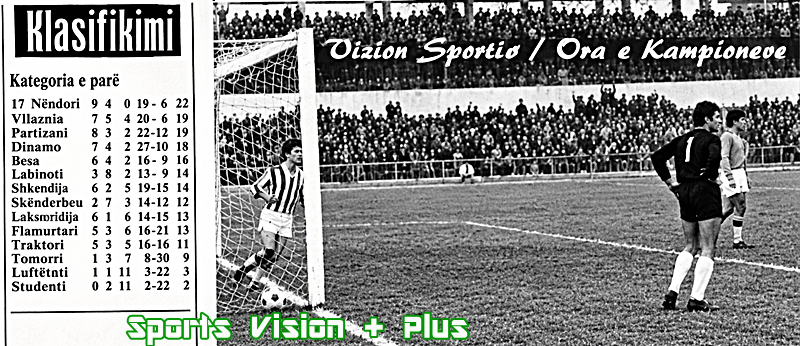
And this was precisely where the most difficult part began.
Matchdays 14–16 — The real title race begins
At the start of the second half, “Vllaznia” showed no signs of slowing down. On January 30, 1972, in Shkodra, came a major 5–0 victory over “Tomori”.

One week later, the Shkodra side drew 1–1 with “Dinamo” in Tirana.
Meanwhile, the battle at the top was becoming increasingly tight.
Matchday 16 produced a championship full of goals and a picture that made it clear that the title would be decided by details. “17 Nëntori” and “Vllaznia” remained among the leading teams, while “Partizani” and “Dinamo” were not far behind.
At that point in the season, the gaps were not large enough for anyone to feel comfortable.
Matchday 17 — The duel that produced no winner, but changed everything
On March 5, 1972, “17 Nëntori” and “Dinamo” met at the national stadium “Qemal Stafa”.
It was a match with pace and four goals.
“Dinamo” scored first t
hrough Ilir Përnaska, who found the net twice. “17 Nëntori” responded through Kazançhi and Xhaçka.
2–2.
The draw gave neither team the two points it was looking for, but it kept the race open.
In the same round, “Vllaznia” drew 0–0 with “Lokomotiva” in Durrës.
Matchday 18 — Nobody gets away
One week later, “17 Nëntori” drew with “Shkëndija”, while “Vllaznia” defeated “Labinoti” 2–0.
At the top, there was no longer any room for mistakes.
Every week brought a new movement in the standings, and every match involving the leading teams was beginning to carry the weight of a decisive encounter.
“Partizani” was also closing the gap again.
At this point, the championship had stopped being an ordinary weekly competition.
It had become a battle of nerves.
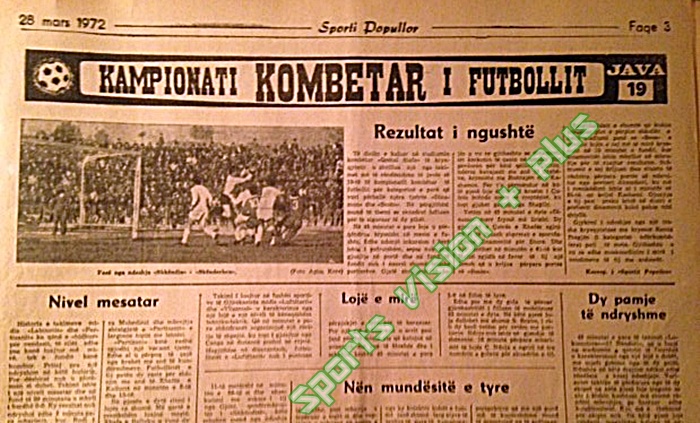
Matchday 19 — One point behind the leaders
On March 26, “17 Nëntori” remained at the top, but “Vllaznia” was now only one point behind.
The Shkodra side won convincingly in Gjirokastër, 3–0 against “Luftëtari”, with goals from Rauf Çanga, Ismet Hoxha and Çesk Ndoja.
Meanwhile, “17 Nëntori” drew 1–1 in Durrës with “Lokomotiva”.
“Dinamo” defeated “Besa” 1–0, while “Partizani” took only one point in Elbasan after a 0–0 draw with “Labinoti”.
The race was tightening.
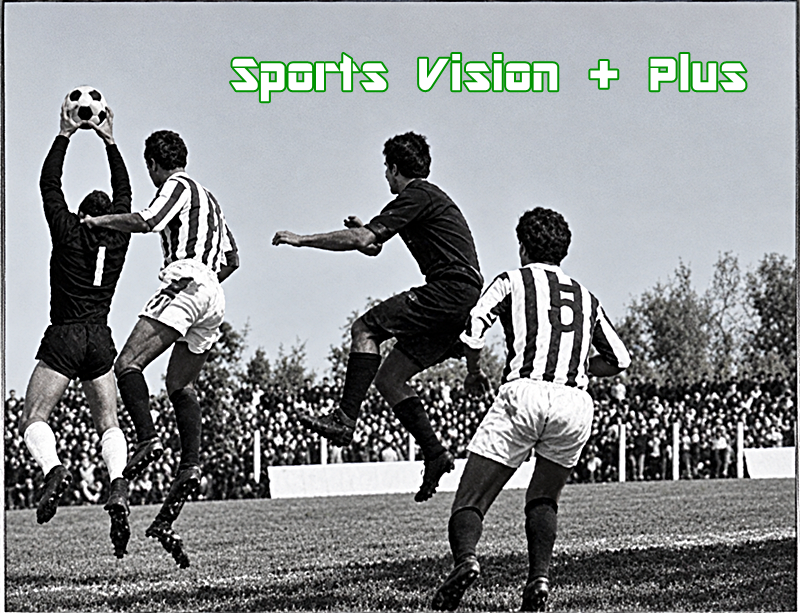
Matchdays 20–21 — Shkodra moves closer to the top
In the following weeks, “Vllaznia” continued collecting points and waiting for their rivals to make a mistake.
And that moment came.
On April 18, 1972, in Shkodra, “Vojo Kushi” Stadium hosted one of the most important matches of the entire championship.
“Vllaznia” – “Partizani”.
Rain had taken over the city. The pitch was heavy. The stands had filled long before kick-off and, partly because of the long wait for the supporters, the match had taken on a special atmosphere.
The first half ended goalless.
Then came “Vllaznia’s” moment.
A mistake in the “Partizani” defense and Sabah Bizi sent the ball into the net. 1–0.
Shkodra was touching the top.
But “Partizani” did not give up.
In the final minutes, following an attack launched from the wing, Vladimir Balluku scored the equalizer. 1–1.
One point for each team.
But for “Vllaznia”, that point had a different value: the draw moved them to the top of the standings on goal difference.
For the first time during that season, Shkodra was at the summit.
And now they had to stay there.
Matchday 22 — Goalless, but hugely important
On May 7, 1972, one of the matches that would be remembered most vividly from the championship was played at “Qemal Stafa”.
“17 Nëntori” – “Vllaznia” 0–0.
The two leading teams entered the field with the same number of points and the same objective: to gain the advantage in the title race.
The match produced no goals.
But it produced tension, chances and a strong tactical battle.
“17 Nëntori” had more initiative in the second half, while Ndoja made several important interventions in the Shkodra goal.
“Vllaznia” defended, fought and took the point they were looking for.
0–0.
At the end of the round, both teams had 33 points, while “Dinamo” were three points behind them.
The championship had entered the stage where every point was a step toward the title.
Or a step away from it.
Matchday 23 — Vllaznia takes the lead again
Another important match came in Shkodra.
“Vllaznia” against “Skënderbeu”.
And this time, the spectators saw five goals.
Vllaznia – Skënderbeu 3–2.
First came Lek Koçobashi.
“Skënderbeu” equalized through Toshi, but then came Rragami’s moment. Ramazan Rragami scored twice, putting the score at 3–1.
The Korçë side reduced the deficit through Xhambazi from the penalty spot, but could go no further.
3–2.
In the same round, in Tirana, “Partizani” defeated “17 Nëntori” 2–1.
And that was the blow that changed the top of the table once again.
“17 Nëntori” dropped to second place.
“Vllaznia” were back on top.
Matchday 24 — Vllaznia does not shine, but survives
In Kavajë, “Vllaznia” played one of those matches that do not enter history for the beauty of the football, but can enter history for the value of the point. Besa – Vllaznia 0–0.
Besa played better and had opportunities to score. Karriqi even missed a penalty in the 25th minute, while the Shkodra goalkeeper Ndoja was among the key figures of the match.
“Vllaznia” did not play at their best.
But they did not lose.
And at that stage of the championship, that was of enormous importance.
At the end of the round, the title race remained open, but Shkodra still held the advantage.
Matchday 25 — One step from the crown
On May 28, “Vllaznia” had another match ahead of them at “Vojo Kushi”.
The opponent was “Flamurtari”.
The Shkodra side did not let the opportunity slip away.
Vllaznia – Flamurtari 2–0.
In the seventh minute, Çesk Ndoja took advantage of a mistake by the Vlora defense and scored the opening goal.
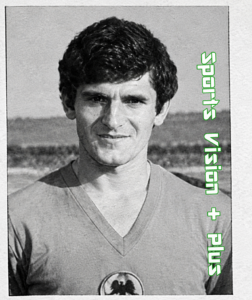
In the 51st minute, Sabah Bizi doubled the advantage.
It was “Vllaznia’s” 14th victory in the championship.
Even more importantly, it was another step toward the title.
But the title was not yet mathematically secure.
One match remained.
One week.
One match.
One point of advantage.
And an entire city waiting.
Matchday 26 — The day Shkodra became champion
June 4, 1972.
The championship had reached its final day.
“Vllaznia” travelled to Tirana for the final match against “Studenti”.
At the same time, “17 Nëntori” were playing in Kavajë against “Besa”.
The situation was clear: “Vllaznia” had the advantage, and a victory would make them champions regardless of their rival’s result.
And the Shkodra side left nothing to chance.
Studenti – Vllaznia 1–4.
A victory that settled everything.
In Kavajë, meanwhile, “Besa” defeated “17 Nëntori” 4–1.
Thus, after 26 matchdays, the final table had taken shape:
Vllaznia — 40 points.
17 Nëntori — 37 points.
Dinamo — 36 points.
Partizani — 34 points.
15 wins.
10 draws.
Only 1 defeat.
48 goals scored.
15 conceded.
Champions of Albania.

But this was not simply a victory in a championship featuring 14 teams.
It was the end of a long wait for Shkodra.
“Vllaznia” was no longer simply a team capable of challenging the capital. Now it was the team that had reached the end of the marathon ahead of everyone else.
And while the Shkodra footballers celebrated the title, the story of the season was still not over.
Because several months earlier, this team had entered another battle.
The Rrepublic Cup
The Rrepublic Cup — The second trophy
If the championship had been a 26-week marathon, the Cup had been a different story: shorter, more nervous and featuring a final that would make “Vllaznia’s” season even more special.
Their opponent was “Besa” of Kavajë.
The first match ended 2–0 for Besa.
“Vllaznia” needed a comeback.
And in the return match in Shkodra, it came.
Vllaznia – Besa 2–0.
Both goals were scored by Ramazan Rragami from the penalty spot.
After 90 minutes, the aggregate score was 2–2.
After extra time, nothing changed.
The trophy had to be decided by a penalty shootout.
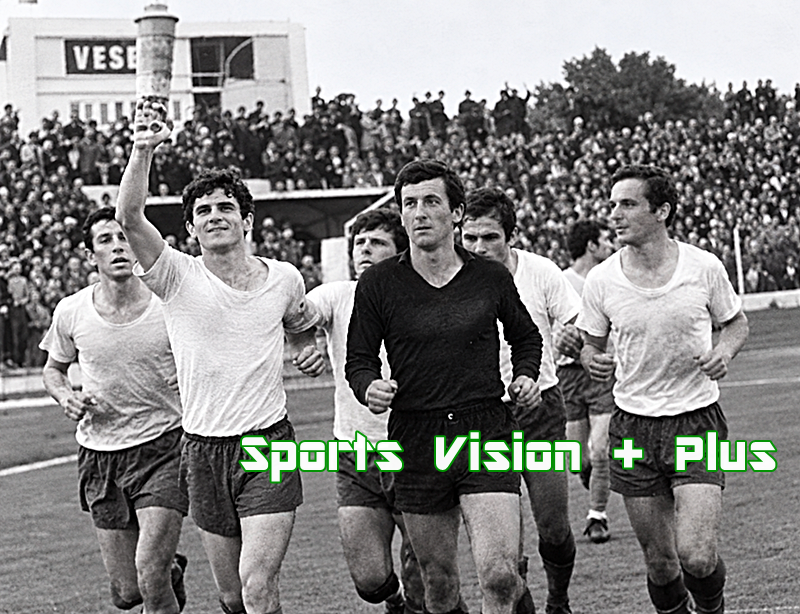
And there “Vllaznia” won 5–3, taking the Albanian Cup.
Thus, in 1972, Shkodra did not win only the championship.
It also won the Cup.
A double.
And this was the moment when the 1971–72 season went from being a great season to becoming one of the most important chapters in the history of “Vllaznia”.
While “Vllaznia” celebrated the championship title, other teams were experiencing the opposite fate at the other end of the table. “Tomori” and “Studenti”, the two teams that finished in the bottom two places, were relegated from the First Division.
VLLAZNIA – ALBANIAN CHAMPION 1971-1972!
The 1972 championship-winning squad was: Rauf Çanga; Zyhdi Basha; Hajrulla Lekaj; Suat Duraj; Paulin Ndoja; Ramazan Rragami; Menduh Dedja; Myzafer Mani; Viktor Plumbini; Esat Rakiqi; Çesk Ndoja; Medin Zhega; Sabah Bizi; Lek Koçobashi; Ismet Hoxha; Myzafer Qeraj; Millan Vaso; Selami Dani; Halil Puka.
Coach: Xhevdet Shaqiri.

Top scorer of the championship: Ilir Përnaska — 17 goals.
The “Dinamo” striker was one of the most prominent names of his generation: a player with a natural sense for goals, intelligent movement inside the box and the ability to turn an opportunity into a result.
Epilogue
But the story of this season cannot end with a table alone.
Because a title won by “Vllaznia” is not only the history of a club.
It is the history of a city.
Shkodra.
A city in northern Albania, near the lake, the Drin, the Buna and the Albanian Alps; a place where history, culture and sport have been intertwined for centuries.
Shkodra was one of the most important centers of the Illyrian world and is associated with the Illyrian kingdom during the time of King Gentius.
Then came other centuries. The city changed and accumulated new layers of history, culture and faith.
Shkodra of art.
Shkodra of music.
Shkodra of photography.
Shkodra of humor.
Shkodra of people who turned the city into a way of life.
And, naturally, Shkodra of sport.
In this city, football was never simply a game.
It was part of the identity.
And the name that carried that identity across generations was “Vllaznia”.
That is why, when we look back today at the spring and summer of 1972, we do not see only a team that collected 40 points.
We see a city that, after many years, returned to the summit of Albanian football.
And perhaps this is where our journey comes to its most fitting conclusion.
In 2026, when we look at history from a distance, we travel back to 1972.
From 1972 we go further back, to the early football history of Shkodra.
From football to sport.
From sport to culture.
From culture to history.
And from history to the city.
Shkodra.
One of the oldest cities in Albania.
A city where, long before the ball began rolling on the field of “Vllaznia”, history had already begun to be written in other chapters.
And now, after more than a century, the ball had returned to its own home.
To Shkodra.
Statistics!
“Vllaznia” finished the championship with 15 wins, 10 draws and only 1 defeat in 26 matches. The Shkodra side scored 48 goals and conceded only 15, recording the best goal difference in the championship: +33.
Over 26 matchdays, “Vllaznia” collected 40 points, three more
than “17 Nëntori”, while “Dinamo” finished third with 36 points. Only one defeat throughout the season also reveals another characteristic of the champions: they did not win simply through the number of victories, but above all through consistency.
15 wins • 10 draws • 1 defeat • 48 goals scored • 15 goals conceded • +33 goal difference • 40 points.
Across the 182 matches of the 1971–72 National Championship, 412 goals were scored, an average of 2.26 goals per match.
“Vllaznia” were the highest-scoring team, with 48 goals, while “Tomori” conceded the most, 56. At the other end, “Vllaznia” had the best defensive record in the championship, conceding only 15 goals, while “Studenti” scored fewer than any other team, just 9.
At home, “Vllaznia” and “Partizani” recorded 10 wins each, more than any other team.
Away from home, “Shkëndija” recorded the most victories, 6, while “Vllaznia” and “17 Nëntori” followed with 5 each.
Among the biggest scorelines of the season were “Dinamo’s” 7–1 victory over “Luftëtari”, “Besa’s” 6–0 victory over “Shkëndija”, and several 5–0 victories, including “Vllaznia” against “Studenti” and “Tomori”, as well as “17 Nëntori” against “Studenti”.
© Copyright by Pjerin Bj
Bronx, New York: September 18, 19, 20, 2026
_______________
Sports Vision +Plus | Champions Hour in activity since 2013

Discover more from Sports Vision +
Subscribe to get the latest posts sent to your email.